Ashadhi Ekadashi Baby Boy Photoshoot with Lord Vitthal Theme | Warkari Baby Photoshoot
Viral Trends & Formats prompt: create image of a premium devotional baby lay photoshoot inspired by the sacred Vitthal tradition, Baby Sant Tukaram symbolism, and handcrafted…
Prompt
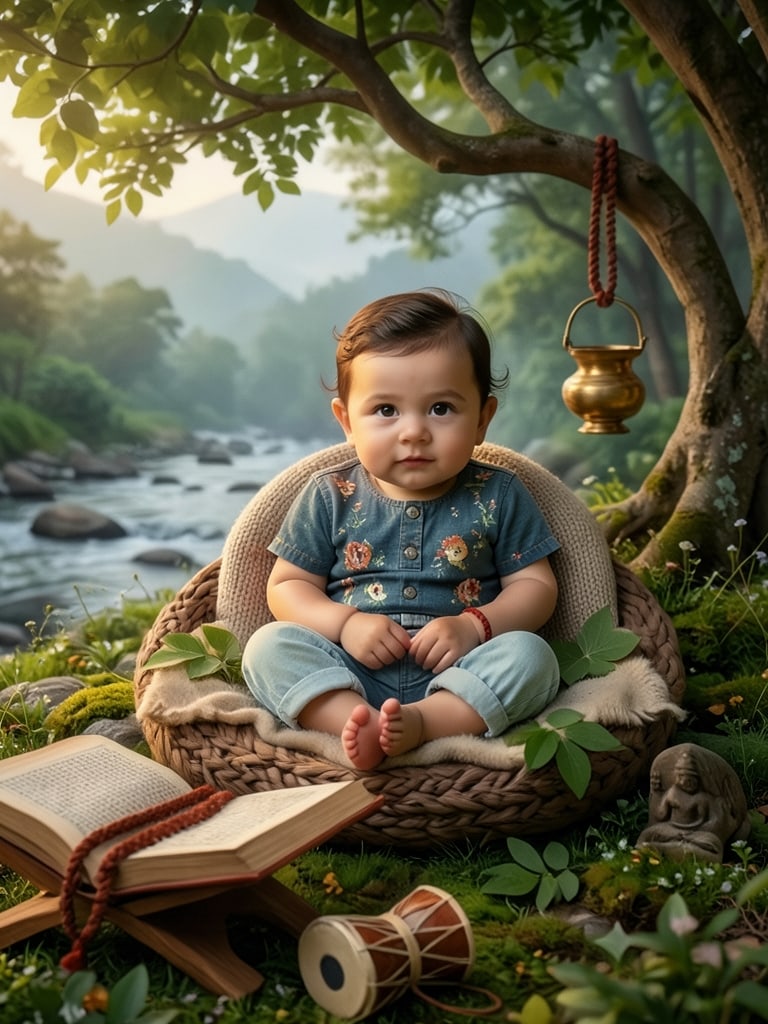
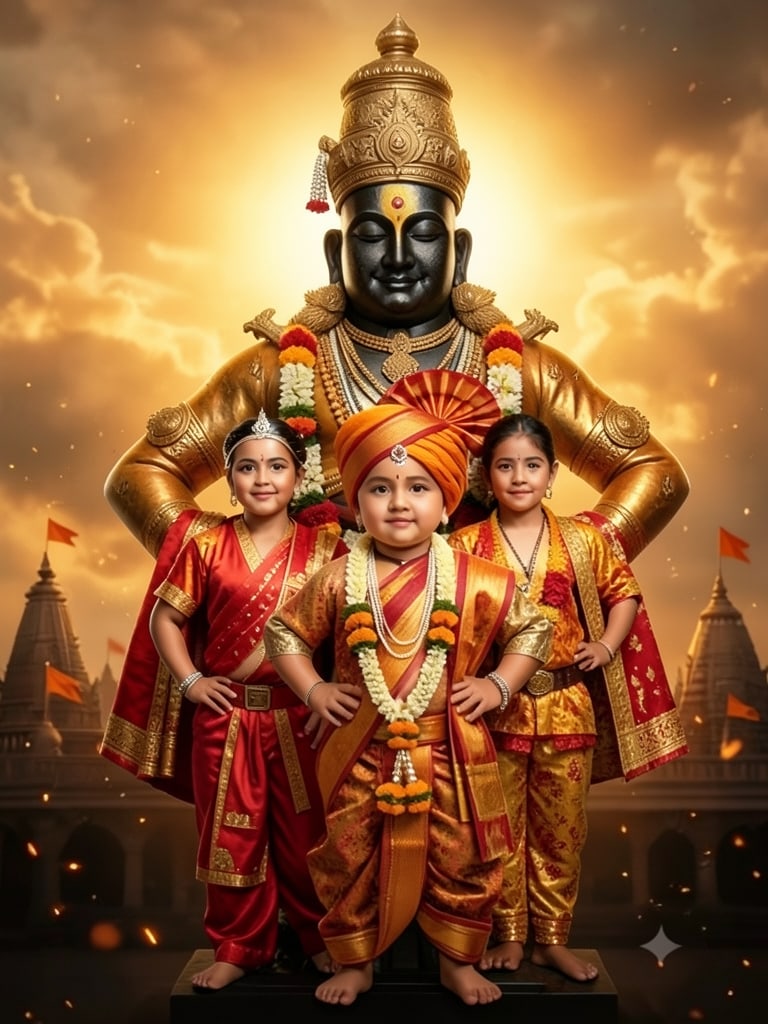
create image of a premium devotional baby lay photoshoot inspired by the sacred Vitthal tradition, Baby Sant Tukaram symbolism, and handcrafted Maharashtrian rangoli art. Use the attached photo as the person identity reference only. The uploaded baby image is not a reference for the composition, outfit, props, typography, background, lighting, or artistic layout unless explicitly instructed. Generate an ultra-realistic 4K Ultra HD vertical 9:16 composition with museum-quality devotional storytelling, authentic rangoli craftsmanship, premium flat-lay photography, and elegant spiritual aesthetics.
STRICT FACE IDENTITY PRESERVATION
Use the attached photo as the person identity reference only. Do not change the baby’s facial identity, expression, body proportions, or natural posture unless explicitly instructed by the prompt. Preserve the baby’s eyes, eyebrows, forehead, nose, lips, cheeks, ears, skin tone, facial proportions, infant age, natural hairline, facial symmetry, eye spacing, nose structure, lip shape, jawline, skin texture, and innocent sleeping expression exactly as shown in the uploaded image. No beautification, stylization, facial enhancement, reshaping, age modification, gender alteration, or artistic reinterpretation is permitted. The baby must remain unmistakably identical to the uploaded reference while naturally integrating into the recreated devotional artwork.
Visual Blueprint Reconstruction
Reconstruct the reference image as a complete visual blueprint rather than an artistic inspiration. Preserve the overall visual hierarchy, structural balance, symmetry, proportions, spacing relationships, object scaling, negative space, and compositional rhythm exactly as shown. The entire scene must appear as a meticulously handcrafted rangoli installation viewed from directly overhead, with every visual component maintaining the same relative position and visual importance as the reference while presenting a premium devotional interpretation centred around Lord Vitthal and Baby Sant Tukaram symbolism.
Canvas Layout, Composition & Spatial DNA
Construct a tall vertical rectangular rangoli occupying nearly the full canvas with narrow outer margins visible around the artwork. Surround the complete rangoli with a continuous handcrafted border of uniformly sized bright pink circular rangoli dots, maintaining identical spacing, diameter, rhythm, and border thickness throughout all four edges. The internal composition should be strongly symmetrical around the central vertical axis, with the Lord Vitthal silhouette acting as the dominant visual anchor occupying approximately seventy percent of the artwork height. Position the baby inside the lower portion of the silhouette so that the baby visually becomes part of the deity’s sacred presence rather than lying independently. Maintain generous blue negative space around the silhouette, balanced equally on both sides by decorative floral motifs and devotional calligraphy.
Rangoli Background & Sacred Vitthal Silhouette
Create the complete artwork entirely from authentic coloured rangoli powder applied by hand over a smooth floor surface. The background should consist of rich royal-blue rangoli with naturally blended pigment transitions, visible handcrafted grain texture, soft powder diffusion, slight tonal variation, and realistic handmade imperfections. At the centre recreate the monumental black silhouette of Lord Vitthal in the traditional standing posture with both hands resting on the waist. The silhouette should retain broad shoulders, gently tapering sides, and a stable symmetrical stance exactly matching the reference proportions. Surround the silhouette with a delicate white rangoli outline that naturally separates the black figure from the blue background. Behind the head construct a perfectly centred circular halo using layered rangoli gradients transitioning from brilliant golden yellow at the centre through warm orange into deep reddish-orange toward the outer edge. Place a traditional yellow marigold garland around the silhouette’s neck using individually formed floral rangoli elements, and recreate the golden pilgrimage location marker positioned precisely at the forehead of the silhouette.
Baby Sant Tukaram Composition
Position the baby sleeping peacefully within the lower central portion of the Lord Vitthal silhouette, occupying approximately one-third of the silhouette height while remaining perfectly centred. Preserve the same relaxed sleeping posture with both arms naturally raised upward, elbows slightly bent, palms gently open, legs softly crossed, and facial muscles completely relaxed. Dress the baby in authentic traditional white Maharashtrian Warkari attire consisting of a clean white kurta, white dhoti finished with elegant woven golden borders, and a diagonally draped cream-white shoulder cloth carrying subtle gold edging. Wrap the head with a neatly folded traditional white Maharashtrian turban while keeping the styling simple, devotional, and historically authentic. Add a small traditional forehead tilak and allow the clothing folds to fall naturally with realistic cotton texture, fine embroidery, gentle fabric creases, and soft shadows. The overall appearance should subtly evoke Baby Sant Tukaram while remaining visually faithful to the reference composition.
Supporting Devotional Objects & Relationship DNA
Preserve the precise placement relationships of every supporting object. Position a polished wooden tanpura diagonally to the lower left of the baby with accurate proportions, realistic wood grain, carved detailing, and devotional significance. Place a rounded earthen flower pot immediately beside the tanpura containing several upright yellow tulips with fresh green stems. Arrange eight handcrafted rangoli flowers across the blue background using identical spacing, distribution, and visual rhythm as the reference. Each flower should consist of white petals outlined with warm yellow and orange centres formed entirely from coloured rangoli powder. Every supporting object must maintain the same visual weight and distance from the primary composition so that the artwork feels balanced and symmetrical.
Typography DNA & Rangoli Calligraphy Reconstruction
Reconstruct every textual element exactly as handcrafted rangoli lettering rather than digital typography. Every Devanagari character must appear individually shaped using coloured rangoli powder with visible handcrafted edges, natural powder accumulation, subtle grain variation, and slight handmade irregularities while preserving excellent readability. At the lower centre recreate the large golden title “॥ विठ्ठल ॥” using thick premium golden rangoli powder with identical proportions, baseline, stroke thickness, spacing, and visual dominance as the reference. Directly beneath it recreate the devotional line “अभंग संतांचा, विठ्ठल आवाज भक्तांचा विठ्ठल अर्थ जीवनाचा” in finely handcrafted white rangoli lettering while preserving the same line spacing, alignment, font proportions, and hierarchy. Below this reproduce “॥ राम कृष्ण हरी ॥” in bright golden rangoli powder with the same centred placement and devotional emphasis. On the right side faithfully reconstruct the handwritten Marathi devotional calligraphy exactly where it appears in the reference, preserving its handwritten flow, stroke rhythm, natural spacing, powder texture, and artistic balance without replacing it with modern fonts.
Material, Texture & Rangoli Craftsmanship
Every visual component should clearly display authentic rangoli craftsmanship rather than painted graphics. Powder edges should remain soft yet controlled, colours should blend naturally at transitions, and tiny pigment grains should remain visible upon close inspection. The handmade quality must be evident through realistic powder density, layered application, slight edge diffusion, naturally compressed pigment, and subtle imperfections characteristic of expert rangoli artists. The floor beneath should remain minimally visible while enhancing realism through fine surface texture and soft interaction with the rangoli pigments.
Lighting, Camera & Photography DNA
Capture the entire artwork using a perfectly perpendicular overhead camera positioned exactly ninety degrees above the composition so that every object remains free from perspective distortion. Illuminate the scene using soft diffused studio lighting evenly distributed across the artwork, revealing rangoli texture, powder depth, cloth folds, and handcrafted details without harsh reflections or distracting shadows. The finished photograph should resemble a premium award-winning devotional baby lay photoshoot where authentic Maharashtrian rangoli artistry, Lord Vitthal symbolism, Baby Sant Tukaram devotion, and ultra-realistic photography merge seamlessly into a single museum-quality composition while faithfully preserving the structural DNA of the supplied reference image.
How to use
Paste the prompt into Stable Diffusion. Swap the subject and keep the lighting, lens and style details for a consistent look.
Use case
Viral Trends & Formats — rangoli, baby
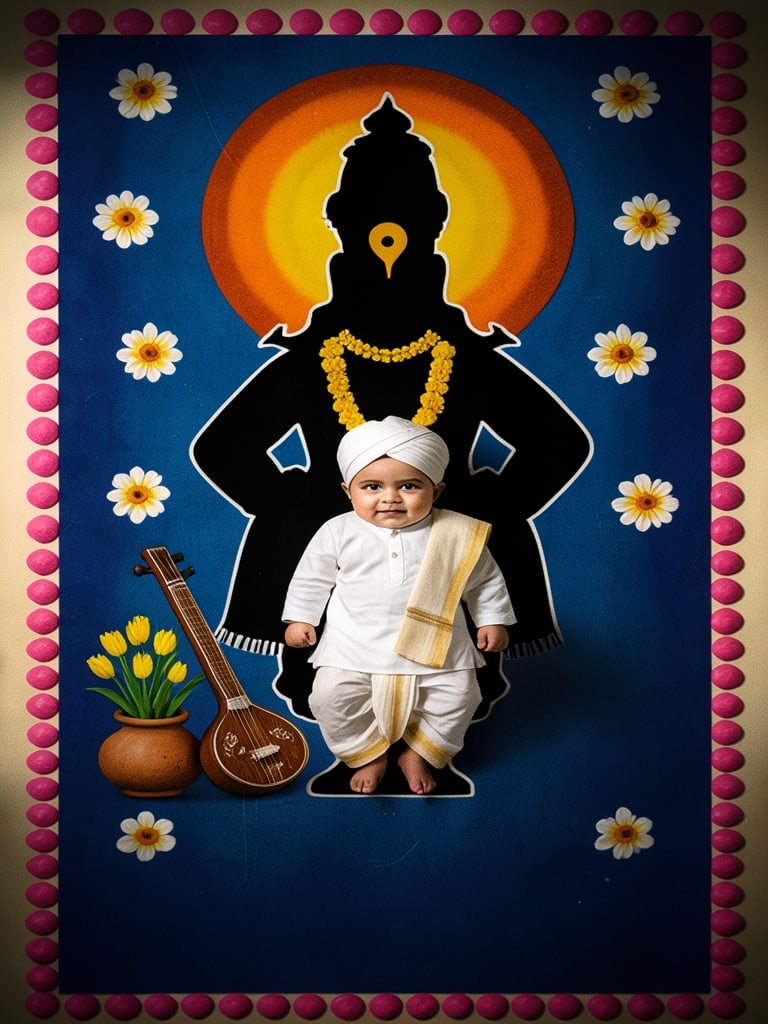 image / ChatGPT
Studio tools
AI Optimizer
Improve, shorten, expand or retarget this prompt for another image or video model. Every result is saved as a new version — the original is never overwritten.
Improve prompt
Produces optimized, concise, detailed, beginner and model-specific versions.
Generate variations
Professional, creative, cinematic, minimal and advanced.
Prompt history
- v1 · Original1 day ago