Ashadhi Ekadashi Girl Photoshoot with Warkari Palkhi Theme and Traditional Flat Lay
Portrait Photography prompt: create image STRICT FACE IDENTITY PRESERVATION DNA Use the uploaded image exclusively as the facial identity reference for the baby. Preserve the…
Prompt
create image
STRICT FACE IDENTITY PRESERVATION DNA
Use the uploaded image exclusively as the facial identity reference for the baby. Preserve the exact facial identity, including the head shape, forehead proportions, hairline, eyebrows, eyelids, eye spacing, eye shape, nose structure, cheeks, lips, jawline, chin, ears, skin tone, skin texture, facial symmetry, and apparent age. Preserve the baby’s innocent smile, soft infant expression, naturally rounded cheeks, and delicate facial proportions exactly as shown. Do not beautify, stylize, enlarge the eyes, reshape facial proportions, sharpen facial contours, modify complexion, alter age, or apply beauty-filter effects. The uploaded image serves only as the facial identity reference while every devotional object, environment, costume, and artistic relationship is reconstructed entirely through descriptive instructions.

SUBJECT DNA
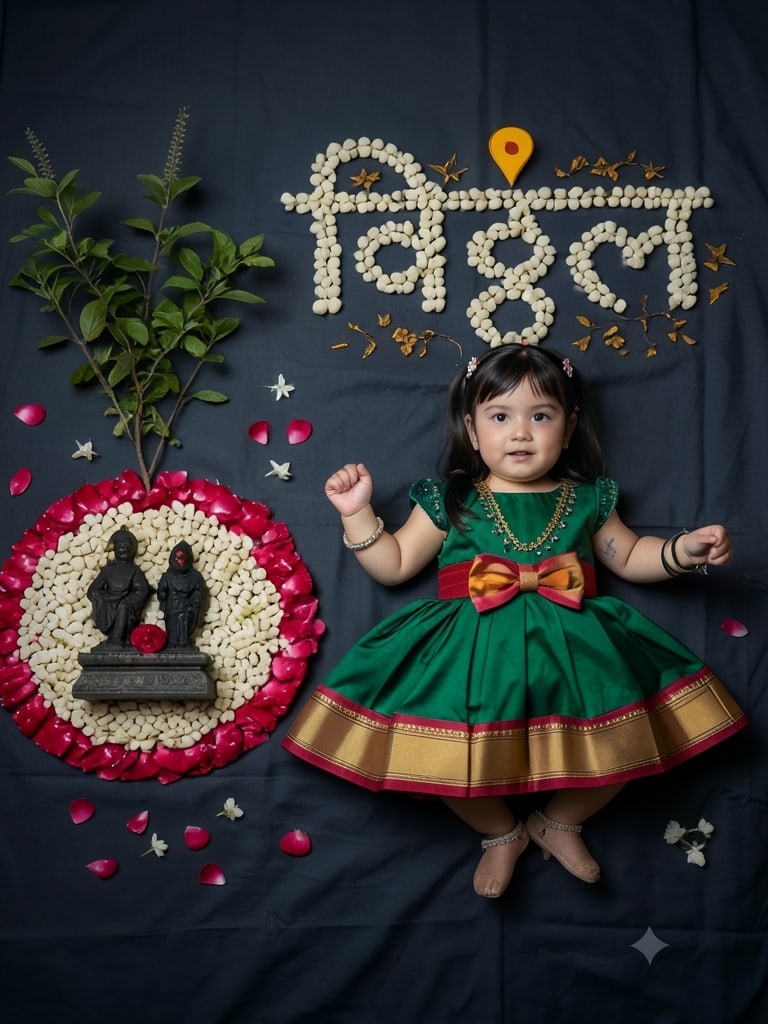
Create an ultra-realistic premium Ashadhi Ekadashi 3-Month Baby Milestone Flat-lay inspired by the sacred Warkari tradition of Pandharpur. The baby should become the centrepiece of a handcrafted devotional artwork where every surrounding object celebrates Lord Vitthal, Tulsi devotion, Pandharpur pilgrimage, and Warkari culture. The composition should resemble a professionally curated museum-quality devotional flat-lay rather than a simple milestone photograph.

OUTFIT DNA
Dress the baby in a luxurious traditional Maharashtrian Paithani infant dress. The upper bodice should be deep vermilion-red silk richly embroidered with antique gold zari floral motifs, creating realistic woven texture and authentic silk sheen. The lower skirt should transition into a royal navy-blue Paithani silk displaying bold traditional geometric zari weaving with intricate antique gold motifs running throughout the fabric. The skirt should spread naturally beneath the baby with graceful radial folds while maintaining premium silk realism. Add tiny black infant bangles on both wrists, delicate gold earrings, a traditional white Vaishnav tilak with black central dot on the forehead, and naturally styled infant hair.

MILESTONE DNA
The milestone number “3” should be handcrafted from deep saffron-red matte material and positioned directly above the baby’s head, perfectly centred within the composition. The number should occupy approximately twelve percent of the overall frame height, creating immediate visual recognition while remaining proportionally balanced with the devotional objects. Its placement should clearly indicate the baby’s third-month milestone without competing for visual attention.

RITUAL OBJECT DNA
Construct a complete handcrafted Warkari devotional arrangement around the baby.
On the upper-left section, position a handcrafted silhouette of Lord Vitthal standing upon a stylized temple base inspired by the architecture of Pandharpur Temple. The silhouette should feature realistic matte charcoal-black handcrafted texture with carefully cut devotional proportions.
Directly below, arrange a pair of traditional wooden Paduka (holy sandals) carved from aged sandalwood with visible natural wood grain.
Beside the sandals, create a beautifully handcrafted “ॐ” symbol using hundreds of individual ivory-coloured Tulsi beads arranged with perfect spacing and realistic bead texture.
Place authentic brass Taal (hand cymbals) beside both of the baby’s hands, suspended naturally using green cotton cords. Their polished brass surfaces should display realistic reflections, aged metal texture, and authentic devotional craftsmanship.
On the upper-right corner, position a premium handcrafted Tulsi Vrindavan with traditional white-and-maroon temple architecture, realistic carved detailing, and a vibrant living Tulsi plant overflowing naturally with healthy green leaves.
Below the Tulsi Vrindavan position two handcrafted saffron Warkari flags crossed symmetrically, their cotton fabric displaying realistic folds and natural drape.
In the lower-right section arrange miniature handcrafted Warkari pilgrims carrying saffron flags, mridangam, veena, and devotional instruments while walking together in Dindi procession, representing the sacred Pandharpur pilgrimage.

POSITION DNA
Lay the baby naturally upon the saffron devotional cloth in a perfectly relaxed infant posture. Approximately ninety-eight percent of the body weight rests evenly upon the soft fabric. The spine follows its natural infant curvature while the torso rotates gently approximately five degrees toward camera-left. The head turns softly toward camera-left by approximately ten degrees with the chin slightly elevated. The left leg extends naturally downward while the right knee bends softly, creating authentic infant relaxation. Both shoulders remain completely relaxed with the arms comfortably positioned away from the torso, preserving realistic infant anatomy.

HAND POSITION DNA
The baby’s left forearm bends naturally upward with the tiny hand softly closed into a relaxed partial fist, positioned approximately twelve centimetres away from the chest. The right forearm extends slightly outward while gently holding one brass cymbal through its green cotton cord. The fingers naturally wrap around the cord without visible tension. The opposite brass cymbal rests beside the left arm, suspended naturally by gravity. Every finger maintains anatomically correct infant curvature.

BODY LANGUAGE DNA
The baby should communicate peaceful innocence and quiet devotional joy. The relaxed shoulders, gently bent limbs, softly turned head, and calm expression should create the impression of a child peacefully resting within a sacred Ashadhi Ekadashi celebration. Every posture must remain anatomically authentic while preserving emotional warmth.

EYE DIRECTION DNA
The baby looks gently toward camera-left with naturally open eyes focused slightly upward, creating the impression of peacefully observing the surrounding devotional world. The expression remains soft, relaxed, and emotionally engaging.

CAMERA DNA
Position the camera perfectly perpendicular to the floor at a true 90-degree overhead angle. Mount the camera approximately 2.6 metres above the flat-lay setup, ensuring complete geometric symmetry without any perspective distortion. The optical axis remains perfectly centred over the baby, producing a true professional milestone flat-lay composition.

CAMERA POSITION DNA
Align the camera exactly above the geometric centre of the devotional arrangement. The baby’s chest becomes the optical centre while every ritual object radiates outward with balanced spacing. Maintain absolute horizontal symmetry so every element appears intentionally placed within the handcrafted composition.

CAMERA DISTANCE DNA
Photograph using a professional full-frame camera equipped with a 50mm premium macro prime lens positioned approximately 2.6 metres above the setup. This focal length preserves perfectly accurate flat-lay geometry while maintaining edge-to-edge sharpness throughout every devotional object.

CAMERA ELEVATION RELATIONSHIP DNA
The overhead perspective transforms the milestone arrangement into devotional artwork. Every object remains parallel to the sensor plane while the baby becomes the sacred centre surrounded by symbolic representations of Pandharpur pilgrimage. The balanced spacing between devotional elements should create visual harmony similar to handcrafted festival rangoli compositions.

LENS DNA
Photograph using a professional full-frame camera fitted with a 50mm macro prime lens at f/6.3. Maintain complete sharpness throughout the baby, silk clothing, Tulsi Vrindavan, Vitthal silhouette, brass cymbals, milestone number, and every handcrafted devotional object.

LIGHTING DNA
Illuminate the flat-lay using two oversized premium overhead softboxes positioned symmetrically on both sides of the arrangement. The lighting should remain completely diffused with virtually shadowless illumination, preserving realistic silk reflections, brass highlights, Tulsi leaf texture, wooden Paduka grain, and delicate infant skin rendering. Every object should appear naturally illuminated without harsh directional shadows.

BOKEH DNA
Because this is a professional flat-lay composition, maintain complete optical sharpness throughout the entire arrangement. Apply only extremely subtle edge softness beyond the outer decorative elements while preserving perfect clarity across every devotional object and the baby.

VISUAL DEPTH DNA
The foreground begins with the richly woven saffron devotional cloth displaying authentic textile weave, soft natural folds, and decorative temple-style zari borders framing the composition. The primary subject layer consists of the baby rendered with pore-level skin detail, premium silk Paithani textures, realistic infant anatomy, authentic jewellery, and devotional markings. Surrounding the baby, handcrafted Vitthal temple artwork, Tulsi bead Om symbol, brass cymbals, Paduka, crossed saffron flags, Tulsi Vrindavan, and miniature Warkari procession create richly layered devotional storytelling. The final layer consists of the luxurious saffron fabric extending seamlessly toward every edge while maintaining visual balance.

ENVIRONMENT DNA
Construct a premium handcrafted devotional studio flat-lay inspired by the sacred atmosphere of Pandharpur Ashadhi Ekadashi. The entire saffron fabric should resemble a ceremonial altar where every devotional object has been intentionally arranged according to traditional Warkari symbolism. The composition should feel handcrafted, culturally authentic, spiritually meaningful, and visually luxurious without appearing cluttered.

STORYTELLING DNA
This portrait celebrates the baby’s third month through the sacred traditions of the Warkari Sampradaya. Surrounded by Lord Vitthal, Tulsi devotion, Paduka, Om, brass Taal, saffron flags, and the Dindi procession, the baby symbolically begins life’s spiritual journey under the blessings of Pandurang. Every object contributes to the narrative of devotion, pilgrimage, humility, and inherited faith, transforming the milestone portrait into a timeless devotional masterpiece.

COMPOSITION DNA
Construct the composition using perfect radial balance with the baby positioned precisely at the centre. The Vitthal temple silhouette anchors the upper-left, the Tulsi Vrindavan balances the upper-right, the Om symbol and Paduka stabilize the lower-left, and the Warkari procession completes the lower-right. The milestone number forms the upper visual anchor while the brass cymbals create natural symmetry beside the baby’s hands. Every visual pathway should converge toward the baby’s face before expanding outward into the sacred symbols of Pandharpur, producing a museum-quality devotional flat-lay composition.

FINAL OUTPUT
Create an ultra-realistic premium Ashadhi Ekadashi 3-Month Warkari milestone flat-lay portrait in 4K Ultra HD, photographed with a professional full-frame camera using a 50mm macro prime lens at f/6.3, featuring physically accurate optics, luxurious Paithani silk simulation, authentic handwoven saffron ceremonial fabric, handcrafted devotional objects, realistic brass, wood and Tulsi textures, premium edge-to-edge sharpness, museum-quality overhead flat-lay composition, emotionally immersive storytelling, masterpiece-level devotional photography, and a 9:16 vertical composition.
How to use
Paste the prompt into Stable Diffusion. Swap the subject and keep the lighting, lens and style details for a consistent look.
Use case
Portrait Photography — baby, devotional
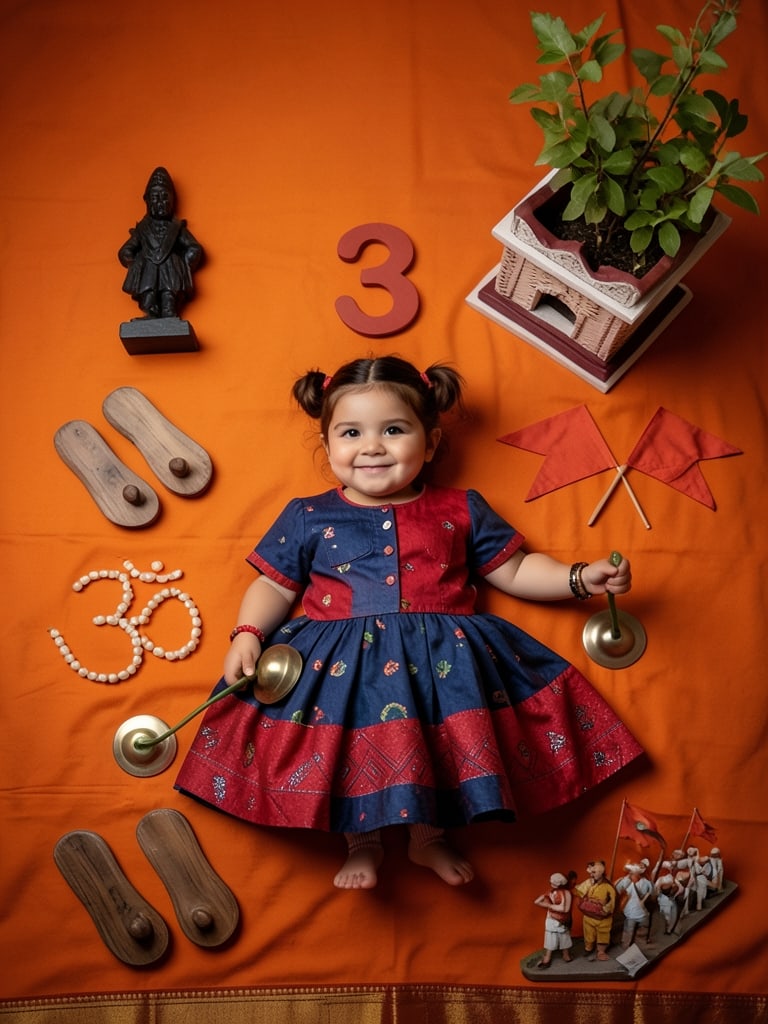 image / ChatGPT
Studio tools
AI Optimizer
Improve, shorten, expand or retarget this prompt for another image or video model. Every result is saved as a new version — the original is never overwritten.
Improve prompt
Produces optimized, concise, detailed, beginner and model-specific versions.
Generate variations
Professional, creative, cinematic, minimal and advanced.
Prompt history
- v1 · Original1 day ago