PromptBehind

Ashadhi Ekadashi Photoshoot With Vitthal Rukmini Traditional Wari Theme

Portrait Photography prompt: create image STRICT FACE IDENTITY PRESERVATION DNA Use the uploaded image exclusively as the facial identity reference for the woman. Preserve her…

Prompt
create image
STRICT FACE IDENTITY PRESERVATION DNA
Use the uploaded image exclusively as the facial identity reference for the woman. Preserve her exact facial identity, including head shape, forehead proportions, natural hairline, eyebrows, eyelids, eye shape and spacing, nose structure, lips, cheeks, jawline, chin, ears, skin tone, natural skin texture, facial symmetry, smile characteristics, expression characteristics, and apparent age. Do not beautify, stylize, reshape, slim, age, or modify any facial feature. The uploaded image must be used only for exact facial identity preservation. Reconstruct the outfit, jewellery, hairstyle arrangement, body mechanics, pose, Vitthal-Rukmini murtis, environment, typography, lighting, camera geometry, and composition entirely from the detailed instructions below.
SUBJECT AND CONCEPT DNA
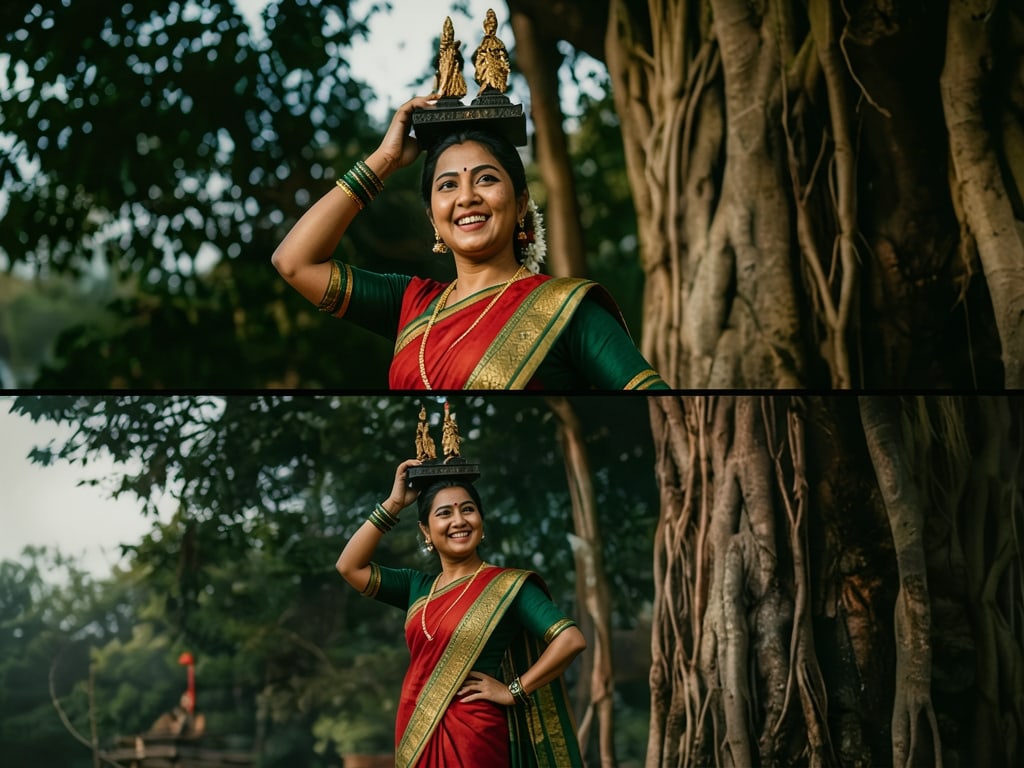
Create an ultra-realistic vertical outdoor Maharashtrian devotional portrait of a young woman standing confidently beneath a massive old banyan tree while balancing a small paired black-stone murti set of Lord Vitthal and Goddess Rukmini on the crown of her head. The woman should appear joyful and culturally elegant, combining a traditional Maharashtrian saree, green glass bangles, traditional jewellery, and a dynamic asymmetrical standing pose.
The defining visual story is the relationship between the woman’s upward sideward gaze and the sacred Vitthal-Rukmini murtis balanced above her head. Her raised hand should physically stabilize the murti pedestal while her opposite hand rests confidently at her waist. The composition should feel like a naturally captured festive devotional portrait rather than a formal studio photograph.
OUTFIT DNA
Dress the woman in a vibrant traditional Maharashtrian saree featuring a rich vermilion-red main body with a broad contrasting green and antique-gold woven border. The saree should have authentic silk-cotton texture with subtle natural creasing and realistic fabric weight.
Create a prominent red pallu crossing diagonally from her lower waist upward across the front of her torso toward her left shoulder. The pallu border should feature a muted olive-green outer edge and an antique-gold inner woven band decorated with repeating circular traditional motifs.
Allow the pallu to continue behind her shoulder as a secondary green-and-gold striped fabric section, descending vertically along her back and becoming visible on the camera-right side of her body.
Pair the saree with a fitted deep forest-green blouse featuring elbow-length sleeves. The blouse should have a simple traditional silhouette with realistic cotton-silk texture and no excessive embroidery.
The saree must wrap naturally around her waist and lower body with authentic pleating and fabric tension corresponding accurately to her standing pose.
JEWELLERY AND CULTURAL STYLING DNA
Style the woman with traditional Maharashtrian jewellery appropriate for a festive devotional portrait. Add a delicate gold necklace with a longer fine gold chain descending over the saree, traditional small gold earrings, and a prominent Maharashtrian nath nose ornament with delicate pearl and red decorative detailing.
Place a small understated bindi at the center of her forehead.
Cover both wrists with multiple traditional dark-green glass bangles mixed with a few narrow antique-gold bangles. The raised arm should display a particularly dense arrangement of green bangles extending several centimetres above the wrist.
Add subtle rings without excessive ornamentation.
Style her dark hair neatly pulled backward into a traditional low bun. Decorate the back of the bun with a small arrangement of fresh white jasmine flowers and tiny red floral accents. Keep the hairstyle tidy while preserving a few natural fine hair strands around the forehead and temples.
EXACT BODY POSITION DNA
Position the woman slightly left of the vertical centerline, with the center of her torso approximately 45–47% across the image width.
Her visible body should extend from approximately 42% down from the top edge to slightly beyond the bottom frame, producing a medium-long portrait crop that includes her head, torso, waist, hips, and part of the lower saree while allowing the lower legs to remain outside the composition.
Rotate her torso approximately 20–25 degrees toward camera-right, creating a gentle three-quarter body orientation.
Her hips should shift subtly toward camera-right while her upper torso counterbalances slightly toward camera-left, creating a natural soft S-curve through the body.
Keep her shoulders relaxed but asymmetrical because one arm is raised above shoulder level.
Her chest should remain naturally open and upright, communicating confidence and celebratory energy.
RAISED ARM AND HAND POSITION DNA
Raise the woman’s right arm diagonally upward toward the top-left portion of the frame.
The upper arm should extend outward from the shoulder at approximately 55–65 degrees, while the elbow bends approximately 90–105 degrees, bringing the forearm upward toward the head.
Position the right hand horizontally against the left side of the rectangular murti pedestal resting on her head.
Her palm should lightly support and stabilize the pedestal from the side rather than lifting the entire object above her head.
The fingers should naturally curve around the front-left edge of the pedestal, with the thumb positioned along the opposite edge. Keep every finger anatomically accurate and clearly separated.
The bright red nail polish should remain visible on the raised hand.
The wrist should bend only slightly, maintaining realistic alignment between the forearm and palm.
WAIST HAND AND ARM POSITION DNA
Bend the woman’s left arm outward and place her left hand firmly but gracefully against her left waist or upper hip.
The elbow should project diagonally toward camera-right, forming a strong triangular negative space between the inner arm and torso.
The wrist should bend naturally inward toward the waist.
Allow the fingers to rest across the saree fabric with a relaxed but confident spread.
The layered green glass bangles on this wrist should gather naturally toward the lower forearm due to gravity.
This hand-on-waist gesture should create the confident lower counterpoint to the raised supporting arm.
HEAD, NECK AND GAZE DNA
Keep the woman’s neck elongated naturally while her head remains directly beneath the center of the murti pedestal.
Tilt her head approximately 5–8 degrees toward her left shoulder, while rotating her face approximately 20–25 degrees toward camera-right.
Direct her eyes upward and sideways toward camera-right, approximately 20–30 degrees above the horizontal eye line, as though joyfully glancing toward the sacred figures balanced above her.
Her eyes should not look directly into the camera.
Preserve a broad, genuine smile with naturally visible teeth and subtle cheek elevation.
The expression should communicate happiness, devotion, pride, and playful cultural celebration.
VITTHAL-RUKMINI MURTI DNA
Place a paired set of small traditional black-stone murtis of Lord Vitthal and Goddess Rukmini directly above the woman’s head.
Both murtis should stand upright on a single rectangular charcoal-black stone pedestal measuring approximately 28–32 centimetres wide, 10–12 centimetres deep, and 5–7 centimetres thick.
Lord Vitthal should stand on the viewer’s left side of the pedestal and be slightly taller, approximately 30–35 centimetres high, while Goddess Rukmini stands immediately beside him on the viewer’s right at approximately 27–32 centimetres high.
Lord Vitthal should display the recognizable traditional upright hands-at-waist posture, tall carved crown, layered sculptural garments, and a small yellow devotional forehead marking.
Goddess Rukmini should have a complementary upright traditional sculptural posture, tall crown, carved drapery, and a subtle red forehead marking.
Both figures should have authentic matte black basalt-stone texture with finely carved details rather than glossy plastic surfaces.
Decorate each murti with a very small delicate garland made from alternating red and white flowers. Keep the garlands proportional to the miniature statues.
The pedestal must rest horizontally and physically convincingly on the crown of the woman’s head. Its center of gravity should align with the center of her skull so the arrangement appears realistically balanced.
Her raised right hand provides additional stabilization from the side.
MURTI-TO-SUBJECT SCALE DNA
The complete pedestal and both murtis together should measure approximately 1.3–1.5 times the visible height of the woman’s head, from chin to crown.
The murti arrangement should be prominent enough to function as a major devotional focal point but must not become unrealistically oversized.
Maintain approximately 2–4 centimetres of visually believable contact between the pedestal base and the top of the woman’s hair.
The figures must remain completely visible against the softly blurred green background.
Do not allow the murtis to merge with the Marathi typography positioned above them.
BANYAN TREE ENVIRONMENT DNA
Create an outdoor location dominated by an enormous mature banyan tree in the middle and background.
The banyan tree should feature a massive twisting trunk with thick sculptural aerial roots descending and merging into the ground. Create complex intertwined woody forms with realistic aged bark texture in muted brown-grey tones.
Position the main trunk behind the woman toward camera-right, allowing large twisting roots and branches to form organic diagonal lines throughout the background.
Fill the upper background with dense green foliage, producing naturally mottled light and soft green bokeh.
The environment should resemble a peaceful public temple courtyard or traditional devotional gathering space built around an ancient sacred tree.
BACKGROUND ARCHITECTURE DNA
Along the lower-left background, create a low white boundary wall with repeating vertical posts extending diagonally away from the camera.
Allow a distant pale building with subtle blue-grey vertical architectural sections to appear softly blurred behind the tree foliage on camera-left.
On the far upper-right edge, include a small partial saffron-orange triangular or rectangular devotional flag entering the frame.
Keep all architecture secondary and softly defocused so the woman and murtis remain dominant.
Do not add crowds or distracting people.
CAMERA ANGLE DNA
Photograph from a nearly straight-on frontal position with the camera positioned approximately at the woman’s upper-abdomen to lower-chest height, around 105–120 centimetres above ground level.
Angle the camera upward very subtly by approximately 3–5 degrees so the composition comfortably includes the murtis above her head without creating exaggerated low-angle distortion.
The woman’s torso should retain natural proportions.
Keep vertical architectural lines stable and avoid extreme perspective distortion.
The slight upward perspective should reinforce the devotional prominence of the murtis while preserving the woman’s face as the primary human focal point.
CAMERA-TO-SUBJECT DISTANCE DNA
Position the camera approximately 3.5–4.5 metres from the woman.
This distance is critical for achieving the medium-long environmental portrait framing in which the woman fills approximately 65–72% of the frame height from the murtis to the lower crop, while still preserving sufficient banyan-tree context.
Do not position the camera too close. Avoid wide-angle facial distortion or exaggerated arm proportions.
The murti pedestal, raised hand, face, torso, and waist-hand pose must all fit comfortably inside the frame.
LENS AND DEPTH OF FIELD DNA
Use a professional full-frame camera with an approximately 70–85mm portrait lens.
Photograph at approximately f/2.8–f/3.5, ISO 100–400, and a shutter speed of approximately 1/320 second.
Keep the woman’s face, raised hand, saree details, jewellery, and Vitthal-Rukmini murtis sharpl

How to use

Paste the prompt into Stable Diffusion. Swap the subject and keep the lighting, lens and style details for a consistent look.

Use case

Portrait Photography — woman, approximately
Preview rendered from “Ashadhi Ekadashi Photoshoot With Vitthal Rukmini Traditional Wari Theme”
image / ChatGPT
Studio tools

AI Optimizer

Improve, shorten, expand or retarget this prompt for another image or video model. Every result is saved as a new version — the original is never overwritten.

Improve prompt

Produces optimized, concise, detailed, beginner and model-specific versions.

Generate variations

Professional, creative, cinematic, minimal and advanced.

Prompt history

  • v1 · Original1 day ago
More like this

Related prompts

Preview of Couple posing together in a warm brown studio
image / Gemini
Couples & EngagementGemini · ChatGPT

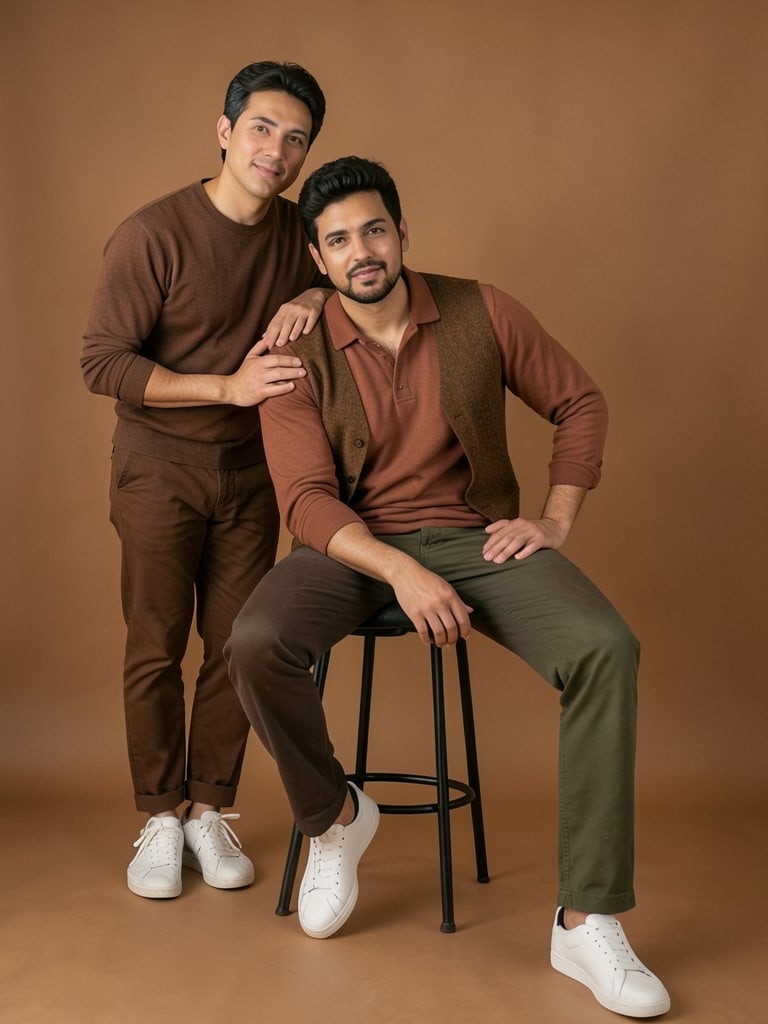
Couple posing together in a warm brown studio

STRICT FACE IDENTITY COPY DNA Create image using the uploaded image only as the facial identity reference for the man and woman. Preserve both faces exactly, including head shape, facial proportions, forehead, hairline, eyebrows, eyes, eyelids, nose, cheeks, lips, chin, jawline, ears, skin tone, natural skin texture, apparent age, facial symmetry, and every recognizable identity-defining characteristic. Do not beautify, reshape, smooth, stylize, age, de-age, or modify either face. Use the uploaded image only for facial identity; do not copy its clothing, pose, background, props, or lighting. VISUAL RECONSTRUCTION DNA Create a photorealistic premium studio couple portrait with a warm contemporary editorial aesthetic. Reconstruct a similar intimate two-person studio composition: the man seated confidently on a tall minimalist black metal stool while the woman stands closely behind and slightly to his left, leaning affectionately toward him. The result should feel stylish, natural, modern, and professionally photographed. SUBJECT & COMPOSITION DNA Use a vertical 9:16 composition. Place the man centrally in the lower-middle frame, seated on the stool with his legs naturally separated and extending toward the lower corners. Place the woman behind him, slightly toward camera-left, creating a layered composition with her upper body visible beside and above his head. Keep both subjects fully visible from head to shoes. Maintain balanced negative space around them while keeping the couple as the dominant visual focus. POSE & BODY LANGUAGE DNA The man sits upright but comfortably on a tall black metal stool. One hand rests naturally on his thigh while the other hand rests near his waist/hip, creating a relaxed confident posture. His shoulders remain natural and his legs extend comfortably forward. The woman stands behind the stool and leans gently toward the man. One arm rests affectionately across or near his shoulder while her other hand rests naturally near his upper arm. She tilts her head slightly toward him and smiles warmly toward the camera. Their interaction should communicate closeness, affection, confidence, and playful companionship without looking overly posed. Maintain realistic anatomy, natural hands, correct fingers, believable body proportions, and physically accurate contact between both subjects. OUTFIT DNA — WOMAN Dress the woman in a fitted white short-sleeve crew-neck T-shirt layered under a warm camel-brown knitted sleeveless sweater vest with subtle knit texture. Pair it with olive-green slim-fit trousers and clean white casual sneakers. Keep her styling modern, minimal, fashionable, and understated. Give her naturally styled shoulder-length to medium-length light brown/blonde hair, softly waved with realistic individual strands and natural volume. OUTFIT DNA — MAN Dress the man in a muted terracotta-brown long-sleeve polo-style shirt with a soft cotton texture and natural folds. Pair it with relaxed dark taupe-brown trousers and clean white low-top sneakers. Keep his styling contemporary, masculine, minimal, and polished. SET & BACKGROUND DNA Create a seamless warm caramel-tan studio backdrop and matching floor, producing a monochromatic premium editorial environment. The background should have extremely subtle tonal variation and a soft gradient, with the floor blending naturally into the background without a visible horizon line. Include only the minimal black metal stool as a functional prop. No furniture, plants, decorations, text, logos, watermarks, equipment, or unnecessary objects. LIGHTING DNA Use soft warm studio illumination with gentle frontal and slightly side-oriented light falling naturally across both faces and clothing. Create smooth highlights on the forehead, cheeks, nose, and hair while maintaining soft dimensional shadows beneath the chin, arms, clothing folds, and stool. Add a subtle warm ambient glow consistent with the caramel studio environment. Keep the lighting clean, flattering, balanced, and premium, with moderate contrast and realistic skin rendering. Do not show any softboxes, reflectors, lamps, diffusers, light stands, or studio equipment. Lighting describes only the resulting illumination, highlights, shadows, contrast, and color atmosphere. CAMERA & OPTICAL DNA Use a professional full-frame portrait camera with an approximately 50–70mm lens at f/4, positioned at approximately chest-to-eye level and facing the couple almost directly. Maintain realistic perspective and enough depth of field to keep both faces, clothing, stool, and shoes clearly recognizable while allowing the background to remain subtly softer. COLOUR & MOOD DNA Use a refined palette of camel tan, terracotta brown, olive green, white, dark brown, and black. Keep colors warm, sophisticated, muted, and naturally coordinated. The emotional mood should be modern, affectionate, confident, stylish, relaxed, and editorial. PHOTOREALISM DNA Render as 4K Ultra HD, ultra-realistic professional photography with authentic skin pores, natural facial texture, individual hair strands, realistic cotton and knit fibers, accurate fabric folds, natural shoe materials, physically correct shadows, and believable studio-floor contact. Avoid plastic skin, excessive beauty retouching, facial alterations, distorted anatomy, extra fingers, malformed hands, unrealistic limbs, floating feet, excessive HDR, oversaturation, artificial glow, cartoon styling, or an obvious AI-generated appearance. FINAL OUTPUT DNA Create a polished warm-toned studio couple portrait featuring the identity-preserved man seated confidently on a minimalist black metal stool and the identity-preserved woman leaning affectionately beside him from behind. Use the coordinated camel, white, olive, terracotta, and brown wardrobe, seamless caramel studio environment, soft warm illumination, natural shadows, realistic anatomy, and premium contemporary editorial photography aesthetics.

25 0 0
3h
Preview of Ashadhi Ekadashi Women Photoshoot with Lord Vitthal Temple Theme
image / Gemini
Photo Edits & TrendsGemini · ChatGPT

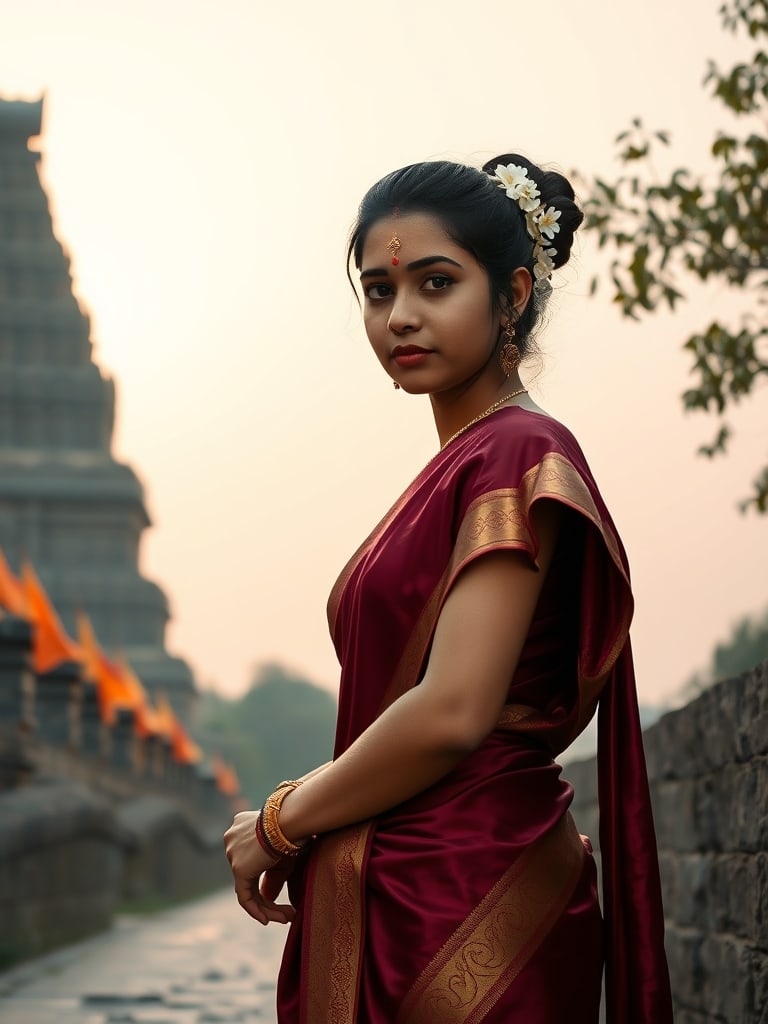
Ashadhi Ekadashi Women Photoshoot with Lord Vitthal Temple Theme

create image STRICT FACE IDENTITY PRESERVATION DNA Use the uploaded image exclusively as the facial identity reference for the woman. Preserve her exact facial identity, including head shape, forehead proportions, natural hairline, eyebrow shape, eyelids, eye size and spacing, nose bridge and structure, lips, cheeks, jawline, chin, ears, skin tone, natural skin texture, facial symmetry, smile characteristics, expression, and apparent age. Do not beautify, stylize, reshape, slim, age, or modify any facial feature. The uploaded image must be used only for exact facial identity preservation. Reconstruct the outfit, hairstyle arrangement, jewellery, body pose, Lord Vitthal statue, temple environment, lighting, camera perspective, and overall composition entirely from the detailed instructions below. SUBJECT AND CONCEPT DNA Create an ultra-realistic devotional cinematic portrait of a young Maharashtrian woman standing confidently on a narrow ancient stone temple pathway, with a monumental black-stone statue of Lord Vitthal rising directly behind her. The woman should be the primary human subject in the foreground, while the enormous Vitthal statue creates a powerful spiritual presence immediately behind her. The visual story should represent devotion to Lord Vitthal and the sacred atmosphere of Pandharpur. Create a majestic yet believable photographic scene where warm golden sunrise light radiates from directly behind the crown and head of the Vitthal statue, producing naturally visible volumetric sun rays. Ancient temple architecture, saffron devotional flags, lush pathway vegetation, and warm morning haze should extend into the background. OUTFIT DNA Dress the woman in an authentic traditional deep wine-red to rich maroon Maharashtrian silk saree. The saree should feature a broad antique-gold zari border with intricate traditional woven motifs and subtle fine red detailing. Drape the saree in an elegant traditional Maharashtrian-inspired style, fitted neatly around the waist and hips while allowing realistic pleats to descend vertically toward the lower body. The pallu should cross diagonally from the lower waist across the torso and over the left shoulder, creating a clearly visible broad golden zari border. Pair the saree with a fitted short-sleeved deep maroon blouse featuring broad antique-gold woven sleeve borders. The fabric should display realistic silk weight, fine weave, natural folds, slight compression around the waist, subtle highlights from the sunrise, and physically accurate draping. Avoid artificial plastic-like fabric or excessively saturated red. JEWELLERY AND CULTURAL STYLING DNA Style the woman with elegant traditional Maharashtrian gold jewellery. Add a long layered gold necklace descending toward the upper abdomen with a prominent traditional pendant, complemented by a shorter delicate gold chain near the neckline. Add traditional gold earrings, subtle gold rings, and a delicate traditional gold waist belt encircling the saree at the natural waist. Place multiple dark green glass bangles on both wrists, arranged densely but naturally, with a few subtle gold bangles mixed between them. Keep the jewellery culturally authentic and refined rather than excessively bridal. Her hair should be long, thick, dark, and naturally wavy, styled with a deep side part. Sweep most of the hair over her right shoulder so that soft waves descend across the right side of her chest. Keep the opposite side relatively open to reveal the jewellery and saree drape. EXACT BODY POSITION AND STANCE DNA Position the woman centrally in the lower-middle foreground, with the center of her body approximately 48–50% across the image width. Her body should face almost directly toward the camera with only a subtle 5-degree rotation toward camera-left. She should stand upright with confident but relaxed posture. Keep the spine straight, shoulders gently pulled back, and chest naturally open. Place both hands firmly but gracefully on the waist, creating a symmetrical confident stance. Her elbows should extend diagonally outward on both sides, approximately 30–40 degrees away from the torso, creating a strong triangular body silhouette. Position her right hand against the right side of her waist with fingers naturally spread and gently curved. Mirror the posture with her left hand resting on the opposite waist. The hands should not appear stiff or clenched. Maintain anatomically accurate fingers and wrists. Keep the hips naturally balanced with a very subtle weight shift toward one leg rather than an exaggerated fashion pose. HEAD, FACE, GAZE AND EXPRESSION DNA Keep the woman’s head nearly upright with a subtle 5–8 degree tilt toward her right shoulder. Her face should turn directly toward the camera. Her eyes should establish clear, warm eye contact with the camera. Preserve a broad, genuine, joyful smile matching her exact facial identity and natural smile characteristics. The expression should communicate happiness, devotion, confidence, and warmth without appearing exaggerated or artificially posed. LORD VITTHAL STATUE DNA Create a monumental, highly detailed traditional black-stone statue of Lord Vitthal positioned directly behind the woman. The statue should rise approximately 2.5–3 times the visible height of the woman, creating a powerful sense of spiritual scale. Lord Vitthal must stand in the iconic traditional pose with both arms bent outward and hands firmly positioned at the waist. Create a tall, intricately carved cylindrical crown with authentic temple-sculpture detailing. Place the distinctive bright yellow-orange Vaishnav devotional tilak prominently at the center of the statue’s forehead. The statue should have authentic dark black basalt or polished black-stone texture with subtle weathering and finely carved jewellery, necklaces, arm ornaments, shoulder decorations, and traditional sculptural garments. Position the statue directly behind the woman but offset its torso slightly toward camera-left so that the woman’s head does not completely obscure the statue’s face. The statue’s head and crown should remain completely visible above the woman’s head. The woman’s head should overlap only the lower central torso region of the statue, preserving clear recognition of Lord Vitthal. SCALE AND SPATIAL RELATIONSHIP DNA The woman should occupy approximately 55–65% of the total image height, extending from near the bottom edge toward the middle-upper region. The Vitthal statue should begin behind her at ground level but extend dramatically upward, with the crown reaching approximately 8–12% below the top edge. Create enough physical separation between the woman and statue to preserve realistic depth. The woman should stand approximately 3–4 metres in front of the statue. Despite this separation, use telephoto compression so the statue appears visually close and imposing behind her. The woman remains the sharpest foreground subject, while the statue should retain substantial detail and recognizable facial and sculptural features. TEMPLE PATHWAY DNA Place the woman on an old narrow stone-paved pathway leading through a sacred temple environment. The pathway should begin at the bottom center of the frame and extend behind the woman toward the temple complex. Create irregular rectangular stone paving with subtle age, weathering, fine cracks, and a slightly damp surface that reflects small amounts of warm golden sunlight. The path should feel authentic, ancient, and naturally used rather than perfectly constructed. Add low green shrubs and leafy vegetation along both edges of the pathway, particularly visible in the lower-right foreground. Keep the vegetation naturally irregular and softly illuminated by the golden morning light. TEMPLE ARCHITECTURE DNA Create a series of ancient dark-stone Maharashtrian temple structures receding into the background, particularly along the right side of the frame. The temples should feature tall traditional shikhara towers with layered stone carvings and authentic weathered architectural surfaces. The nearest temple tower should be visible behind the right shoulder region of the Vitthal statue, with additional temple silhouettes progressively fading into atmospheric haze. Avoid fantasy palace architecture. The structures should resemble historically grounded Indian temple architecture associated with Maharashtra and the devotional atmosphere of Pandharpur. SAFFRON FLAG DNA Place several saffron-orange triangular devotional flags throughout the middle and distant background. Mount the flags on slender poles positioned along the temple pathway and around the temple structures. Allow the flags to flutter gently in a light morning breeze. Keep the flags relatively small and secondary within the composition. Their saturated saffron tone should create subtle warm accents against the stone architecture and golden atmospheric haze. SUNRISE AND BACKLIGHT DNA Position the rising sun directly behind the upper head and crown of the Lord Vitthal statue. Create intense but natural warm golden sunrise illumination forming a radiant halo around the crown. Generate multiple visible volumetric sun rays spreading upward and diagonally outward from behind the statue’s head, producing a symmetrical spiritual radiance without looking like artificial graphic lines. The brightest light should remain concentrated behind the statue rather than directly overexposing the woman’s face. Create warm golden rim lighting along the statue’s crown, shoulders, and carved edges. Add subtle warm rim light along the woman’s hair, shoulders, and saree borders. Use soft frontal fill illumination on the woman’s face so her facial identity remains perfectly visible despite the strong backlight. ATMOSPHERIC DNA Create a warm early-morning atmosphere with delicate golden mist suspended throughout the temple pathway. The distant architecture should gradually soften into atmospheric perspective. Add extremely subtle floating dust particles illuminated by the sunlight. The environment should feel sacred and cinematic while remaining photorealistic. Avoid excessive fantasy effects, glowing particles, fire, supernatural flames, or unrealistic celestial imagery. CAMERA ANGLE DNA Photograph from approximately the woman’s mid-torso to upper-waist height, positioning the camera approximately 100–115 centimetres above the pathway surface. Use a very subtle low-angle perspective of approximately 3–5 degrees upward, allowing both the woman and monumental Vitthal statue to appear commanding while maintaining natural human proportions. Keep the camera horizontally centered with the woman. Do not use an extreme ground-level angle and do not use a high-angle perspective. Maintain straight architectural verticals and realistic perspective. CAMERA-TO-SUBJECT DISTANCE DNA Position the camera approximately 6–8 metres from the woman. This distance should create a three-quarter to nearly full-body environmental portrait while retaining sufficient surrounding temple context. The woman should remain prominently framed but should not become an extreme close-up. Position the Vitthal statue approximately 3–4 metres behind the woman, making the total camera-to-statue distance approximately 9–12 metres. Use optical compression to visually connect the woman and statue while preserving genuine physical depth. LENS AND DEPTH OF FIELD DNA Use a professional full-frame camera with an approximately 70–85mm portrait telephoto lens. Photograph at approximately f/4–f/5.6, ISO 100–200, and a shutter speed suitable for sharp handheld portrait photography. Keep the woman’s face, body, jewellery, and saree sharply focused. Maintain the Lord Vitthal statue in moderately sharp focus so its face, crown, iconic pose, and forehead tilak remain clearly recognizable. Allow the distant temple towers, saffron flags, and vegetation to transition gradually into soft atmospheric blur. Avoid extreme shallow depth of field that would erase important d

25 0 0
2h
Preview of Elegant Family Photo Pose for Studio Portraits
image / Gemini
Baby & KidsGemini · ChatGPT

Elegant Family Photo Pose for Studio Portraits

create image STRICT FACE IDENTITY PRESERVATION DNA Use the uploaded image strictly as the facial identity reference for the father, mother, and daughter. Preserve every facial characteristic exactly, including head shape, facial proportions, forehead, hairline, hairstyle, eyebrows, eyelids, eye shape, eye spacing, nose, lips, smile, jawline, chin, ears, beard density, skin tone, natural skin texture, facial symmetry, and apparent age. Preserve the little girl’s innocent smile, expressive eyes, rounded cheeks, and toddler proportions exactly as they appear. Do not beautify, stylize, slim the face, enlarge the eyes, sharpen facial features, smooth skin, change complexion, or modify expressions. Everything except the faces must be reconstructed through the following instructions. SUBJECT DNA Create a premium luxury family studio portrait where the father and mother sit comfortably back-to-back on a seamless white cyclorama floor while their daughter sits happily between them in the foreground. The image should communicate warmth, happiness, trust, and playful family bonding rather than a formal studio pose. Every expression should feel genuine, spontaneous, and emotionally connected. OUTFIT DNA The father wears a matte charcoal-black full-sleeve premium cotton shirt with subtle natural wrinkles and light ash-grey tailored trousers. The mother wears an elegant black embroidered designer saree featuring delicate floral threadwork in muted crimson and silver tones with a sleeveless matching blouse, oxidized earrings, a bracelet, wedding ring, and neatly tied ponytail. The little girl wears a luxurious dusty-mauve princess gown featuring embroidered floral detailing, oversized sculpted satin bow sleeves, layered satin and soft tulle skirt, and white sneakers with textured rubber soles visible toward the camera. POSITION & BODY LANGUAGE DNA Seat both parents directly on the seamless floor with their backs gently touching, allowing each person’s upper back to naturally support the other. The father sits on the left side with approximately seventy-five percent of his body weight resting on the floor through his pelvis. Both legs extend diagonally toward camera-left with relaxed knees. His spine remains naturally upright before leaning backward approximately six degrees until it comfortably contacts the mother’s back. His shoulders stay relaxed while his head rotates gently toward the camera, producing a broad, genuine smile. The mother mirrors the composition on the opposite side. She sits with her legs folded comfortably toward camera-right while approximately seventy-five percent of her body weight rests evenly through her seated position. Her spine remains elongated before leaning softly backward against the father’s upper back. Her shoulders stay relaxed and naturally lowered while her head rotates gently toward the camera with a joyful smile. Position the daughter centrally in front of both parents, approximately sixty centimetres closer to the camera than the adults. She sits with both legs stretched naturally toward the camera, knees relaxed, feet slightly apart, and sneaker soles clearly visible. Around eighty-five percent of her weight rests comfortably through her seated hips. Her torso remains upright with a slight five-degree forward lean created by excitement. Her shoulders remain relaxed while her head turns naturally toward camera-left as she laughs openly. Her posture should radiate playful innocence and complete emotional comfort. The father’s left arm extends naturally behind his body for balance while his right forearm rests comfortably across his bent knee. The mother’s hands rest gracefully across her lap with naturally relaxed fingers. The child’s right palm lightly touches the floor for support while her left hand rests softly across her gown. Every finger should appear naturally relaxed without stiffness. EYE DIRECTION DNA The father and mother establish warm direct eye contact with the camera while maintaining genuine relaxed smiles. The daughter looks slightly toward camera-left while laughing naturally, creating a spontaneous lifestyle feeling rather than a perfectly synchronized pose. CAMERA DNA Capture the portrait from a low camera position approximately 60 cm above the studio floor, placing the lens almost at the daughter’s seated eye level. Use a perfectly frontal camera orientation with only a subtle two-degree upward inclination, naturally emphasizing the child while maintaining flattering proportions for the seated parents. Position the camera approximately 4.2 metres from the family so the entire seated arrangement fills around sixty-five percent of the frame while preserving generous white negative space above them. The optical centre should align with the daughter’s upper torso, making her the emotional centre of the composition. LENS DNA Photograph using a professional full-frame camera with a 105mm prime portrait lens at f/3.2, creating elegant perspective compression, exceptional facial sharpness across all three subjects, natural body proportions, and smooth separation from the background without excessive blur. LIGHTING DNA Illuminate the portrait with a bright high-key luxury studio aesthetic. Overall exposure should remain clean, balanced, and evenly distributed across the frame without harsh highlights or deep shadows. Light should wrap gently around every face, producing extremely soft facial modelling with delicate feathered shadows beneath the chin, around clothing folds, and where the bodies naturally overlap. Highlights should appear smooth and creamy across the forehead, cheeks, nose bridge, lips, hair, and fabric without clipping or glossy reflections. Maintain a neutral daylight colour balance around 5500K, preserving natural skin tones, rich fabric colours, and clean whites. Contrast should remain low to medium with wide dynamic range, ensuring visible detail in the father’s black shirt, the mother’s embroidered saree, and the daughter’s gown while the white background remains bright with a subtle tonal gradient instead of appearing completely flat. The overall mood should feel joyful, elegant, soft, welcoming, and premium. BOKEH & VISUAL DEPTH DNA The seamless white background should transition gradually into soft tonal gradients with no visible texture. The foreground begins with the daughter’s flowing gown and visible sneaker soles, establishing depth immediately. The daughter forms the primary visual layer with crisp facial detail and realistic fabric texture. The seated parents create the secondary layer through their overlapping silhouettes, while the seamless studio backdrop forms the final background layer. Subject separation should remain strong while preserving the clean minimalist studio aesthetic. ENVIRONMENT DNA Create a premium commercial photography studio featuring a seamless white cyclorama floor and wall with no visible corners or distractions. The environment should remain completely minimal so the family’s interaction becomes the only visual focus. STORYTELLING DNA The portrait celebrates the joy of family through playful simplicity. The parents symbolize mutual support by sitting comfortably back-to-back, while their daughter becomes the emotional heart of the composition through her uninhibited laughter. The image should feel like a genuine family memory filled with warmth, security, companionship, and unconditional love rather than a posed studio photograph. COMPOSITION DNA Build the composition around a balanced triangular structure. The daughter occupies the foreground centre as the primary focal point, while both parents rise symmetrically behind her, forming a stable visual frame. Maintain generous negative space above the family to create a premium editorial appearance. Every leading line created by posture, gaze, and body alignment should naturally direct attention toward the joyful interaction shared between all three family members. FINAL OUTPUT Create an ultra-realistic 4K Ultra HD luxury family portrait with authentic skin rendering, realistic hair strands, premium textile simulation, natural body mechanics, elegant high-key lighting, soft tonal transitions, realistic depth, refined editorial aesthetics, emotionally rich storytelling, masterpiece-quality commercial family photography, and a vertical 9:16 composition.

25 0 0
2h
Preview of Traditional Tulsi Vrindavan Ashadhi Ekadashi Women Photoshoot
image / Gemini
Photo Edits & TrendsGemini · ChatGPT

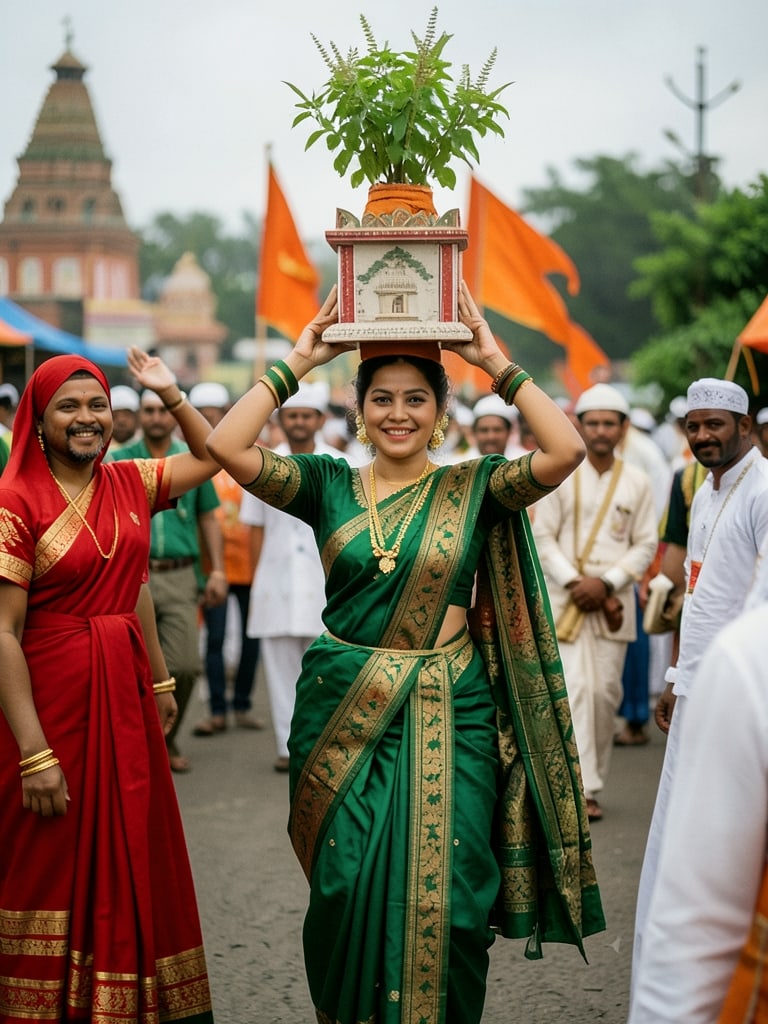
Traditional Tulsi Vrindavan Ashadhi Ekadashi Women Photoshoot

create image STRICT FACE IDENTITY PRESERVATION DNA Use the uploaded image exclusively as the facial identity reference for the woman. Preserve the exact facial identity, including the head shape, forehead proportions, hairline, eyebrows, eyelids, eye spacing, eye shape, nose structure, cheeks, lips, jawline, chin, ears, skin tone, skin texture, facial symmetry, smile characteristics, and apparent age. Preserve her confident devotional smile, bright expressive eyes, and naturally joyful facial expression exactly as shown. Do not beautify, stylize, enlarge the eyes, reshape facial proportions, sharpen facial contours, modify complexion, alter age, or apply beauty-filter effects. The uploaded image serves only as the facial identity reference while every costume, body posture, ritual object, procession environment, and photographic relationship is reconstructed entirely through descriptive instructions. SUBJECT DNA Create an ultra-realistic premium documentary-style portrait capturing a young Maharashtrian Warkari woman proudly participating in the Ashadhi Wari pilgrimage to Pandharpur. She walks joyfully within the Dindi procession while balancing a beautifully decorated Tulsi Vrindavan upon her head. The portrait should communicate devotion, strength, humility, and celebration simultaneously, making the viewer feel present inside the sacred Wari rather than observing a staged photograph. OUTFIT DNA Dress the woman in a luxurious traditional Maharashtrian Nauvari Paithani saree draped in authentic Brahmani style. The saree body should be rich vermilion-red silk with realistic woven texture, while the broad borders feature antique gold zari interwoven with traditional peacock and lotus motifs framed by deep emerald-green piping. The pallu flows naturally behind the shoulders with physically accurate silk folds created by walking. The blouse should be deep forest-green silk with puff sleeves, richly woven Paithani motifs, antique gold zari sleeve borders, and realistic silk sheen. Adorn her with a traditional Maharashtrian bridal-style gold necklace layered with a longer Lakshmi haar, matching gold jhumka earrings, traditional Maharashtrian nose pin, gold waist belt beneath the saree folds, multiple green glass bangles mixed with antique gold bangles, traditional finger rings, and fresh white jasmine flowers woven around a neatly tied bun. Apply a small black bindi between the eyebrows while preserving exact facial proportions. RITUAL OBJECT DNA Balance a beautifully handcrafted Tulsi Vrindavan upon the woman’s head. The Tulsi Vrindavan should be constructed from traditional carved white stone with realistic architectural detailing, hand-painted red and green borders, miniature temple carvings, and premium aged stone texture. A lush healthy Tulsi plant emerges naturally from the centre with vibrant green leaves, fresh flowering spikes, and realistic botanical structure. Place a folded saffron cloth ring beneath the Tulsi Vrindavan to stabilize it naturally upon the head. Behind the woman, several saffron Warkari flags wave naturally above the Dindi procession. POSITION DNA The woman walks confidently toward the camera. Approximately 72% of the body weight transfers naturally through the leading right leg while the left leg advances forward to complete the next step. The pelvis rotates subtly with authentic walking mechanics. The torso remains upright with approximately 4° forward inclination generated by natural walking momentum. Both shoulders remain level while supporting the balanced Tulsi Vrindavan. The head remains perfectly vertical with almost no lateral tilt, demonstrating experienced balance during pilgrimage. HAND POSITION DNA Both elbows lift naturally outward to support the Tulsi Vrindavan. Each forearm bends approximately 105 degrees. The palms gently stabilize opposite sides of the Tulsi pedestal without gripping tightly. The fingers remain naturally spread across the stone surface with anatomically correct curvature. Visible muscle tension should remain minimal, communicating effortless balance developed through devotional practice. BODY LANGUAGE DNA The entire posture expresses confidence, devotion, and joyful participation in the sacred pilgrimage. The upright spine, relaxed shoulders, balanced head position, gentle smile, and rhythmic walking mechanics should communicate that carrying the Tulsi Vrindavan is an honour rather than a burden. Every movement should remain anatomically accurate and naturally elegant. EYE DIRECTION DNA The woman looks directly toward the camera with warm, welcoming eyes and a genuine devotional smile, inviting the viewer into the spiritual atmosphere of the Wari. Natural catchlights preserve life within the eyes while maintaining emotional authenticity. CAMERA DNA Position the camera approximately 138 centimetres above the road surface, closely matching the woman’s upper chest level. Maintain a perfectly frontal camera orientation with only a two-degree upward inclination, allowing the Tulsi Vrindavan to dominate the upper composition while preserving realistic body proportions. CAMERA POSITION DNA Place the photographer approximately 4.2 metres directly in front of the walking devotee. The optical centre aligns precisely with the centre of the woman’s torso, ensuring symmetrical balance between her body, the Tulsi Vrindavan, and the background procession. CAMERA DISTANCE DNA Capture using a professional full-frame camera equipped with a 135mm premium telephoto portrait lens from approximately 4.2 metres. This focal length compresses the background procession beautifully while maintaining luxurious separation between the woman and surrounding devotees. The subject occupies approximately seventy percent of the vertical composition while preserving meaningful environmental context. CAMERA ELEVATION RELATIONSHIP DNA The slightly lowered camera position gives the viewer the perspective of another Warkari walking within the procession. The Tulsi Vrindavan rises majestically above the woman’s head while the saffron flags naturally extend beyond, reinforcing the vertical devotional hierarchy. LENS DNA Photograph using a professional full-frame camera fitted with a 135mm prime portrait lens at f/2.0. Produce exceptional facial sharpness, premium telephoto compression, luxurious subject isolation, creamy optical rendering, and physically accurate perspective. LIGHTING DNA Photograph during an overcast monsoon morning with naturally diffused daylight. Soft cloud-filtered illumination wraps evenly around the face, eliminating harsh shadows while preserving realistic skin texture. Gentle ambient reflections from surrounding devotees softly illuminate the saree and jewellery. Tiny highlights sparkle naturally across the silk fabric, gold ornaments, and Tulsi leaves without appearing artificial. BOKEH DNA Render the Dindi procession into luxurious creamy telephoto bokeh. Background devotees dressed in white Gandhi caps, saffron flags, temple structures, roadside greenery, and monsoon atmosphere gradually dissolve into elegant circular bokeh while remaining visually recognisable enough to communicate the pilgrimage setting. Maintain extremely strong subject isolation. VISUAL DEPTH DNA The foreground begins with softly blurred saffron flags and nearby pilgrims entering the lower edges of the frame. The primary subject layer consists of the woman rendered with pore-level skin detail, luxurious Paithani silk textures, premium gold jewellery, realistic Tulsi Vrindavan craftsmanship, and healthy botanical detail. The secondary layer includes softly blurred Warkari devotees carrying saffron flags and traditional instruments. The distant background fades into misty monsoon atmosphere with subtle temple architecture and mature trees dissolving into luxurious depth. ENVIRONMENT DNA Construct the authentic Pandharpur Wari pilgrimage route during Ashadhi Ekadashi. Include thousands of softly blurred Warkari devotees dressed in traditional white attire, Gandhi caps, saffron flags, devotional banners, distant temple structures, roadside greenery, monsoon sky, and naturally wet pilgrimage roads. The environment should feel vibrant, sacred, and alive without overwhelming the primary subject. STORYTELLING DNA This portrait celebrates one of the most cherished traditions of Maharashtra, where women carry the sacred Tulsi Vrindavan during the Pandharpur Wari. Every step symbolizes devotion, surrender, and unwavering faith in Lord Vitthal. The woman’s joyful smile reflects the spiritual fulfilment of walking alongside thousands of fellow devotees toward Pandharpur. The Tulsi plant represents purity, the saffron flags symbolize the Warkari movement, and the monsoon atmosphere embodies the timeless rhythm of the Ashadhi pilgrimage. Rather than appearing posed, the image should feel like a precious documentary moment preserved forever. COMPOSITION DNA Construct the composition around a strong vertical devotional hierarchy. The walking devotee occupies the central axis, the Tulsi Vrindavan crowns the composition, and the saffron flags create upward visual rhythm behind her. The telephoto compression gently merges the procession into a harmonious devotional backdrop while preserving generous negative space around the subject. Every visual pathway—from the woman’s smile, to her supporting hands, to the Tulsi plant, and finally to the waving saffron flags—should reinforce the spiritual journey toward Lord Vitthal. FINAL OUTPUT Create an ultra-realistic premium Pandharpur Wari devotional portrait in 4K Ultra HD, photographed with a professional full-frame camera using a 135mm prime portrait lens at f/2.0, featuring physically accurate optics, luxurious Maharashtrian Paithani silk textures, authentic Tulsi Vrindavan craftsmanship, realistic botanical details, premium gold jewellery, creamy telephoto bokeh, monsoon pilgrimage atmosphere, emotionally immersive storytelling, documentary-style fine-art devotional photography, and a 9:16 vertical composition.

25 0 0
2h
Preview of Elegant Ashadhi Ekadashi Women Photoshoot with Lord Vitthal Idol
image / Gemini
Photo Edits & TrendsGemini · ChatGPT

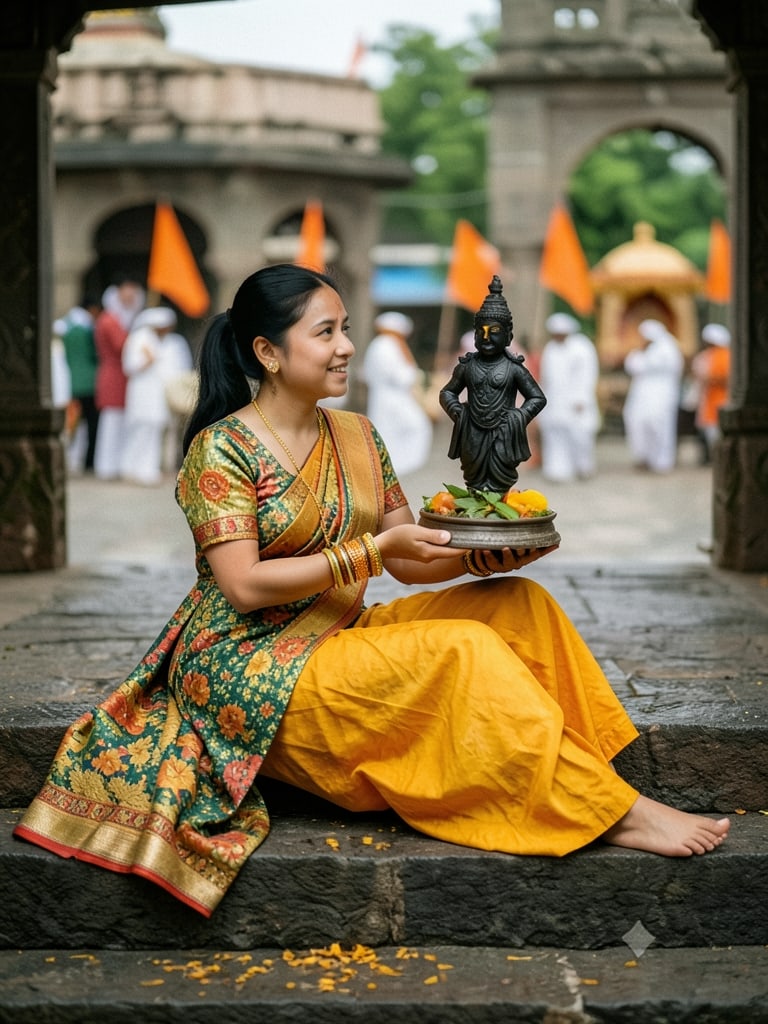
Elegant Ashadhi Ekadashi Women Photoshoot with Lord Vitthal Idol

create image STRICT FACE IDENTITY PRESERVATION DNA Use the uploaded image exclusively as the facial identity reference for the woman. Preserve the exact facial identity, including the head shape, forehead proportions, hairline, eyebrows, eyelids, eye spacing, eye shape, nose structure, cheeks, lips, jawline, chin, ears, skin tone, skin texture, facial symmetry, natural smile, and apparent age. Preserve her joyful devotional smile, bright expressive eyes, relaxed facial muscles, and graceful feminine appearance exactly as shown. Do not beautify, stylize, enlarge the eyes, reshape facial contours, modify complexion, alter age, or apply beauty-filter effects. The uploaded image serves only as the facial identity reference while every costume, sitting posture, temple environment, ritual object, lighting relationship, and storytelling element is reconstructed entirely through descriptive instructions. SUBJECT DNA Create an ultra-realistic premium devotional portrait inspired by Pandharpur Ashadhi Wari, where a young Maharashtrian Warkari woman sits peacefully on the ancient stone steps of Shri Vitthal Rukmini Temple, lovingly holding a beautifully sculpted idol of Lord Vitthal in both hands. The portrait should represent the emotional moment immediately after completing the sacred pilgrimage, when the devotee quietly offers gratitude to Pandurang. The atmosphere should feel timeless, peaceful, and spiritually fulfilling. OUTFIT DNA Dress the woman in a luxurious traditional Maharashtrian Nauvari Paithani saree draped in authentic Brahmani style. The saree should be woven from rich saffron-yellow mulberry silk displaying realistic natural sheen with premium silk texture. The borders should feature broad antique-gold zari weaving framed by deep magenta piping and intricate traditional peacock and lotus motifs. The pallu drapes naturally across the shoulder before flowing beside the stone steps with physically accurate silk folds created by gravity. The blouse should be rich magenta silk with elbow-length sleeves, heavily woven antique gold zari motifs, and realistic silk reflections. Adorn her with a traditional Maharashtrian gold choker necklace layered with a longer Lakshmi haar, elegant gold jhumka earrings, a delicate Maharashtrian nose pin, multiple green and red glass bangles mixed with antique gold bangles, traditional finger rings, and a neatly arranged jasmine flower gajra around a low bun. Apply a small black bindi between the eyebrows while preserving exact facial proportions. RITUAL OBJECT DNA The woman gently holds a beautifully sculpted black basalt idol of Lord Vitthal, approximately 24 centimetres tall, mounted on a circular carved stone pedestal. The idol should display: authentic Pandharpur iconography hands resting upon the waist richly carved crown sacred ornaments polished black basalt texture realistic centuries-old stone craftsmanship saffron-yellow Vaishnav tilak Decorate the pedestal with fresh Tulsi leaves and delicate marigold blossoms placed naturally around its base. POSITION DNA The woman sits comfortably upon wide ancient basalt temple steps. Approximately 96% of her body weight rests naturally through both hips. Both knees bend comfortably toward camera-right. The lower legs extend gracefully toward the right side with the ankles gently overlapping. The spine remains naturally upright without stiffness. The torso rotates approximately 18 degrees toward camera-left, orienting the body toward the Lord Vitthal idol. The shoulders remain completely relaxed. The head turns approximately 16 degrees toward camera-left while inclining gently upward by 5 degrees, creating an expression of admiration toward the deity. HAND POSITION DNA Both forearms extend naturally forward. The elbows remain comfortably close to the torso. Both palms cradle the circular pedestal beneath Lord Vitthal. The fingers remain softly curved beneath the base with anatomically correct spacing. The thumbs lightly stabilize the front edge of the pedestal while avoiding any visible gripping force. The wrists remain naturally aligned, communicating gentle reverence. BODY LANGUAGE DNA The posture should communicate peace, fulfilment, humility, and devotional happiness. The relaxed shoulders, naturally upright spine, softly inclined head, and careful way of holding the deity should express deep gratitude after the successful completion of the sacred Wari. Every body mechanic should remain anatomically correct and completely effortless. EYE DIRECTION DNA The woman gazes softly toward Lord Vitthal rather than the camera. Her eyes remain filled with warmth, gratitude, and devotion. Small natural catchlights preserve emotional realism while maintaining her intimate connection with the deity. CAMERA DNA Position the camera approximately 88 centimetres above the temple steps, closely matching the seated eye level of the devotee. Maintain a front three-quarter camera angle positioned approximately 22 degrees toward camera-right, allowing both her facial expression and the Lord Vitthal idol to remain fully visible. Apply only a subtle 2-degree downward inclination, preserving realistic perspective while showcasing the temple architecture behind. CAMERA POSITION DNA Place the photographer approximately 3.8 metres from the seated devotee. The optical centre aligns precisely between the woman’s face and the Lord Vitthal idol, ensuring equal visual importance while maintaining balanced composition. CAMERA DISTANCE DNA Capture using a professional full-frame camera equipped with a 105mm premium portrait prime lens from approximately 3.8 metres. This focal length produces elegant compression between the foreground subject and the temple while preserving authentic body proportions and luxurious portrait rendering. The seated woman occupies approximately sixty percent of the frame, leaving sufficient space for the temple architecture and Warkari procession. CAMERA ELEVATION RELATIONSHIP DNA The camera remains almost perfectly aligned with the seated eye level, creating the feeling that the viewer is another pilgrim respectfully seated nearby. This perspective enhances emotional intimacy while preserving the monumental presence of the temple rising behind her. LENS DNA Photograph using a professional full-frame camera fitted with a 105mm prime portrait lens at f/2.2. Produce exceptional facial sharpness, premium optical compression, luxurious subject isolation, creamy background rendering, and physically accurate perspective. LIGHTING DNA Capture during an overcast Ashadhi morning using naturally diffused daylight. Soft ambient light evenly illuminates the face while preserving realistic skin texture and premium silk reflections. Gentle reflected light from the ancient stone steps subtly fills the lower face. Tiny highlights shimmer naturally across the gold jewellery, Lord Vitthal idol, and Tulsi leaves without appearing artificial. BOKEH DNA Render the temple courtyard into luxurious creamy telephoto bokeh. The ancient temple architecture, softly moving Warkari devotees dressed in white Gandhi caps, saffron flags, distant palkhi structures, and monsoon greenery should gradually dissolve into elegant circular bokeh while remaining recognisable enough to preserve the sacred Pandharpur atmosphere. Maintain extremely strong subject isolation. VISUAL DEPTH DNA The foreground begins with weathered black basalt temple steps displaying realistic worn stone texture and centuries of devotional use. The primary subject layer consists of the woman rendered with pore-level skin detail, luxurious Paithani silk textures, premium jewellery craftsmanship, jasmine flowers, and the intricately carved Lord Vitthal idol. The secondary layer contains softly blurred Warkari devotees moving through the temple courtyard carrying saffron flags. The background reveals the majestic stone architecture of Shri Vitthal Temple before gradually dissolving into creamy monsoon atmosphere and lush greenery. ENVIRONMENT DNA Construct the authentic surroundings of Shri Vitthal Rukmini Temple, Pandharpur. Include ancient basalt temple steps, centuries-old stone architecture, carved entrance gateways, softly blurred Warkari devotees dressed in traditional white attire, saffron flags, flower petals scattered across the courtyard, monsoon greenery, and naturally diffused devotional atmosphere. Every environmental element should reinforce the timeless sacred character of Pandharpur. STORYTELLING DNA This portrait captures the peaceful silence that follows the completion of the sacred Ashadhi Wari. Having finally reached Pandharpur, the devotee sits upon the ancient temple steps, lovingly holding Lord Vitthal close while offering silent gratitude. The yellow Paithani represents joy, the black basalt idol symbolizes Pandurang’s eternal presence, and the ancient temple stones witness generations of unwavering faith. Rather than appearing staged, the portrait should feel like an authentic devotional memory where the pilgrim, the temple, and Lord Vitthal become inseparable. COMPOSITION DNA Construct the composition using a refined triangular devotional hierarchy. The Lord Vitthal idol anchors the foreground, the woman’s joyful face becomes the emotional focal point, and the towering temple sanctum rises naturally behind her along the central axis. The flowing Paithani drape guides the viewer’s eye toward the deity, while softly blurred Warkaris and saffron flags create a living devotional backdrop. Every visual relationship should reinforce peace, gratitude, and the sacred fulfilment of reaching Pandharpur. FINAL OUTPUT Create an ultra-realistic premium Pandharpur devotional fine-art portrait in 4K Ultra HD, photographed with a professional full-frame camera using a 105mm prime portrait lens at f/2.2, featuring physically accurate optics, luxurious Maharashtrian Paithani silk textures, authentic black basalt Lord Vitthal idol, premium gold jewellery craftsmanship, ancient Shri Vitthal Temple architecture, realistic weathered basalt steps, creamy telephoto bokeh, Ashadhi Wari atmosphere, emotionally immersive storytelling, museum-quality devotional photography, and a 9:16 vertical composition.

25 0 0
2h
Preview of Couple Eye AI Prompt for Romantic Golden Hour Close-Up Portrait
image / Gemini
Couples & EngagementGemini · ChatGPT

Couple Eye AI Prompt for Romantic Golden Hour Close-Up Portrait

create image STRICT FACE IDENTITY PRESERVATION DNA Use the uploaded image exclusively as the facial identity reference for both individuals: the woman positioned on the left side and the man positioned on the right side. Preserve each person’s exact facial identity independently, including their natural head shape, forehead proportions, hairline, eyebrow shape and density, eyelids, exact eye shape and spacing, iris appearance and natural iris color, nose bridge and structure, lips, cheeks, jawline, chin, visible skin tone, natural skin texture, facial symmetry, expression characteristics, and apparent age. For the man, also preserve his exact natural moustache and beard growth pattern, density, placement, and texture if visible in the identity reference. Do not beautify, reshape, slim, age, stylize, merge, average, or interchange their facial characteristics. Do not change either person’s natural eye color to match the scene. The uploaded image must be used only for exact facial identity preservation; reconstruct the extreme-close pose, hair movement, foreground flowers, lighting, framing, camera distance, and cinematic atmosphere entirely from the detailed instructions below. CONCEPT AND EMOTIONAL DNA Create an ultra-realistic cinematic extreme-close-up romantic portrait focused primarily on the couple’s eyes, eyebrows, upper cheeks, and noses. The couple should be positioned extraordinarily close together, creating an intimate composition where their faces nearly meet along the central vertical axis. The emotional atmosphere should feel warm, dreamy, private, and quietly romantic, as though they are hiding together behind delicate dried flowers during golden-hour sunlight. Their expressions should remain subtle and contemplative rather than smiling broadly, allowing their eyes and physical proximity to communicate the emotional connection. WOMAN POSITION AND BODY LANGUAGE DNA Position the woman on the left side of the frame, marginally closer to the camera than the man. Her face should fill approximately 43–47% of the total image width, extending beyond the left and bottom boundaries because of the extreme-close crop. Her head should remain almost upright with a subtle 3–6 degree tilt toward camera-right, gently leaning toward the man. Rotate her face approximately 5–8 degrees toward camera-right, creating a very slight three-quarter orientation while keeping both eyes visible. Her eyes should look toward camera-left, away from the man and slightly beyond the lens, producing a thoughtful sideways gaze. The pupils should sit naturally toward the left side of her visible irises without an exaggerated eye turn. Her eyebrows, both eyes, upper and lower eyelids, nose bridge, complete nose, upper cheeks, and a small portion of the area above her upper lip should remain visible. Crop the lower part of her face before the full mouth and chin become prominent. Her expression should be calm, intimate, and quietly observant, with naturally relaxed facial muscles. MAN POSITION AND BODY LANGUAGE DNA Position the man on the right side of the composition, immediately beside the woman, with his face occupying approximately 43–47% of the image width. His outer right temple, ear, and part of the right side of his face should extend beyond the right frame boundary. Keep his head almost upright but tilted approximately 3–5 degrees toward camera-left, subtly leaning toward the woman. Rotate his face approximately 5–10 degrees toward camera-left, bringing the inner sides of their faces closer together. Direct the man’s eyes toward camera-right, creating an opposite sideways gaze from the woman. His pupils should naturally shift toward the right side of his irises while preserving his exact eye anatomy and natural eye color. Show both of his eyes, eyebrows, forehead, nose bridge, complete nose, upper cheeks, and only the upper portion of his moustache and facial-hair region. The lower mouth, chin, and most of the jaw should extend naturally beyond the bottom edge. His expression should remain calm, serious, and contemplative. FACE-TO-FACE SPATIAL RELATIONSHIP DNA Position the couple with only approximately 2–5 centimetres of real physical separation between their closest facial planes. Their inner forehead and temple regions should nearly touch around the central upper portion of the composition. The woman’s right eye and the man’s left eye should sit close to the central vertical axis, separated visually by only a narrow shadowed region created by their noses and facial depth. Their faces should overlap slightly in perspective without physically merging. Preserve clear anatomical boundaries between the two individuals. Align their eyes at approximately the same vertical level, with the man’s eyes positioned no more than 1–3% of the frame height higher than the woman’s. HAIR MOVEMENT DNA Style the woman’s dark hair naturally loose, with several thin strands moving horizontally and diagonally across her face. One prominent group of fine hair strands should sweep from the far left across her lower eye and upper-cheek region, continuing toward the bridge of her nose. Additional loose strands should curve naturally across her forehead near the hairline. The hair movement should feel caused by a very gentle breeze, with realistic individual strands, natural irregularities, and subtle golden rim highlights. The man’s dark hair should appear naturally tousled, with several loose wavy strands falling downward across the upper forehead. Preserve realistic hair density, individual strands, and natural texture. Do not allow hair to obscure either person’s eyes excessively. FOREGROUND DRIED FLOWER DNA Place delicate cream-white dried flowers and thin beige stems extremely close to the camera lens, primarily along the right foreground and lower-central foreground. The flowers should remain heavily out of focus because they are positioned significantly closer to the lens than the subjects. They should create soft organic cream and golden bokeh shapes that partially overlap the man’s outer cheek, lower nose region, and lower-right portion of the frame. A smaller blurred floral element may enter near the upper-right corner. Do not allow the flowers to completely cover either person’s eyes. Their purpose is to create natural depth, visual softness, and romantic foreground framing. CAMERA ANGLE DNA Position the camera directly in front of the couple at exact eye level, with the lens optical axis pointing toward the narrow central space between their two faces. Maintain an essentially straight-on perspective with no noticeable high-angle or low-angle distortion. A subtle 1–3 degree horizontal offset toward the woman’s side may be used to make her face appear marginally closer to the lens. The resulting composition should emphasize the symmetrical relationship between two pairs of eyes while retaining natural asymmetry from their opposite gazes. CAMERA-TO-SUBJECT DISTANCE DNA Position the camera approximately 35–50 centimetres from the woman’s closest facial plane and approximately 40–55 centimetres from the man’s closest facial plane. Place the foreground dried flowers only approximately 5–15 centimetres from the lens, creating strong optical foreground blur. The extremely close camera position should naturally crop both faces at the outer edges and bottom of the frame. Do not simulate this composition by photographing full faces from a long distance and digitally cropping afterward. The image must retain authentic close-range perspective while avoiding wide-angle facial distortion. LENS AND FOCUS DNA Use a professional full-frame camera with an approximately 85–105mm macro-capable portrait lens. Use approximately f/4 to f/5.6 to maintain sharp focus across both subjects’ eyes despite their slightly different depth positions. Focus precisely on the eye plane shared by both individuals. Both pairs of eyes should appear sharply resolved, with the woman’s nearest eye and the man’s nearest eye receiving the strongest micro-detail. Allow the foreground dried flowers to remain deliberately soft and heavily defocused. Use approximately ISO 200–500 and a shutter speed around 1/200 second. EYE DETAIL DNA The eyes are the dominant visual focus and must preserve each person’s exact natural identity. Do not introduce artificial green, hazel, blue, or golden eye colors unless those colors genuinely exist in the uploaded facial identity reference. Render realistic iris patterns, natural pupil size, individually visible eyelashes, fine lower lashes, subtle eyelid creases, realistic tear-line moisture, and small environmental catchlights. The woman’s eyes should retain her exact natural shape and spacing. The man’s eyes must independently retain his exact natural shape and spacing. Do not enlarge the eyes, alter their symmetry, increase iris saturation, or create fantasy-style reflective eyes. SKIN TEXTURE DNA Render exceptionally realistic close-range skin detail, including natural pores, fine facial hairs, subtle tonal variations, small natural marks, gentle under-eye texture, and realistic highlights across the nose bridge and upper cheeks. Maintain the woman’s and man’s exact natural skin tones independently. Use minimal photographic retouching. Do not create porcelain skin, excessive smoothing, artificial glow, beauty-filter effects, or exaggerated makeup. Preserve the man’s natural facial-hair texture around the moustache and upper beard region wherever visible within the crop. LIGHTING DNA Use soft, warm golden-hour illumination coming primarily from camera-right and slightly above, creating warm amber highlights across the man’s forehead, eyebrow ridge, nose bridge, and upper cheek while softly illuminating the woman’s central face. Introduce subtle reflected warm fill from camera-left to maintain detail across the woman’s eyes and cheek. The overall color palette should consist of warm honey, amber, beige, soft brown, and muted gold. Allow gentle highlights to catch individual strands of the woman’s moving hair and the edges of the blurred dried flowers. Maintain soft but dimensional shadows between the couple’s faces, especially around the narrow central space between their noses and inner eye regions. DEPTH AND CINEMATIC OPTICS DNA Create three distinct depth layers: heavily blurred dried flowers in the extreme foreground, both faces in the sharply focused middle plane, and an indistinct warm neutral background behind them. Use natural optical depth rather than artificial blur masks. The blurred flowers should produce creamy circular and irregular bokeh shapes with smooth transitions. Maintain subtle cinematic lens softness in peripheral areas while preserving exceptional sharpness around both subjects’ eyes. BACKGROUND DNA Keep the background completely abstract and heavily blurred in warm dark-brown, muted olive, and golden-beige tones. Do not include recognizable buildings, furniture, landscapes, text, or decorative objects. The background should contribute only warm atmospheric color and depth. COMPOSITION AND CROPPING DNA Create a 16:9 horizontal extreme-close-up cinematic composition. The woman’s face should dominate the left half while the man’s face dominates the right half. Together, their faces should occupy approximately 85–95% of the total image width. Position all four eyes across approximately the upper-middle horizontal band of the frame. The woman’s outer eye should sit near the left third, her inner eye near the center-left, the man’s inner eye near the center-right, and his outer eye near the right third. Crop the top edges of some hair naturally. Crop the woman’s lower face approximately around the upper-lip level and the man’s lower face approximately around the moustache or upper-lip level. The extreme-close crop must feel deliberate and photographic, with no attempt to include complete faces. CLEAN IMAGE DNA Do not include text, logos, watermarks, emojis, social-media interface elements, deco

25 0 0
2h

Search prompts

Search by keyword or describe what you need