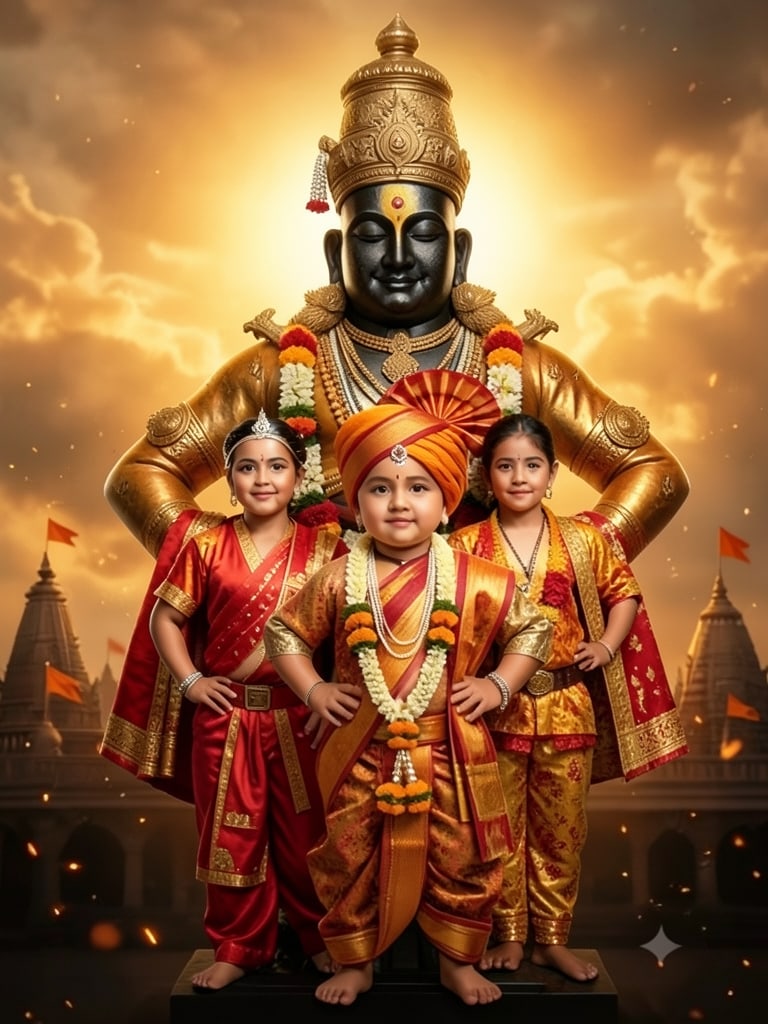
Minimalist Ashadhi Ekadashi Boy Photoshoot in Traditional Warkari Dress
Portrait Photography prompt: create image STRICT FACE IDENTITY PRESERVATION DNA Use the uploaded image exclusively as the facial identity reference for the child. Preserve the…
Prompt
create image
STRICT FACE IDENTITY PRESERVATION DNA
Use the uploaded image exclusively as the facial identity reference for the child. Preserve the exact facial identity, including the head shape, forehead proportions, hairline, eyebrows, eyelids, eye spacing, eye shape, nose structure, cheeks, lips, jawline, chin, ears, skin tone, skin texture, facial symmetry, and apparent age. Preserve the child’s innocent smile, naturally curious expression, and gentle facial softness exactly as shown. Do not beautify, stylize, enlarge the eyes, reshape facial proportions, sharpen facial contours, modify complexion, or apply beauty-filter effects. The uploaded image serves only as the facial identity reference while every devotional element, environment, costume, and photographic relationship is reconstructed entirely through descriptive instructions.

SUBJECT DNA
Create an ultra-realistic premium devotional portrait of a young Warkari child standing peacefully during the sacred Pandharpur pilgrimage. The portrait should celebrate the beauty of childhood innocence intertwined with unwavering devotion. Rather than appearing as a posed studio image, the child should appear naturally captivated by the divine atmosphere, expressing quiet happiness while looking toward an unseen spiritual presence. The entire portrait should resemble a timeless devotional fine-art photograph suitable for a museum exhibition.

OUTFIT DNA
Dress the child in a pristine traditional white handwoven cotton Warkari kurta featuring a standing collar, neatly stitched concealed placket, authentic cotton weave, naturally relaxed full sleeves, and realistic fabric folds produced by natural body posture. Pair the kurta with a traditional white cotton dhoti featuring hand-folded pleats and soft organic draping. Place a perfectly folded white Gandhi cap securely upon the child’s head with visible cotton stitching and crisp folded geometry. Around the neck place a long handcrafted Tulsi mala made from naturally polished dark wooden beads extending below the chest. Apply a bright saffron-yellow Vaishnav tilak centred upon the forehead with a small black devotional dot inside the tilak, accompanied by a delicate white sacred dot placed upon the left cheek. Small traditional gold earrings complete the authentic devotional styling.

RITUAL OBJECT DNA
Maintain devotional simplicity by allowing the Gandhi cap, Tulsi mala, Vaishnav tilak, sacred cheek marking, and traditional white attire to become the only visible devotional identifiers. Avoid unnecessary ritual objects so that the child’s spiritual expression remains the strongest visual element throughout the portrait.

POSITION DNA
Position the child naturally in a relaxed standing posture with approximately sixty-five percent of the body weight resting comfortably through the left supporting leg while the right leg remains slightly relaxed beneath the body. The pelvis remains centred with only minimal lateral displacement. The torso rotates gently toward camera-right by approximately twelve degrees while remaining naturally upright. The spine follows its normal relaxed childhood curvature, allowing the shoulders to remain soft and completely free of tension. The neck extends gently upward while the head rotates approximately fifteen degrees toward the child’s right side and lifts approximately six degrees upward, creating an elegant devotional profile without exaggeration.

HAND POSITION DNA
Both forearms remain comfortably lowered outside the visible portrait crop while the shoulders stay naturally relaxed. The upper arm muscles remain completely loose, allowing the clothing to drape naturally around the shoulders and chest. The unseen hands should rest comfortably near the lower abdomen with softly relaxed fingers, preserving anatomically accurate body mechanics despite the tight portrait composition.

BODY LANGUAGE DNA
The child’s posture should communicate calm devotion, quiet curiosity, and complete innocence. Every muscle remains naturally relaxed, allowing the face and upward gaze to become the emotional centre of the composition. The slight head turn combined with the gentle smile should create the impression that the child has become fascinated by something spiritually beautiful just outside the frame.

EYE DIRECTION DNA
The child looks softly toward the upper-right portion of the frame with bright expressive eyes filled with hope, curiosity, and devotional wonder. The eyes remain perfectly focused upon an unseen sacred presence while subtle catchlights reflect the surrounding natural light. The upward gaze should become the strongest storytelling element of the portrait.

CAMERA DNA
Position the camera approximately 116 centimetres above the ground, aligning the sensor almost perfectly with the child’s eye level. Maintain a perfectly frontal portrait orientation while shifting the camera approximately ten degrees toward the child’s left side, allowing the face to remain gently turned into the frame. Apply only a slight upward camera inclination of approximately one degree, preserving realistic facial proportions while reinforcing the child’s upward devotional gaze.

CAMERA POSITION DNA
Place the photographer approximately 2.6 metres from the child’s face while remaining centred upon the child’s torso. The optical axis intersects directly through the child’s eyes, ensuring maximum emotional engagement. Leave generous negative space in the direction of the child’s gaze so the composition naturally follows the devotional eye line toward the unseen divine presence.

CAMERA DISTANCE DNA
Photograph the portrait using a professional full-frame camera equipped with an 85mm premium portrait prime lens from approximately 2.6 metres. This distance preserves authentic facial proportions while creating elegant compression and luxurious background separation. The child’s head and upper torso should occupy approximately sixty percent of the vertical composition while maintaining generous breathing space around the face.

CAMERA ELEVATION RELATIONSHIP DNA
The eye-level camera creates an intimate relationship between the viewer and the child while allowing the upward gaze to introduce spiritual aspiration. Because the camera remains aligned with the child’s natural height, the viewer experiences the portrait from the child’s world rather than observing from above, creating stronger emotional connection and authenticity.

LENS DNA
Photograph using a professional full-frame camera fitted with an 85mm prime portrait lens at f/1.8. The lens should produce exceptional facial sharpness, luxurious telephoto compression, premium skin rendering, physically accurate perspective, and creamy background separation while preserving realistic anatomy.

LIGHTING DNA
Illuminate the portrait using beautifully diffused natural daylight entering softly from camera-left at approximately thirty degrees. The light wraps gently across the child’s face, producing smooth highlight transitions and soft shadow gradients while preserving natural skin texture. A subtle fill source created by the open sky softly illuminates the opposite side of the face, ensuring balanced tonal rendering without flattening facial depth. The overall lighting should feel peaceful, devotional, and naturally cinematic.

BOKEH DNA
Render the background into luxurious monochromatic creamy bokeh featuring soft neutral tonal gradients with virtually no recognizable detail. Preserve only the child in natural colour while allowing the environment to dissolve into elegant black-and-white softness. The bright saffron-yellow Vaishnav tilak becomes the strongest selective colour accent, immediately drawing attention toward the child’s forehead before leading naturally into the expressive eyes.

VISUAL DEPTH DNA
The foreground begins softly out of focus with subtle portions of the child’s white clothing gently guiding attention upward toward the face. The primary subject layer consists of the child rendered with pore-level skin detail, authentic cotton textures, realistic Tulsi wooden beads, naturally folded Gandhi cap, delicate gold earrings, and physically accurate facial expression. The background dissolves completely into luxurious monochromatic bokeh with subtle tonal transitions that preserve exceptional depth while eliminating visual distractions. The isolated saffron tilak acts as the visual bridge connecting innocence with devotion.

ENVIRONMENT DNA
Construct a minimalist outdoor devotional environment where every background element dissolves into elegant monochromatic blur. The surroundings should quietly suggest the atmosphere of Pandharpur pilgrimage without introducing identifiable distractions. Nature becomes only a supporting emotional texture, allowing the child’s expression to dominate the visual narrative completely.

STORYTELLING DNA
This portrait tells the story of a young devotee experiencing faith through innocent curiosity rather than ritual. The child’s peaceful smile, lifted eyes, traditional Warkari attire, and sacred tilak reflect the purity with which devotion is inherited across generations. The monochromatic environment symbolizes the fading distractions of the world, while the vibrant saffron tilak becomes the visible light of unwavering faith. The portrait should feel less like a photograph and more like a timeless spiritual memory preserved forever.

TYPOGRAPHY DNA
Reserve the upper-left corner for elegant Marathi devotional typography without overlapping the child. Use traditional white Devanagari calligraphy reading “॥ पंढरपूर ॥”, accompanied by subtle symmetrical devotional divider lines. The typography should remain refined, lightly textured, and visually integrated into the composition while maintaining clear hierarchy beneath the child’s face.

COMPOSITION DNA
Construct the composition around the visual dialogue between the child’s upward gaze and the negative space above. Position the face slightly right of centre, allowing the typography to balance the opposite side of the frame. The Tulsi mala creates graceful vertical flow while the Gandhi cap anchors the upper composition. The saffron tilak becomes the initial focal point before naturally leading the viewer toward the expressive eyes. Every visual relationship should reinforce quiet devotion, emotional innocence, and timeless spiritual beauty.

FINAL OUTPUT
Create an ultra-realistic premium devotional Warkari child portrait in 4K Ultra HD, photographed with a professional full-frame camera using an 85mm prime portrait lens at f/1.8, featuring physically accurate optics, authentic handwoven cotton fabrics, realistic Tulsi bead materials, naturally folded Gandhi cap, premium monochrome fine-art treatment with selective saffron devotional colour accents, luxurious creamy bokeh, soft diffused natural lighting, exceptional portrait depth, emotionally immersive storytelling, masterpiece-quality devotional fine-art photography, and a 9:16 vertical composition.
How to use
Paste the prompt into Midjourney. Swap the subject and keep the lighting, lens and style details for a consistent look.
Use case
Portrait Photography — child, while
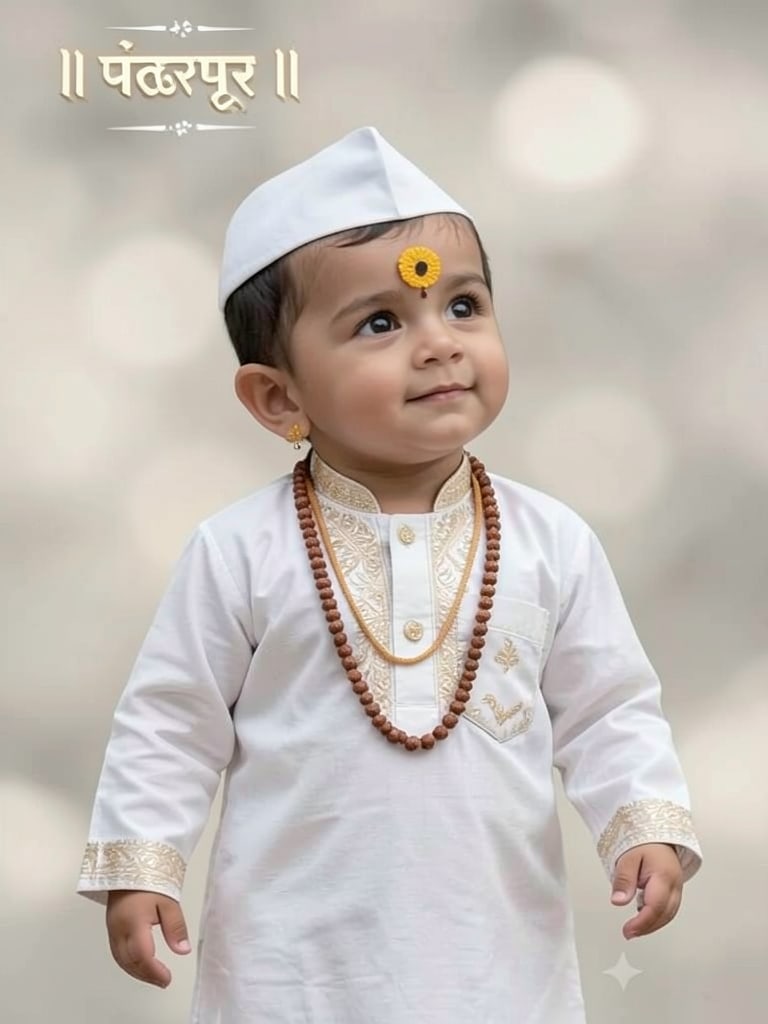 image / ChatGPT
Studio tools
AI Optimizer
Improve, shorten, expand or retarget this prompt for another image or video model. Every result is saved as a new version — the original is never overwritten.
Improve prompt
Produces optimized, concise, detailed, beginner and model-specific versions.
Generate variations
Professional, creative, cinematic, minimal and advanced.
Prompt history
- v1 · Original1 day ago