PromptBehind

Divine Newborn Shiva Flatlay

A sacred top-down newborn portrait styled as Baby Shiva, perfect for milestone photography that embraces spiritual themes.

Prompt
create image
FACE IDENTITY PRESERVATION
Use the supplied photograph solely as the reference for the infant’s facial features. Replicate every detail—head contour, forehead, hairline, fine baby hair texture, eyebrows, eyelids, eye shape and spacing, nose, lips, cheeks, ears, chin, natural skin hue, texture, symmetry, innocent gaze, and apparent age—without any beautification, eye enlargement, proportion changes, complexion alteration, skin smoothing, or beauty‑filter effects. The uploaded picture is only for facial fidelity; all other visual components are defined by the following descriptions.

MAIN SUBJECT
Render a high‑end, top‑down devotional newborn portrait inspired by Lord Shiva. The infant rests serenely at the exact centre of an artistic flat‑lay, dressed as a baby incarnation of Shiva, and surrounded by sacred motifs and handcrafted décor. The overall feeling should be divine, tranquil, culturally true, and aesthetically balanced.

APPAREL
Clothe the infant in a lifelike tiger‑print cotton wrap placed diagonally across torso and waist, echoing Shiva’s traditional garb. The cotton must show genuine texture and soft folds that naturally follow the baby’s shape. Adorn the neck and wrists with several Rudraksha bead malas, add tiny Rudraksha anklets, a black waist thread, and a small black thread bracelet. Paint three delicate white horizontal Vibhuti lines on the forehead with a minute red tilak centered. Keep the feet bare, toes and fingers relaxed.

POSE & BODY LANGUAGE
Position the infant on its back, centered in the layout. The spine stays straight with a subtle newborn curve. The head looks straight upward, unrotated. About 60 % of the body weight rests on the back. The right arm bends roughly 80° with a soft, closed fist near the shoulder; the left arm bends about 95° outward, fingers gently curled. The right knee is flexed about 20°, while the left leg extends slightly longer with the foot relaxed outward. Both feet and hands exhibit natural newborn looseness.

EYE GAZE
The child gazes directly upward toward the camera, eyes wide and expression curiously innocent.

CAMERA SETUP
Shoot from a perfectly vertical, 90° overhead perspective, camera plane parallel to the floor. Place the camera roughly 2.4 m above the scene to achieve flawless symmetry and eliminate perspective distortion. Keep equal margins on all sides. The infant should fill roughly 35 % of the frame, with the surrounding devotional layout occupying the rest. Use a vertical 9:16 aspect ratio.

LENS SPECIFICATIONS
Employ a professional full‑frame body equipped with a 35 mm prime lens set to f/5.6, delivering edge‑to‑edge sharpness across the flat‑lay while preserving uniform focus from the baby to every decorative piece.

LIGHTING
Apply soft, evenly diffused illumination that provides balanced exposure throughout. Brightness should be medium‑high, exposing texture without harsh highlights; shadows must be extremely soft and nearly invisible. Preserve strong contrast between the black background and white devotional elements, while allowing vivid natural tones in the tiger‑print fabric, green leaves, flowers, and Rudraksha beads. The ambience should feel sacred, calm, and luxurious.

SHARPNESS & DEPTH
Maintain consistent crispness across the entire composition; no background blur is required. The black fabric base serves as the foundational layer, the handcrafted devotional items as the secondary layer, and the infant as the primary focal layer with maximum detail.

SETTINGS & BACKDROP
Utilize a high‑quality matte black fabric stretched taut and wrinkle‑free as the base. Above the infant’s head, arrange a large handcrafted portrait of Lord Shiva using white flower petals, rice grains, and natural powders, complete with flowing hair, forehead markings, and a crescent moon. On the left, construct a sizable Trishul from white floral materials, placing a traditional Damru near its base. On the right, spell the Hindi phrase “हर हर महादेव” with white petals or grains in classic Devanagari script. Distribute small white blossoms and fresh green Bilva leaves symmetrically, preserving ample negative space for balance.

NARRATIVE
The scene celebrates the newborn’s purity through Shiva’s symbolic blessings, surrounding the child with hand‑crafted elements that convey divine protection, strength, and spiritual grace. The composition should resemble a sacred ceremonial artwork created by hand for a newborn milestone, not a digitally generated backdrop.

COMPOSITIONAL BALANCE
Arrange all components with perfect vertical symmetry: the handcrafted Shiva portrait crowns the upper portion, bestowing a blessing on the infant below; the Trishul anchors the left side, the Hindi text balances the right. The baby stays precisely centered.

How to use

Paste the prompt into Stable Diffusion. Swap the subject and keep the lighting, lens and style details for a consistent look.

Use case

Portrait Photography — baby, composition
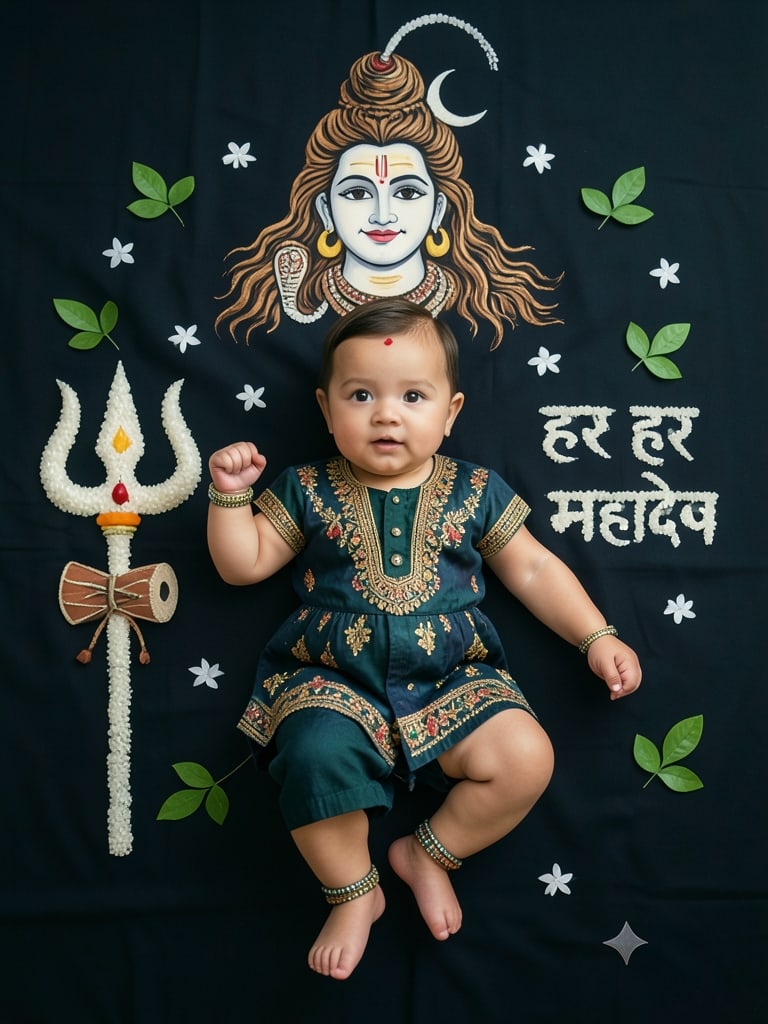
Preview rendered from “Divine Newborn Shiva Flatlay”
image / ChatGPT
Studio tools

AI Optimizer

Improve, shorten, expand or retarget this prompt for another image or video model. Every result is saved as a new version — the original is never overwritten.

Improve prompt

Produces optimized, concise, detailed, beginner and model-specific versions.

Generate variations

Professional, creative, cinematic, minimal and advanced.

Prompt history

  • v1 · Original1 month ago
More like this

Related prompts

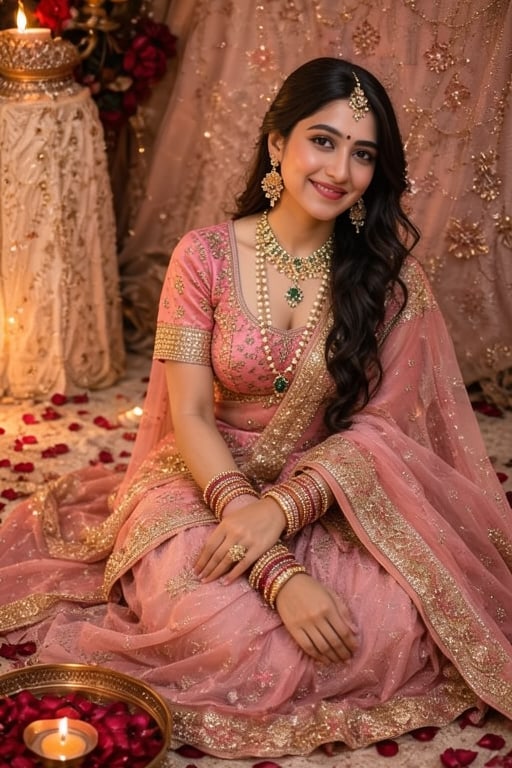
Preview of Radiant Pink Lehenga Diwali Portrait
image / Gemini
Festivals & OccasionsGemini · ChatGPT

Radiant Pink Lehenga Diwali Portrait

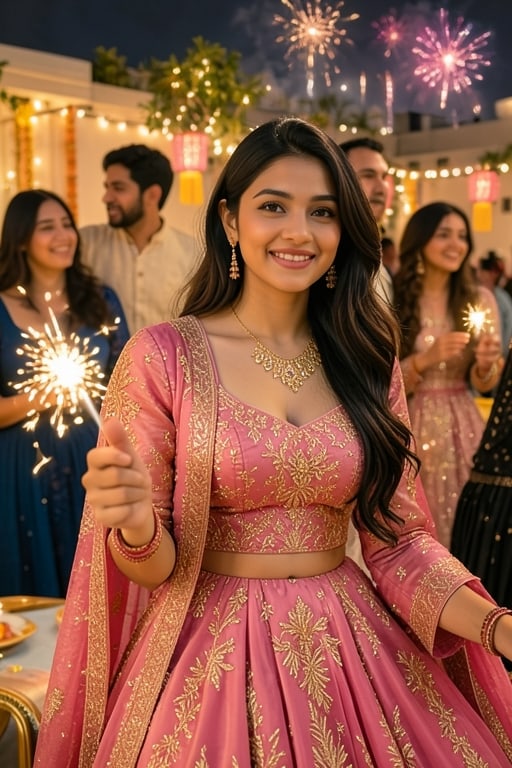
Produce an ultra‑realistic DSLR image with 8K‑grade detail, oriented vertically in a 9:16 frame. The composition must feature the young Indian woman from the uploaded reference picture, keeping her facial identity intact—maintaining her original bone structure, eyes, eyebrows, nose, lips, skin tone and natural proportions. Do not alter her face, over‑beautify, smooth the skin unnaturally, or give her an artificial expression. **Primary subject and look:** The woman stands naturally at a lively outdoor Diwali night scene. She wears a vivid pink lehenga adorned with detailed gold embroidery, a coordinating blouse, and a light pink dupatta draped casually over one shoulder. Her accessories are modest: delicate earrings and subtle bangles. Her long dark hair falls loosely around her shoulders, each strand visible with realistic texture. She displays a spontaneous, joyous smile, eyes bright with genuine happiness, looking slightly toward the camera. In one hand she holds a lit phooljhadi (sparkler) with a natural grip, correctly positioned fingers and wrist angle; the sparkler emits fine golden sparks that light her hand and nearby fabric without hiding her face. **Additional participants and layout – crucial:** Place three to five friends behind the main figure at believable distances. Each background person must appear as a distinct individual with unique facial features, hairstyles, outfits and expressions, avoiding any duplicated looks. They should be engaged in laughing, chatting, or smiling while also holding sparklers safely away from faces. Ensure full, recognizable head shapes and naturally placed shoulders are visible. Allocate roughly 60–70% of visual focus to the central woman; the friends occupy the remaining space on either side and slightly behind, with enough separation to prevent overlapping silhouettes or merged limbs. Their faces may be a touch out of focus due to depth of field, yet still retain coherent, human‑like anatomy, correct eye alignment, realistic skin texture, proper hand formation and natural posture. **Celebratory setting:** The backdrop is an elegantly decorated Indian courtyard or open terrace at night. Warm golden fairy lights stretch overhead, lanterns emit a soft glow, and rows of traditional clay diyas line the perimeter. Distant fireworks in pink, gold and orange burst across the sky. A few additional revelers appear far in the background, blurred just enough to suggest a bustling gathering without crowding the frame. The environment should feel spacious, authentic and physically plausible, not a digitally assembled crowd. **Lighting and photographic fidelity:** Combine warm ambient fairy‑light illumination, the golden light from the sparkler, and a gentle directional light on the woman's face. Preserve true skin tones, natural highlights, realistic shadows, and a consistent light direction across all subjects. Fireworks should light the sky without casting unnatural colour patches on faces. Emulate a full‑frame DSLR look using a 50mm portrait lens at f/2.8, delivering shallow depth of field that keeps the woman's eyes razor‑sharp while rendering embroidery, fabric folds, hair strands and background bokeh authentically. Avoid heavy HDR, oversaturation, artificial glows or overt compositing. **Framing and composition:** Vertical 9:16 portrait, captured from mid‑thigh upward, ensuring the woman's face, upper torso and sparkler are fully visible. Leave ample space above her head for fireworks and enough lateral room for friends to sit naturally within the frame. The woman's face must remain unobstructed and in crisp focus. All elements—sparkler, hands, clothing, secondary figures and surroundings—should integrate seamlessly. **Negative prompt:** Deformed faces, asymmetrical or misplaced eyes, distorted facial features, duplicate faces, cloned people, merged bodies, overlapping heads, fused limbs, extra arms, extra fingers, missing fingers, malformed hands, broken wrists, unnatural shoulders, twisted joints, floating objects, stiff poses, artificial smiles, plastic skin, excessive face smoothing, exaggerated makeup, incorrect body proportions, blurry main subject, incoherent background people, malformed silhouettes, excessive bokeh covering faces, oversaturated colors, fake fireworks, unrealistic sparkler effects, harsh artificial lighting, cartoon appearance, CGI look, watermarks, text, cropped head, cropped sparkler, and unnatural composition.

10 0 0
1w
Preview of Diwali Balcony Couple in Red Saree
image / Gemini
Festivals & OccasionsGemini · ChatGPT

Diwali Balcony Couple in Red Saree

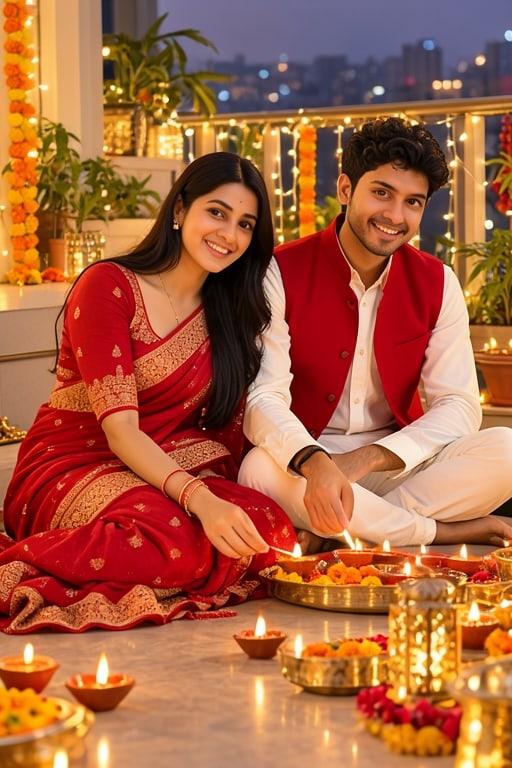
Ultra‑realistic 8K cinematic portrait of a couple, vertical 9:16 format. Identity preservation: employ the two uploaded reference images to keep each subject’s facial features—structure, eyes, nose, lips, skin tone, and authentic expression—exactly as they appear. Avoid any beautification, reshaping, blending, or alteration of the faces. SITTING POSTURE – CRITICAL: The young Indian pair are seated naturally on a spacious balcony floor during a Diwali evening, with anatomically correct, comfortable positions. - Woman: adopts a traditional side‑folded pose, legs folded to her left, knees bent naturally, lower legs resting on the floor, feet tucked beside the hips and partially hidden by the saree. Spine is upright yet relaxed, shoulders level, torso aligned. She is not kneeling, squatting, or perched on her feet. - Man: positioned beside her in a relaxed cross‑legged Sukhasana, knees angled outward, feet tucked under opposite legs. Weight is evenly distributed, back straight but relaxed, shoulders natural, legs firmly grounded without any floating or twisted appearance. - Interaction: they sit close, angled toward a small cluster of clay diyas placed on the floor before them. The woman holds a lit match or taper, while the man assists in lighting a diya. Hands, fingers, wrists, and arms are placed realistically near the lamps. Both gaze softly at the flame, sharing a warm, affectionate smile. - Proportions: display the full bodies from head to feet, ensuring visible seated posture, folded legs, and supported hips. Avoid overlapping limbs, fused bodies, twisted knees, duplicated or missing feet, floating hands, or impossible joints. APPAREL AND ACCESSORIES: Woman wears an elegant red saree with a rich gold embroidered border, draped over the legs, paired with a coordinating blouse, delicate gold necklace, small earrings, and refined bangles. Man dons a cream kurta with a maroon ethnic jacket and subtle traditional accents. Render realistic fabric folds, embroidery detail, and natural cloth movement. SETTING AND ILLUMINATION: A tastefully decorated Indian balcony at night, featuring rows of glowing clay diyas arranged neatly around the couple, warm fairy lights along the railing, gentle marigold flower accents, and a softly blurred city skyline in the distance. The diya flames emit a golden glow that illuminates their faces, producing natural shadows, detailed skin texture, and a cinematic bokeh effect. CAMERA VIEW AND COMPOSITION: Full‑body seated framing captured from a slightly elevated front‑facing three‑quarter angle. Use a vertical 9:16 canvas with sufficient margin to include the entire seated pose, folded legs, feet, and the diyas. Faces must remain sharply in focus. Emulate a professional DSLR with a 50mm lens look, realistic depth of field, warm cinematic colour grading, true‑to‑life proportions, detailed textures, and authentic Diwali ambience. NEGATIVE PROMPT: Incorrect sitting posture, awkward kneeling, unnatural squatting, half‑standing pose, floating body, unsupported hips, twisted spine, backward‑bending knees, anatomically wrong legs, tangled limbs, fused bodies, extra arms, extra legs, duplicated feet, missing feet, deformed hands, extra fingers, stiff shoulders, unnatural leaning, distorted faces, altered facial identity, plastic skin, excessive retouching, artificial lighting, cartoon style, cropped legs, cropped feet, blurry faces, unrealistic diya flames. Priority: first ensure anatomically correct seated anatomy, then maintain precise facial identity, followed by natural couple interaction and cinematic Diwali atmosphere.

10 0 0
1w
Preview of Evening Chhath Ritual on Ganges Steps
image / Gemini
Festivals & OccasionsGemini · ChatGPT

Evening Chhath Ritual on Ganges Steps

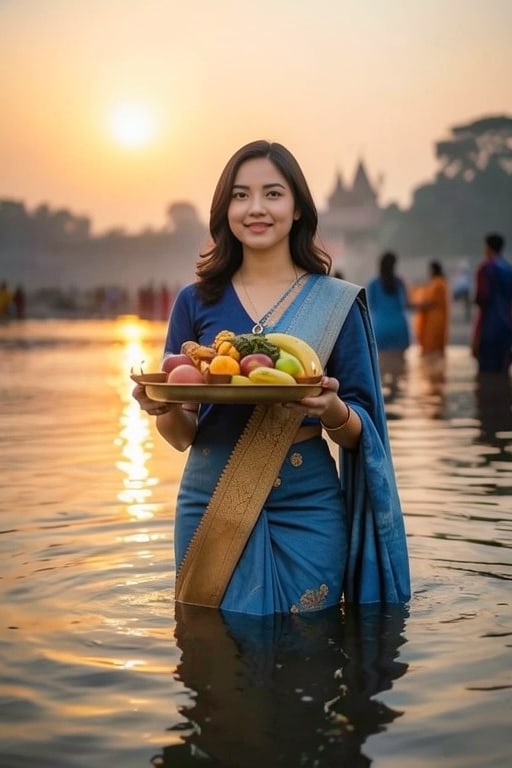
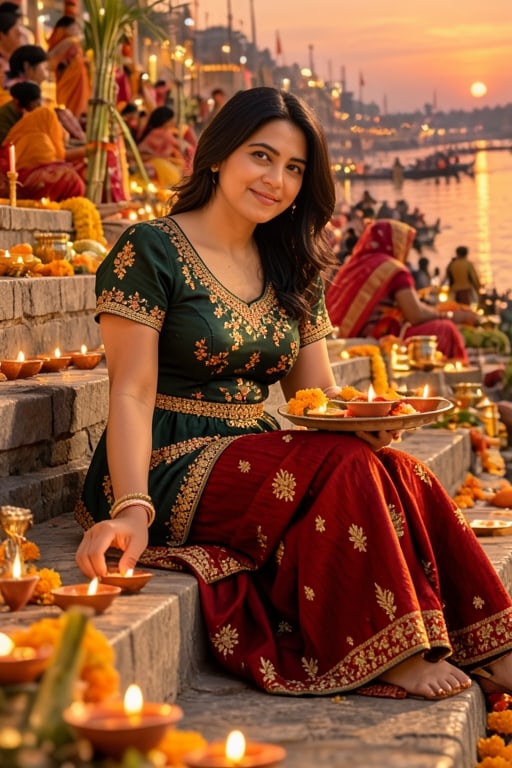
Ultra-realistic 8K cinematic portrait, vertical 9:16 ratio. Face reference: use the uploaded image to replicate the woman's face exactly, keeping her original facial structure, eyes, nose, mouth, skin tone and sincere expression untouched; no smoothing or alteration. Pose: An Indian woman is seated comfortably on a wide stone step of a Ganges ghat at dusk during Chhath celebrations. She adopts a stable, traditional seated posture: hips and buttocks rest on a single step, torso held upright yet relaxed, both knees bent and folded to one side, legs positioned naturally on the stairs. The sari drapes modestly over her lower limbs. One hand carefully places a small clay diya on the adjacent step, while the other supports a brass thali bearing several lit diyas and marigold blossoms. Shoulders are relaxed, back balanced, weight clearly borne by the step. The stance must appear natural, anatomically sound, and seated—not standing, squatting, kneeling, or hovering. Outfit: She dons an ivory‑white sari embellished with fine embroidery, tiny red heart motifs, and a narrow red border. The pallu falls gracefully over her shoulder. Accessories include a delicate gold necklace, modest traditional earrings, and simple bangles. Her long dark‑brown wavy hair cascades over one shoulder, leaving the face fully visible. Expression is calm and serene as she arranges the lamps. Setting: The stone staircase leads down to the holy Ganges, lined with rows of glowing clay lamps, marigold garlands, and typical Chhath offerings. In the distance, other women in colorful saris are seated on the steps, performing rituals. Warm fairy‑light strings illuminate the ghat, and the river mirrors the golden glow against an orange‑pink twilight sky. Camera & lighting: Capture a full‑body or three‑quarter view that includes the entire seated figure, knees, leg fold, sari drape, and foot contact with the stone. Position the camera slightly above eye level at a three‑quarter angle to show both face and pose. Lighting should be warm, sourced from the diyas, producing realistic shadows beneath the body, detailed skin texture, intricate fabric work, gentle background bokeh, subtle film grain, and a nostalgic 1990s Bollywood feel. Aim for photorealistic DSLR‑level quality with lifelike anatomy, accurate hands, authentic cultural details, and rich golden hues. Negative prompt: Standing pose, squatting, kneeling on both knees, awkward leg placement, crossed legs in midair, floating body, unsupported hips, twisted spine, unnatural knees, extra limbs, malformed hands, distorted feet, cropped legs, sari covering an anatomically impossible pose, plastic skin, excessive retouching, altered facial identity, cartoon, illustration, artificial CGI, blurry face, text, watermark.

10 0 0
1w
Preview of Divine Devotional Radha Janmashtami Portrait
image / Gemini
Portrait PhotographyGemini · ChatGPT

Divine Devotional Radha Janmashtami Portrait

Generate an ultra-photorealistic vertical 9:16 luxury Indian devotional festive portrait featuring a young woman styled as a classic, refined, and ethereal incarnation of Radha. Use the provided user image strictly as the exclusive facial identity reference. CRITICAL INPUT DIRECTORY: The end-user submits a SINGLE IMAGE containing their personal face. No additional reference photographs exist. Consequently, every visual element outside of the facial features must be constructed entirely from this textual description. The reference face governs ONLY the personal identity. Rebuild the coiffure, facial cosmetics, facial expression, body posture, attire, adornments, surroundings, illumination, framing, and photographic style precisely per these instructions. The final output must carry an undeniable Radha aesthetic—tender, spiritual, gentle, traditional, tranquil, and ethereal—while remaining an authentic photograph of the specific individual in the source face image. 1. ABSOLUTE FACIAL IDENTITY LOCK Employ the supplied user face as the singular origin for facial identity. Maintain the exact skull shape, facial proportions, forehead contours, eyebrow architecture, eye contours and spacing, eyelid structure, nasal bridge and apex, nostrils, cheek volume, zygomatic bones, lips, cupid's span, chin, jawline, natural facial asymmetry, complexion shade, and unique facial markers. The resulting subject must unmistakably be the identical person from the source photograph. Do NOT generate a generic Indian model visage. Do NOT fabricate an alternate Radha countenance. Do NOT merge the user's features with another individual. Do NOT modify facial proportions toward a stereotypical Indian beauty ideal. Avoid making the face unnaturally slim, broad, elongated, shortened, or overly symmetrical. Preserve the original eye contour, nose shape, lip structure, and jawline. Radha-themed styling must derive exclusively from cosmetics, tresses, ornamentation, posture, costume, and atmosphere, rather than altering or reshaping the subject's baseline identity. 2. RADHA-INSPIRED VISUAL IDENTITY Channel the classic visual aura associated with Radha: soft, heavenly, graceful, youthful, empathetic, romantic, devotional, serene, and feminine. Avoid a modern fashion model appearance dressed in ethnic wear. The result should evoke a timeless Radha-inspired Indian devotional portrait. Beauty must manifest as understated and elegant rather than contemporary Bollywood glamorous. The expression should convey peacefulness, devotion, affection, quiet assurance, soft romantic warmth, and spiritual calm. The eyes must serve as the emotional center of the composition. 3. RADHA-INSPIRED FACIAL MAKEUP Apply authentic North Indian festive cosmetics while safeguarding the subject's exact bone structure. The skin finish should remain naturally luminous and warm. Keep genuine dermal texture perceptible. Utilize soft, refined makeup instead of heavy modern contouring. Eyes: render the gaze expressive and fluid using softly smudged black kajal, slender traditional eyeliner, subtle warm brown and rose eye shadow, naturally defined lashes, delicately highlighted inner tear ducts, and gentle lower lash enhancement. The kajal should subtly lengthen the perceived eye shape in a traditional Indian manner without altering actual anatomy. The gaze should radiate the soulful, devotional softness characteristic of classic Radha imagery. Eyebrows: retain the subject's native brow identity. Groom them neatly without extreme reshaping, keeping them expressive and naturally defined. Bindi / forehead: place a small, refined traditional red or maroon bindi centrally on the forehead. Above the brows, arrange a delicate pattern of tiny white decorative dots, symmetrically yet organically positioned. These minute white spots should remain distinctly visible, forming a traditional Indian Radha-inspired forehead ornament. Keep the dots small to mimic finely painted traditional art rather than stickers or digital overlays. Include subtle red or maroon decorative accents around the central forehead zone where fitting. 4. RADHA-INSPIRED HAIRSTYLE — VERY IMPORTANT The coiffure acts as a primary driver of the Radha transformation. Provide exceptionally long, thick, naturally dark black-brown hair styled with a traditional Indian devotional aesthetic. The tresses should feel extremely soft, feminine, voluminous, long, flowing, heavy through the ends, gently wavy instead of straight, partially swept back, and softly framing the face. Execute a traditional Radha-inspired half-up arrangement. The crown area should possess controlled natural volume. Part the front sections neatly, allowing soft tendrils to escape around the face. Include two or three delicate, naturally curved framing locks, particularly one loose strand resting against the cheek. Let the remaining length cascade naturally behind the shoulders and down the spine. Integrate subtle traditional floral elements into the hair, specifically small white jasmine blossoms arranged gracefully toward the back and sides. The floral styling must remain understated and luxurious rather than oversized. Incorporate a delicate jeweled maang-tikka chain seamlessly blended into the center part. Ensure the hair resembles an authentic traditional Radha devotional coiffure rather than a contemporary bridal updo or salon blowout. Individual strands must remain distinct and photorealistic. 5. RADHA-INSPIRED HEAD JEWELRY Position an elaborate yet dainty traditional Indian maang tikka at the center of the hairline. The piece should incorporate antique gold, pearls, emerald-green gems, and small sparkling white stones. A delicate jeweled chain tracks the hair parting, with the central pendant resting naturally above the bindi and forehead zone. Add subtle side hair accessories following the natural flow of the hairstyle.

10 0 0
1w
Preview of Infant Lord Krishna Janmashtami Overhead Portrait
image / Gemini
Portrait PhotographyGemini · ChatGPT

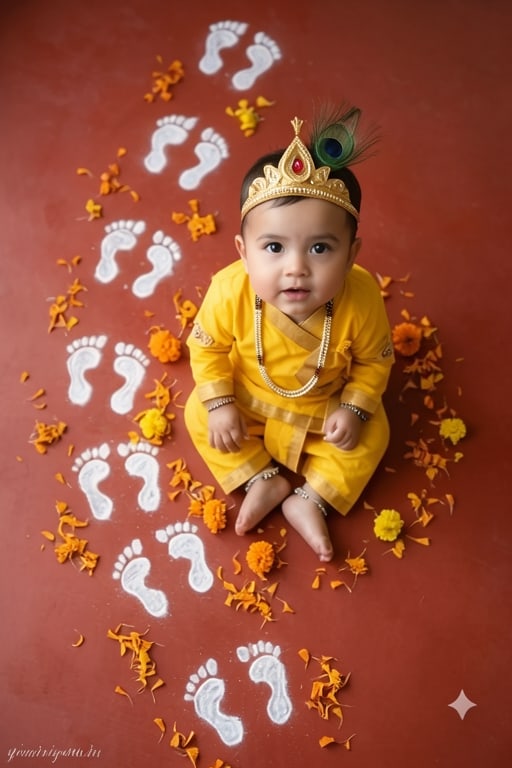
Infant Lord Krishna Janmashtami Overhead Portrait

Maintain exact facial identity from the provided source photo without any smoothing, structural changes, or artificial enhancement, preserving genuine skin pores and realistic details so the output reads as an authentic photograph rather than computer-generated art. Shoot from a high-angle, top-down perspective capturing an infant costumed as Bal Gopal seated on a vibrant red floor at the terminal point of a white rice-flour footprint motif. The infant wears a traditional yellow dhoti, a miniature crown adorned with a peacock plume, and delicate ankle bells. Fresh marigold flower blossoms are strewn alongside the trail of footprints, while the child gazes upward at the lens with a cheerful, authentic demeanor. The illumination consists of soft, overhead natural daylight casting gentle, diffused shadows across the scene, organized within a clean red-and-white chromatic scheme featuring crisp, sharp focus on the floor artwork. Inscribe subtle, handwritten-style cursive text in a delicate off-white tone reading geminiguru.in at the bottom-left corner.

10 0 0
6d

Search prompts

Search by keyword or describe what you need