PromptBehind

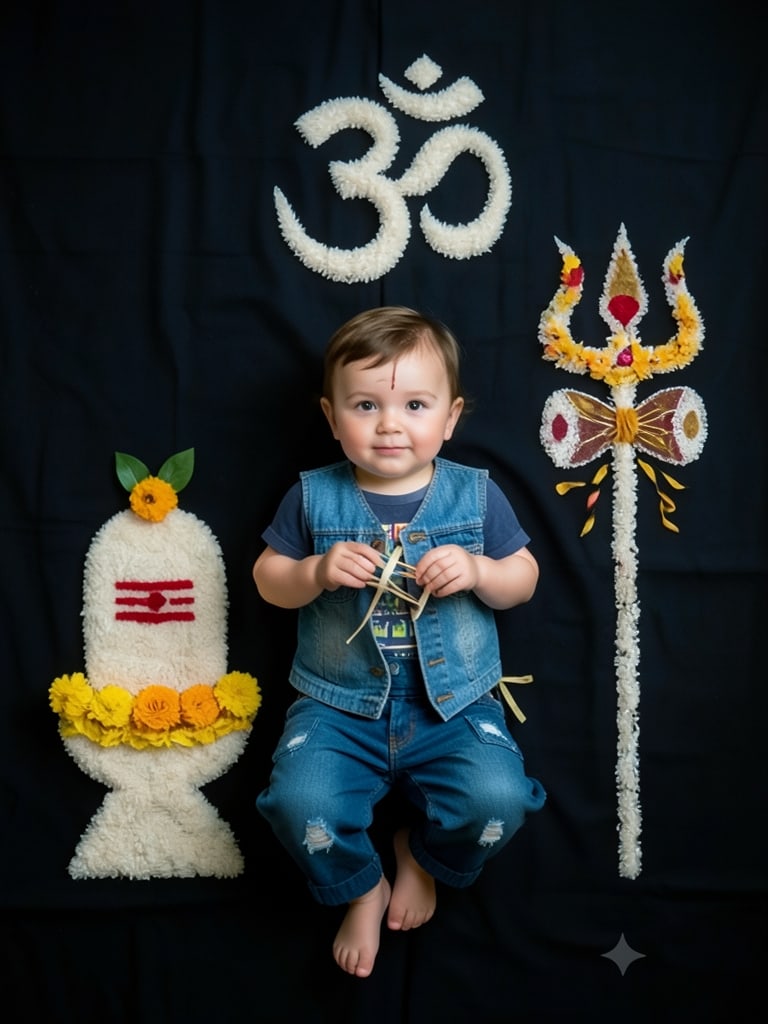
Divine Newborn Flat‑Lay with Shivling and Om

An ultra‑realistic devotional newborn portrait that presents a baby as Baby Shiva, surrounded by intricate rice‑based Rangoli artwork and sacred symbols, perfect for premium spiritual imagery.

Prompt
create image

FACE IDENTITY PRESERVATION:
Use the uploaded photograph solely as the reference for the infant's facial features. Replicate every detail of the face without alteration—head shape, forehead proportion, hairline, eyebrows, eyelids, eye shape and spacing, nose, lips, cheeks, chin, ears, skin tone, natural newborn skin texture, symmetry, innocent proportions, and apparent age. Keep the calm upward‑gazing expression exactly as shown. Do not apply any beautification, eye enlargement, complexion smoothing, facial reshaping, or beauty‑filter effects.

CORE SUBJECT:
Compose a high‑end devotional flat‑lay portrait of a newborn styled as Baby Shiva, positioned among hand‑crafted sacred motifs created from rice grains, flower petals, colored powders, leaves, and other natural materials, evoking a Rangoli‑style arrangement for Mahashivratri.

COSTUME SPECIFICATIONS:
Adorn the baby in a pristine white cotton‑silk dhoti with realistic pleats, secured by a golden waist cord. Drape a Rudraksha mala diagonally across the chest and another around the neck. Place Rudraksha bracelets on both wrists and fine silver anklets on the feet. Lay a miniature traditional Damru across the chest, with the infant’s tiny hands naturally gripping it. Apply three horizontal white Vibhuti lines on the forehead and a central red tilak. Keep the feet bare, toes relaxed, and fingers naturally curled.

POSE & BODY ALIGNMENT:
Lay the infant on its back, offset about 30 cm to the right of the handcrafted Shivling. The spine stays straight with the gentle newborn curvature. Roughly 65 % of the body weight rests evenly on the back, shoulders fully relaxed. The right forearm bends near 95°, allowing the small hand to support one side of the Damru; the left forearm bends about 90°, holding the opposite side with softly curled fingers. The right leg extends with a slight 15° knee bend, while the left leg bends roughly 25°, turning the foot outward naturally. Every finger and toe must exhibit authentic newborn relaxation.

GAZE DIRECTION:
The baby looks straight upward toward the camera, eyes wide with innocence and a serene devotional expression.

CAMERA SETUP:
Shoot from a perfect 90° overhead perspective, camera parallel to the surface, positioned approximately 2.4 m above the flat‑lay to avoid perspective distortion. The infant fills about 30 % of the frame, while the surrounding artwork occupies the remainder. Maintain strict vertical symmetry in a 9:16 composition.

LENS DETAILS:
Use a professional full‑frame body fitted with a 35 mm prime lens set to f/5.6, delivering uniform edge‑to‑edge sharpness across the baby’s features and every handcrafted element.

LIGHTING CONDITIONS:
Employ soft, diffused illumination with medium‑high overall brightness. Shadows should be barely perceptible, allowing rice patterns, flower petals, Rudraksha beads, and textile textures to be clearly visible. Keep deep, rich blacks in the backdrop while the white dhoti, rice artwork, flowers, and sacred symbols appear bright and naturally vivid. Use a neutral‑warm daylight balance around 5600 K to create a calm, sacred, premium atmosphere.

SHARPNESS & DEPTH:
Ensure the entire flat‑lay remains razor‑sharp with no background bokeh. The black fabric base, layered devotional artwork, and the baby’s face all retain equal crispness.

SCENE BACKGROUND:
Place the setup on a smooth, wrinkle‑free matte black fabric. On the lower left, construct a large Shivling entirely from meticulously arranged white rice grains, accented with three horizontal red Vibhuti stripes and a central red tilak; adorn its base with fresh yellow marigold flowers in symmetry. Above the Shivling, form a Trishul with Damru using white and colored rice, flower petals, and natural powders. Center‑top, create a prominent ॐ (Om) symbol from white rice grains with clean, symmetrical curves. Provide ample negative space between elements for a premium, uncluttered, spiritually balanced look.

NARRATIVE ELEMENTS:
The image portrays Baby Shiva resting peacefully under divine blessings. The Om symbol denotes universal consciousness, the Trishul conveys strength and protection, and the Shivling represents eternal devotion. The infant holding the Damru becomes the living focal point of the sacred tableau, celebrating innocence, spirituality, and divine grace.

COMPOSITION LAYOUT:
Arrange the visual hierarchy so the Om symbol anchors the upper centre, the Trishul occupies the upper‑left quadrant, the Shivling anchors the lower‑left quadrant, and the baby fills the right side. The eye should travel naturally from Om to Trishul, down to Shivling, and finally settle on the baby's serene face, achieving harmonious devotional storytelling.

OUTPUT SPECIFICATIONS:
Render an ultra‑realistic 4K Ultra HD luxury devotional newborn flat‑lay with authentic newborn anatomy, lifelike skin rendering, premium cotton dhoti simulation, and meticulously crafted rice‑based artwork.

How to use

Paste the prompt into Midjourney. Swap the subject and keep the lighting, lens and style details for a consistent look.

Use case

Portrait Photography — baby, handcrafted
Preview rendered from “Divine Newborn Flat‑Lay with Shivling and Om”
image / ChatGPT
Studio tools

AI Optimizer

Improve, shorten, expand or retarget this prompt for another image or video model. Every result is saved as a new version — the original is never overwritten.

Improve prompt

Produces optimized, concise, detailed, beginner and model-specific versions.

Generate variations

Professional, creative, cinematic, minimal and advanced.

Prompt history

  • v1 · Original1 month ago
More like this

Related prompts

Preview of Traditional Indian Selfie with Ganesha
image / Gemini
Portrait PhotographyGemini · ChatGPT

Traditional Indian Selfie with Ganesha

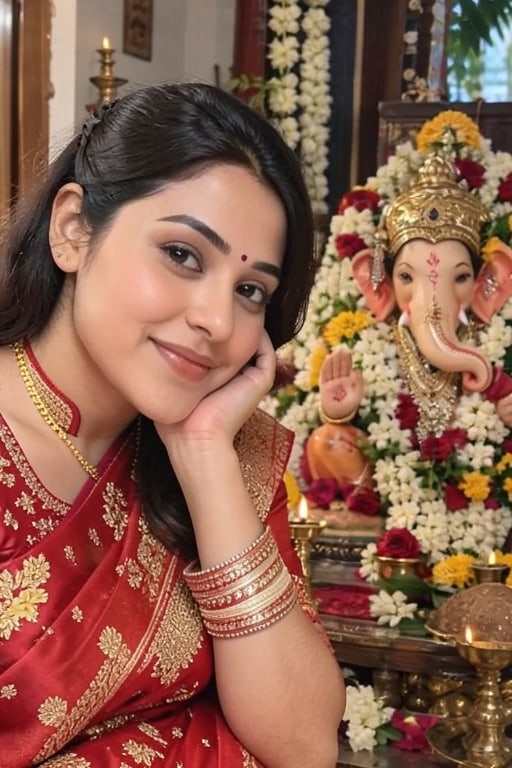
Create a single ultra‑photorealistic portrait in vertical 9:16 orientation, captured as a close‑up selfie‑style shot of the individual whose face is supplied in the uploaded reference. --- FACIAL RECOGNITION – HIGHEST PRIORITY --- Maintain the exact facial identity from the uploaded reference without any alteration. Keep all of the following unchanged: - overall bone structure and proportion - shape of the face and forehead - eyebrow placement and shape - eye shape, spacing and natural look - nose contour and bridge - lip shape and mouth proportion - cheekbone definition - jawline and chin outline - authentic skin texture with visible pores - complete facial geometry Do not apply beautification, age changes, or any redesign that would modify the recognizable identity. --- MODEL & ATTIRE --- Depict a young Indian woman with a graceful appearance, positioned beside a domestic Ganesha statue. Outfit: * traditional suit in silver‑white, woven with fine silver thread embroidery * a soft white dupatta featuring delicate floral silver motifs, draped over one shoulder Hair: * long dark hair, loose and gently falling forward past the shoulder * strands catch light naturally, showing a slight wind‑tossed effect, avoiding any CGI smoothness Accessories & Makeup: * oxidized silver jhumka earrings with tiny pearl drops * several glass‑and‑silver bangles stacked on one forearm * a modest red bindi centered on the forehead * makeup kept natural: subtle glossy lips, defined lashes, bright expressive eyes Pose: * tight framing with the face occupying the left side of the image * chin rested on the back of her hand, allowing the bangles to be visible * head tilted just enough to convey a warm, gentle smile * gaze directed straight at the camera as in a selfie --- SETTING --- To her right stands an ornate Lord Ganesha idol placed within a decorated home mandap. Details of the idol and surroundings: * crown of gold studded with jewels, layered gem and pearl necklaces * thick garlands of white jasmine flowers encircling the statue * clusters of red roses, yellow marigolds and green foliage around the base * the idol’s raised right palm displaying a painted red “ॐ” * an orange‑sindoor‑marked modak and a coconut positioned on the offering tray * brass diyas lit in the foreground, their flames soft and warm * hanging strands of jasmine and a carved wooden frame forming the backdrop * a bright doorway in the distant background with blurred green plants --- LIGHTING & CAMERA --- Illumination comes from natural daylight entering the doorway, complemented by the warm glow of the diyas. * soft directional light falls across the face with gentle fall‑off * warm highlights accent the jasmine, gold ornaments and the idol * creamy shallow bokeh creates a slightly out‑of‑focus foreground of diyas * simulate a full‑frame camera using a 50 mm lens at f/2.0, positioned for a close portrait distance * colour palette leans toward cinematic warm tones with natural contrast, rendering highly detailed skin * output resolution 8K, vertical 9:16 aspect --- RESTRICTIONS --- - Do not modify the person’s facial identity or proportions. - Avoid smoothing, airbrushing, or giving the skin a plastic appearance. - The subject must not resemble a generic model. - Preserve the correct form of the Ganesha idol; no extra arms, distorted trunk, or altered proportions. - No text, watermarks, or logos may appear. - Prevent CGI‑style hair or overly retouched results. - Lighting must remain warm; cool or blue‑white illumination is prohibited. Priority hierarchy: 1. Exact facial likeness 2. Authentic close‑up skin texture 3. Faithful representation of the Ganesha idol 4. Detail of jhumkas, bangles and silver‑white attire 5. Jasmine and floral embellishments 6. Warm natural lighting with bokeh Produce a single finished photorealistic image.

9 0 0
1w
Preview of Radiant Pink Lehenga Diwali Portrait
image / Gemini
Festivals & OccasionsGemini · ChatGPT

Radiant Pink Lehenga Diwali Portrait

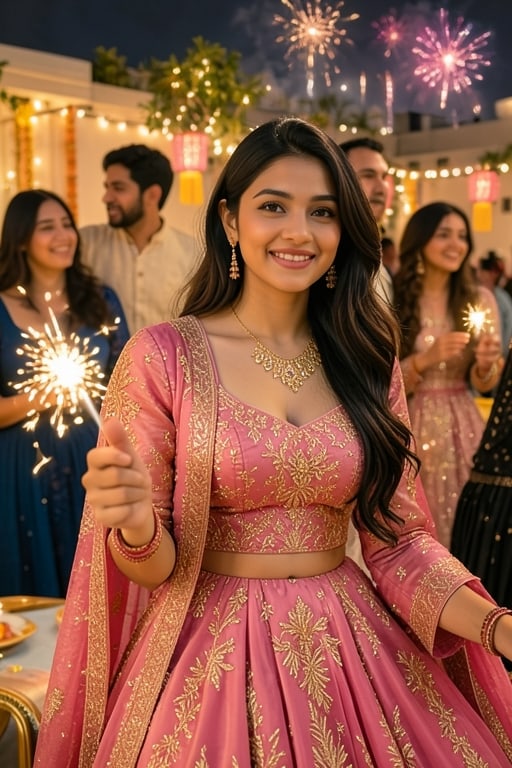
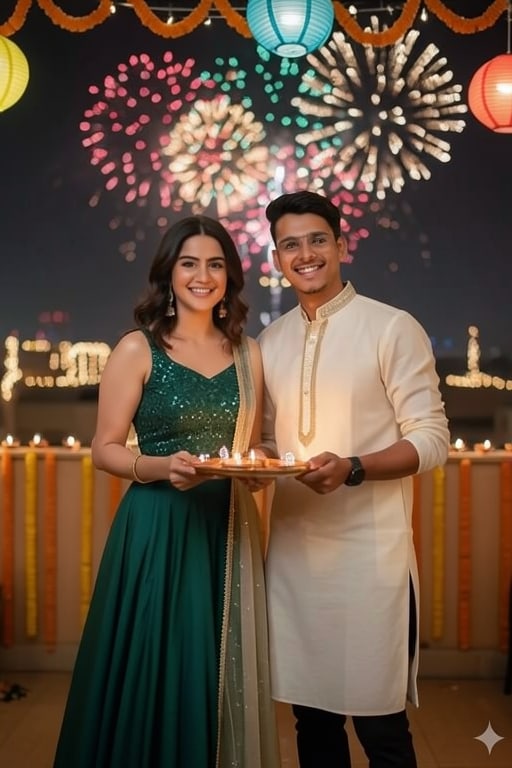
Produce an ultra‑realistic DSLR image with 8K‑grade detail, oriented vertically in a 9:16 frame. The composition must feature the young Indian woman from the uploaded reference picture, keeping her facial identity intact—maintaining her original bone structure, eyes, eyebrows, nose, lips, skin tone and natural proportions. Do not alter her face, over‑beautify, smooth the skin unnaturally, or give her an artificial expression. **Primary subject and look:** The woman stands naturally at a lively outdoor Diwali night scene. She wears a vivid pink lehenga adorned with detailed gold embroidery, a coordinating blouse, and a light pink dupatta draped casually over one shoulder. Her accessories are modest: delicate earrings and subtle bangles. Her long dark hair falls loosely around her shoulders, each strand visible with realistic texture. She displays a spontaneous, joyous smile, eyes bright with genuine happiness, looking slightly toward the camera. In one hand she holds a lit phooljhadi (sparkler) with a natural grip, correctly positioned fingers and wrist angle; the sparkler emits fine golden sparks that light her hand and nearby fabric without hiding her face. **Additional participants and layout – crucial:** Place three to five friends behind the main figure at believable distances. Each background person must appear as a distinct individual with unique facial features, hairstyles, outfits and expressions, avoiding any duplicated looks. They should be engaged in laughing, chatting, or smiling while also holding sparklers safely away from faces. Ensure full, recognizable head shapes and naturally placed shoulders are visible. Allocate roughly 60–70% of visual focus to the central woman; the friends occupy the remaining space on either side and slightly behind, with enough separation to prevent overlapping silhouettes or merged limbs. Their faces may be a touch out of focus due to depth of field, yet still retain coherent, human‑like anatomy, correct eye alignment, realistic skin texture, proper hand formation and natural posture. **Celebratory setting:** The backdrop is an elegantly decorated Indian courtyard or open terrace at night. Warm golden fairy lights stretch overhead, lanterns emit a soft glow, and rows of traditional clay diyas line the perimeter. Distant fireworks in pink, gold and orange burst across the sky. A few additional revelers appear far in the background, blurred just enough to suggest a bustling gathering without crowding the frame. The environment should feel spacious, authentic and physically plausible, not a digitally assembled crowd. **Lighting and photographic fidelity:** Combine warm ambient fairy‑light illumination, the golden light from the sparkler, and a gentle directional light on the woman's face. Preserve true skin tones, natural highlights, realistic shadows, and a consistent light direction across all subjects. Fireworks should light the sky without casting unnatural colour patches on faces. Emulate a full‑frame DSLR look using a 50mm portrait lens at f/2.8, delivering shallow depth of field that keeps the woman's eyes razor‑sharp while rendering embroidery, fabric folds, hair strands and background bokeh authentically. Avoid heavy HDR, oversaturation, artificial glows or overt compositing. **Framing and composition:** Vertical 9:16 portrait, captured from mid‑thigh upward, ensuring the woman's face, upper torso and sparkler are fully visible. Leave ample space above her head for fireworks and enough lateral room for friends to sit naturally within the frame. The woman's face must remain unobstructed and in crisp focus. All elements—sparkler, hands, clothing, secondary figures and surroundings—should integrate seamlessly. **Negative prompt:** Deformed faces, asymmetrical or misplaced eyes, distorted facial features, duplicate faces, cloned people, merged bodies, overlapping heads, fused limbs, extra arms, extra fingers, missing fingers, malformed hands, broken wrists, unnatural shoulders, twisted joints, floating objects, stiff poses, artificial smiles, plastic skin, excessive face smoothing, exaggerated makeup, incorrect body proportions, blurry main subject, incoherent background people, malformed silhouettes, excessive bokeh covering faces, oversaturated colors, fake fireworks, unrealistic sparkler effects, harsh artificial lighting, cartoon appearance, CGI look, watermarks, text, cropped head, cropped sparkler, and unnatural composition.

9 0 0
1w
Preview of Diwali Balcony Couple in Red Saree
image / Gemini
Festivals & OccasionsGemini · ChatGPT

Diwali Balcony Couple in Red Saree

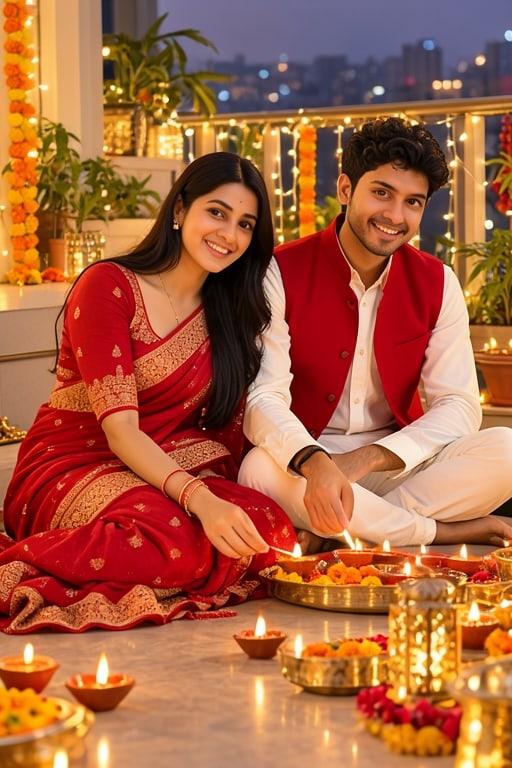
Ultra‑realistic 8K cinematic portrait of a couple, vertical 9:16 format. Identity preservation: employ the two uploaded reference images to keep each subject’s facial features—structure, eyes, nose, lips, skin tone, and authentic expression—exactly as they appear. Avoid any beautification, reshaping, blending, or alteration of the faces. SITTING POSTURE – CRITICAL: The young Indian pair are seated naturally on a spacious balcony floor during a Diwali evening, with anatomically correct, comfortable positions. - Woman: adopts a traditional side‑folded pose, legs folded to her left, knees bent naturally, lower legs resting on the floor, feet tucked beside the hips and partially hidden by the saree. Spine is upright yet relaxed, shoulders level, torso aligned. She is not kneeling, squatting, or perched on her feet. - Man: positioned beside her in a relaxed cross‑legged Sukhasana, knees angled outward, feet tucked under opposite legs. Weight is evenly distributed, back straight but relaxed, shoulders natural, legs firmly grounded without any floating or twisted appearance. - Interaction: they sit close, angled toward a small cluster of clay diyas placed on the floor before them. The woman holds a lit match or taper, while the man assists in lighting a diya. Hands, fingers, wrists, and arms are placed realistically near the lamps. Both gaze softly at the flame, sharing a warm, affectionate smile. - Proportions: display the full bodies from head to feet, ensuring visible seated posture, folded legs, and supported hips. Avoid overlapping limbs, fused bodies, twisted knees, duplicated or missing feet, floating hands, or impossible joints. APPAREL AND ACCESSORIES: Woman wears an elegant red saree with a rich gold embroidered border, draped over the legs, paired with a coordinating blouse, delicate gold necklace, small earrings, and refined bangles. Man dons a cream kurta with a maroon ethnic jacket and subtle traditional accents. Render realistic fabric folds, embroidery detail, and natural cloth movement. SETTING AND ILLUMINATION: A tastefully decorated Indian balcony at night, featuring rows of glowing clay diyas arranged neatly around the couple, warm fairy lights along the railing, gentle marigold flower accents, and a softly blurred city skyline in the distance. The diya flames emit a golden glow that illuminates their faces, producing natural shadows, detailed skin texture, and a cinematic bokeh effect. CAMERA VIEW AND COMPOSITION: Full‑body seated framing captured from a slightly elevated front‑facing three‑quarter angle. Use a vertical 9:16 canvas with sufficient margin to include the entire seated pose, folded legs, feet, and the diyas. Faces must remain sharply in focus. Emulate a professional DSLR with a 50mm lens look, realistic depth of field, warm cinematic colour grading, true‑to‑life proportions, detailed textures, and authentic Diwali ambience. NEGATIVE PROMPT: Incorrect sitting posture, awkward kneeling, unnatural squatting, half‑standing pose, floating body, unsupported hips, twisted spine, backward‑bending knees, anatomically wrong legs, tangled limbs, fused bodies, extra arms, extra legs, duplicated feet, missing feet, deformed hands, extra fingers, stiff shoulders, unnatural leaning, distorted faces, altered facial identity, plastic skin, excessive retouching, artificial lighting, cartoon style, cropped legs, cropped feet, blurry faces, unrealistic diya flames. Priority: first ensure anatomically correct seated anatomy, then maintain precise facial identity, followed by natural couple interaction and cinematic Diwali atmosphere.

9 0 0
1w
Preview of Devotional Portrait with Ganesh
image / Gemini
Photo Edits & TrendsGemini · ChatGPT

Devotional Portrait with Ganesh

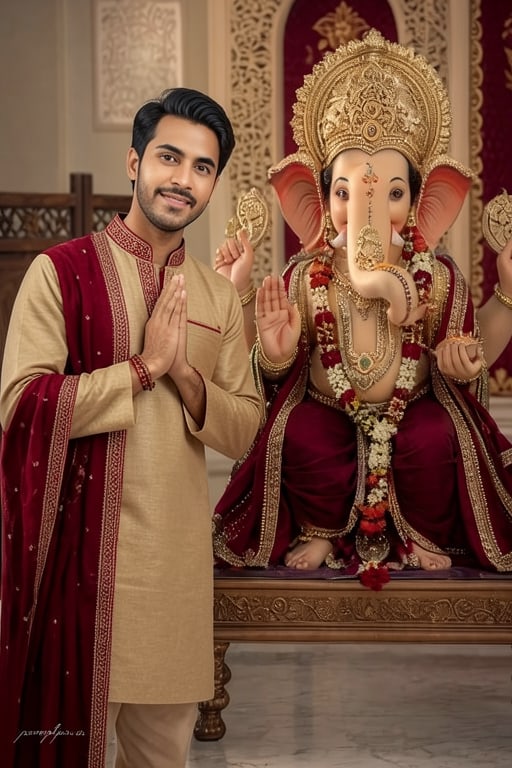
Reference the uploaded image to match the individual's identity precisely. Preserve the facial structure, eyes, eyebrows, nose, lips, jawline, hairstyle, facial hair, skin tone, natural proportions and unique identity without any beautification, reshaping, or redesign. Depict a young Indian man standing respectfully next to Lord Ganesha inside a refined community prayer hall. He wears a soft beige linen kurta that shows natural fibers, tapered ivory trousers, and a deep crimson shawl embroidered with fine detail, draped over one shoulder and bordered with intricate woven trim. Traditional sandals and a simple wooden bead bracelet complete the ensemble, keeping the styling understated. His torso is upright and relaxed; one hand is raised in a natural Namaste gesture, the other rests at his side. He faces the camera directly, offering a calm devotional smile that feels sincere rather than staged. Place Lord Ganesha on a polished carved‑wood platform beside the man, adorned with an ornate crown, layered jewelry, and deep crimson‑and‑cream fabrics. The idol should exhibit realistic handmade texture and paint work, with visible grain and intricate decorative details. The prayer hall features textured cream walls, carved wooden dividers, soft red textile panels, and a polished stone floor. Subtle festive ornaments are present but never clutter the scene; all surfaces remain clean and well‑maintained, with no messy decorations or distracting background elements. Skin texture must stay highly realistic, showing pores, fine facial hairs, natural tonal variation, and authentic eye‑lip detail. Preserve the linen fiber structure, embroidery threads, wooden grain of the bracelet, stone floor reflections, and handcrafted details of the idol at a photographically convincing level. Lighting: soft frontal diffusion complemented by a gentle side fill from the left, producing balanced facial exposure, natural cheek shadows, and delicate fabric highlights. Avoid artificial glowing skin or over‑exposed facial highlights. Camera: 80mm medium‑format portrait style, eye‑level placement, natural perspective, smooth realistic depth separation. Keep the man and Ganesha sharply in focus while allowing the farthest part of the hall to fall off gradually and naturally. Colour grading should employ restrained beige, cream, crimson, and muted gold tones with realistic white balance, subtle grain, and the character of a RAW photograph. Composition: strict vertical orientation with a 4:5 aspect ratio, subject’s face directed straight at the lens. Prohibitions: no dirty surroundings, no litter, no excessive decorations, no brass diyas, no crowd clutter, no distorted hands, no extra fingers, no duplicate objects, no artificial skin smoothing, no facial alteration, no cartoon effect, no plastic skin, no beauty filter, no text, no logo. Add a subtle watermark in the bottom left corner reading “promptpin.in” in Petit Formal Script, thin elegant cursive strokes, small and unobtrusive, without interfering with the subject.

9 0 0
1w
Preview of Minimalist Studio Portrait with Diamond Rings and Owl
image / Gemini
Festivals & OccasionsGemini · ChatGPT

Minimalist Studio Portrait with Diamond Rings and Owl

An ultra-detailed 4K studio portrait showing a male subject inside a stark white cyclorama. He is dressed in an immaculate white tailored suit, paired with dark tinted circular sunglasses. Four distinct diamond rings adorn the fingers of one hand. His posture mimics aiming a firearm, while a large owl perches steadily upon his left shoulder. Preserve the facial features from the provided reference image completely without alteration, maintaining exact facial likeness. Aspect ratio 1080x1350.

9 0 0
1w

Search prompts

Search by keyword or describe what you need