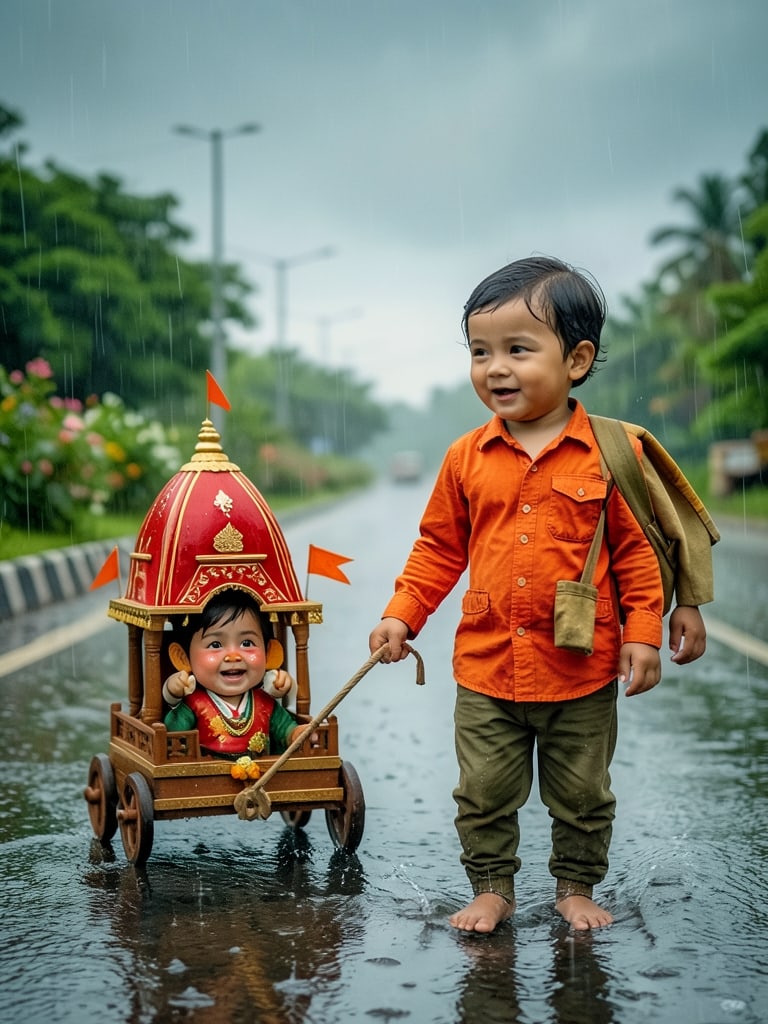
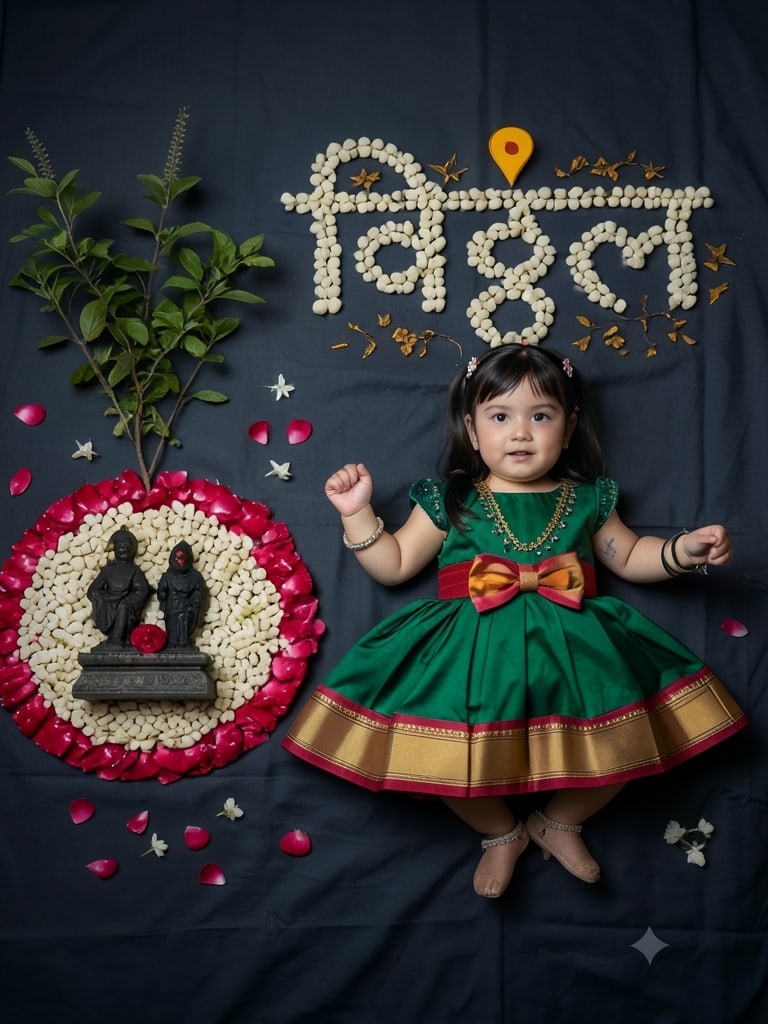
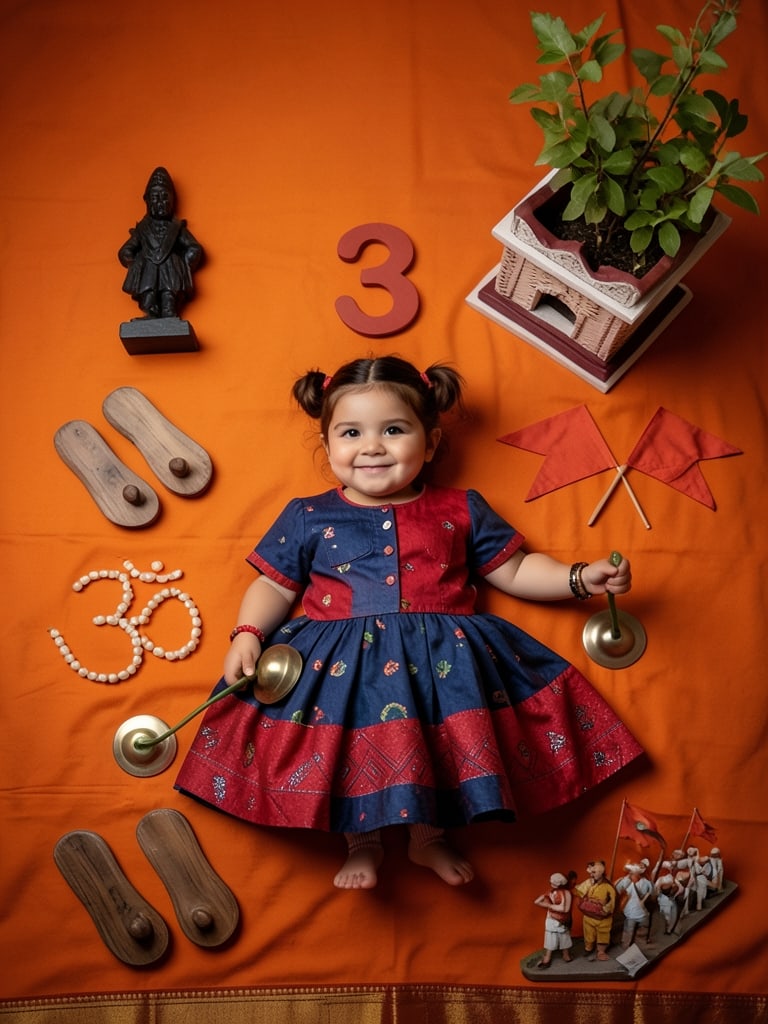
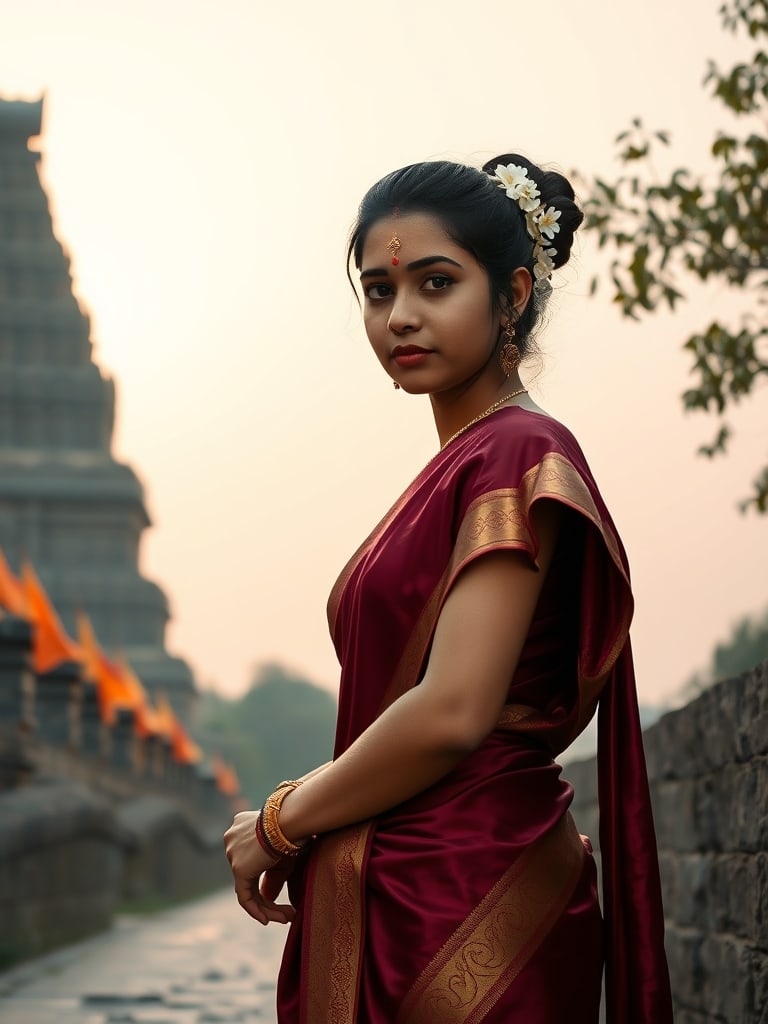
Traditional Tulsi Vrindavan Ashadhi Ekadashi Women Photoshoot
Portrait Photography prompt: create image STRICT FACE IDENTITY PRESERVATION DNA Use the uploaded image exclusively as the facial identity reference for the woman. Preserve the…
Prompt
create image
STRICT FACE IDENTITY PRESERVATION DNA
Use the uploaded image exclusively as the facial identity reference for the woman. Preserve the exact facial identity, including the head shape, forehead proportions, hairline, eyebrows, eyelids, eye spacing, eye shape, nose structure, cheeks, lips, jawline, chin, ears, skin tone, skin texture, facial symmetry, smile characteristics, and apparent age. Preserve her confident devotional smile, bright expressive eyes, and naturally joyful facial expression exactly as shown. Do not beautify, stylize, enlarge the eyes, reshape facial proportions, sharpen facial contours, modify complexion, alter age, or apply beauty-filter effects. The uploaded image serves only as the facial identity reference while every costume, body posture, ritual object, procession environment, and photographic relationship is reconstructed entirely through descriptive instructions.

SUBJECT DNA
Create an ultra-realistic premium documentary-style portrait capturing a young Maharashtrian Warkari woman proudly participating in the Ashadhi Wari pilgrimage to Pandharpur. She walks joyfully within the Dindi procession while balancing a beautifully decorated Tulsi Vrindavan upon her head. The portrait should communicate devotion, strength, humility, and celebration simultaneously, making the viewer feel present inside the sacred Wari rather than observing a staged photograph.

OUTFIT DNA
Dress the woman in a luxurious traditional Maharashtrian Nauvari Paithani saree draped in authentic Brahmani style. The saree body should be rich vermilion-red silk with realistic woven texture, while the broad borders feature antique gold zari interwoven with traditional peacock and lotus motifs framed by deep emerald-green piping. The pallu flows naturally behind the shoulders with physically accurate silk folds created by walking.
The blouse should be deep forest-green silk with puff sleeves, richly woven Paithani motifs, antique gold zari sleeve borders, and realistic silk sheen.
Adorn her with a traditional Maharashtrian bridal-style gold necklace layered with a longer Lakshmi haar, matching gold jhumka earrings, traditional Maharashtrian nose pin, gold waist belt beneath the saree folds, multiple green glass bangles mixed with antique gold bangles, traditional finger rings, and fresh white jasmine flowers woven around a neatly tied bun.
Apply a small black bindi between the eyebrows while preserving exact facial proportions.

RITUAL OBJECT DNA
Balance a beautifully handcrafted Tulsi Vrindavan upon the woman’s head.
The Tulsi Vrindavan should be constructed from traditional carved white stone with realistic architectural detailing, hand-painted red and green borders, miniature temple carvings, and premium aged stone texture.
A lush healthy Tulsi plant emerges naturally from the centre with vibrant green leaves, fresh flowering spikes, and realistic botanical structure.
Place a folded saffron cloth ring beneath the Tulsi Vrindavan to stabilize it naturally upon the head.
Behind the woman, several saffron Warkari flags wave naturally above the Dindi procession.

POSITION DNA
The woman walks confidently toward the camera.
Approximately 72% of the body weight transfers naturally through the leading right leg while the left leg advances forward to complete the next step.
The pelvis rotates subtly with authentic walking mechanics.
The torso remains upright with approximately 4° forward inclination generated by natural walking momentum.
Both shoulders remain level while supporting the balanced Tulsi Vrindavan.
The head remains perfectly vertical with almost no lateral tilt, demonstrating experienced balance during pilgrimage.

HAND POSITION DNA
Both elbows lift naturally outward to support the Tulsi Vrindavan.
Each forearm bends approximately 105 degrees.
The palms gently stabilize opposite sides of the Tulsi pedestal without gripping tightly.
The fingers remain naturally spread across the stone surface with anatomically correct curvature.
Visible muscle tension should remain minimal, communicating effortless balance developed through devotional practice.

BODY LANGUAGE DNA
The entire posture expresses confidence, devotion, and joyful participation in the sacred pilgrimage.
The upright spine, relaxed shoulders, balanced head position, gentle smile, and rhythmic walking mechanics should communicate that carrying the Tulsi Vrindavan is an honour rather than a burden.
Every movement should remain anatomically accurate and naturally elegant.

EYE DIRECTION DNA
The woman looks directly toward the camera with warm, welcoming eyes and a genuine devotional smile, inviting the viewer into the spiritual atmosphere of the Wari. Natural catchlights preserve life within the eyes while maintaining emotional authenticity.

CAMERA DNA
Position the camera approximately 138 centimetres above the road surface, closely matching the woman’s upper chest level.
Maintain a perfectly frontal camera orientation with only a two-degree upward inclination, allowing the Tulsi Vrindavan to dominate the upper composition while preserving realistic body proportions.

CAMERA POSITION DNA
Place the photographer approximately 4.2 metres directly in front of the walking devotee.
The optical centre aligns precisely with the centre of the woman’s torso, ensuring symmetrical balance between her body, the Tulsi Vrindavan, and the background procession.

CAMERA DISTANCE DNA
Capture using a professional full-frame camera equipped with a 135mm premium telephoto portrait lens from approximately 4.2 metres.
This focal length compresses the background procession beautifully while maintaining luxurious separation between the woman and surrounding devotees.
The subject occupies approximately seventy percent of the vertical composition while preserving meaningful environmental context.

CAMERA ELEVATION RELATIONSHIP DNA
The slightly lowered camera position gives the viewer the perspective of another Warkari walking within the procession. The Tulsi Vrindavan rises majestically above the woman’s head while the saffron flags naturally extend beyond, reinforcing the vertical devotional hierarchy.

LENS DNA
Photograph using a professional full-frame camera fitted with a 135mm prime portrait lens at f/2.0.
Produce exceptional facial sharpness, premium telephoto compression, luxurious subject isolation, creamy optical rendering, and physically accurate perspective.

LIGHTING DNA
Photograph during an overcast monsoon morning with naturally diffused daylight. Soft cloud-filtered illumination wraps evenly around the face, eliminating harsh shadows while preserving realistic skin texture. Gentle ambient reflections from surrounding devotees softly illuminate the saree and jewellery. Tiny highlights sparkle naturally across the silk fabric, gold ornaments, and Tulsi leaves without appearing artificial.

BOKEH DNA
Render the Dindi procession into luxurious creamy telephoto bokeh.
Background devotees dressed in white Gandhi caps, saffron flags, temple structures, roadside greenery, and monsoon atmosphere gradually dissolve into elegant circular bokeh while remaining visually recognisable enough to communicate the pilgrimage setting.
Maintain extremely strong subject isolation.

VISUAL DEPTH DNA
The foreground begins with softly blurred saffron flags and nearby pilgrims entering the lower edges of the frame. The primary subject layer consists of the woman rendered with pore-level skin detail, luxurious Paithani silk textures, premium gold jewellery, realistic Tulsi Vrindavan craftsmanship, and healthy botanical detail. The secondary layer includes softly blurred Warkari devotees carrying saffron flags and traditional instruments. The distant background fades into misty monsoon atmosphere with subtle temple architecture and mature trees dissolving into luxurious depth.

ENVIRONMENT DNA
Construct the authentic Pandharpur Wari pilgrimage route during Ashadhi Ekadashi. Include thousands of softly blurred Warkari devotees dressed in traditional white attire, Gandhi caps, saffron flags, devotional banners, distant temple structures, roadside greenery, monsoon sky, and naturally wet pilgrimage roads. The environment should feel vibrant, sacred, and alive without overwhelming the primary subject.

STORYTELLING DNA
This portrait celebrates one of the most cherished traditions of Maharashtra, where women carry the sacred Tulsi Vrindavan during the Pandharpur Wari. Every step symbolizes devotion, surrender, and unwavering faith in Lord Vitthal. The woman’s joyful smile reflects the spiritual fulfilment of walking alongside thousands of fellow devotees toward Pandharpur. The Tulsi plant represents purity, the saffron flags symbolize the Warkari movement, and the monsoon atmosphere embodies the timeless rhythm of the Ashadhi pilgrimage. Rather than appearing posed, the image should feel like a precious documentary moment preserved forever.

COMPOSITION DNA
Construct the composition around a strong vertical devotional hierarchy. The walking devotee occupies the central axis, the Tulsi Vrindavan crowns the composition, and the saffron flags create upward visual rhythm behind her. The telephoto compression gently merges the procession into a harmonious devotional backdrop while preserving generous negative space around the subject. Every visual pathway—from the woman’s smile, to her supporting hands, to the Tulsi plant, and finally to the waving saffron flags—should reinforce the spiritual journey toward Lord Vitthal.

FINAL OUTPUT
Create an ultra-realistic premium Pandharpur Wari devotional portrait in 4K Ultra HD, photographed with a professional full-frame camera using a 135mm prime portrait lens at f/2.0, featuring physically accurate optics, luxurious Maharashtrian Paithani silk textures, authentic Tulsi Vrindavan craftsmanship, realistic botanical details, premium gold jewellery, creamy telephoto bokeh, monsoon pilgrimage atmosphere, emotionally immersive storytelling, documentary-style fine-art devotional photography, and a 9:16 vertical composition.
How to use
Paste the prompt into Midjourney. Swap the subject and keep the lighting, lens and style details for a consistent look.
Use case
Portrait Photography — tulsi, vrindavan
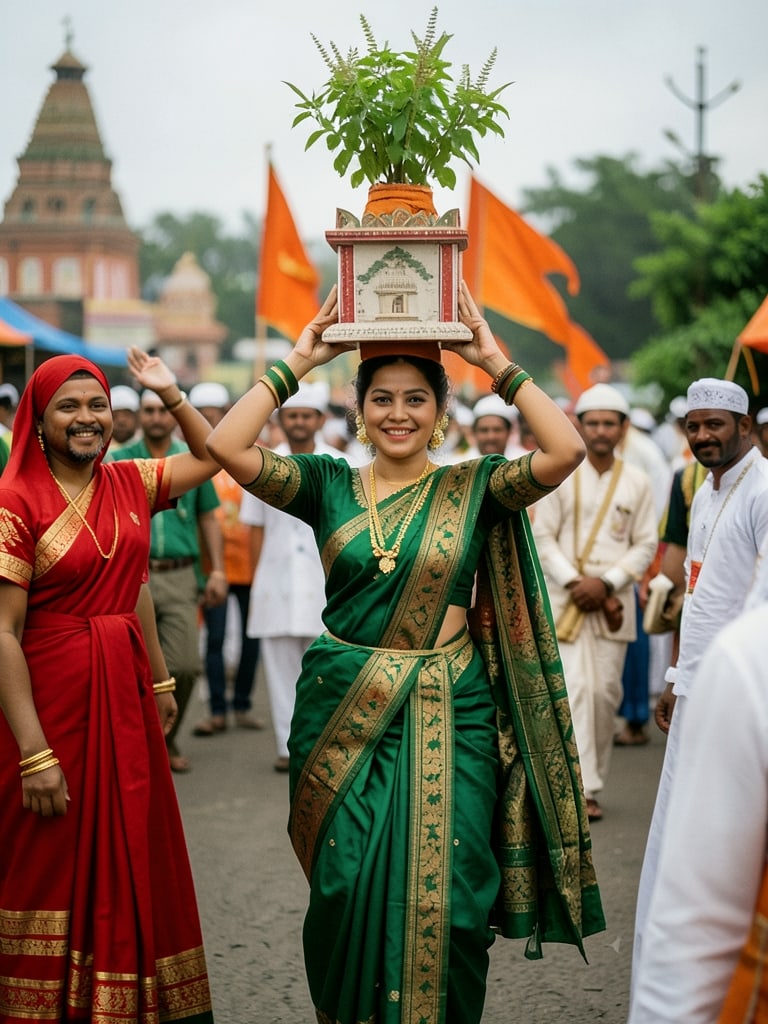 image / ChatGPT
Studio tools
AI Optimizer
Improve, shorten, expand or retarget this prompt for another image or video model. Every result is saved as a new version — the original is never overwritten.
Improve prompt
Produces optimized, concise, detailed, beginner and model-specific versions.
Generate variations
Professional, creative, cinematic, minimal and advanced.
Prompt history
- v1 · Original1 day ago