PromptBehind

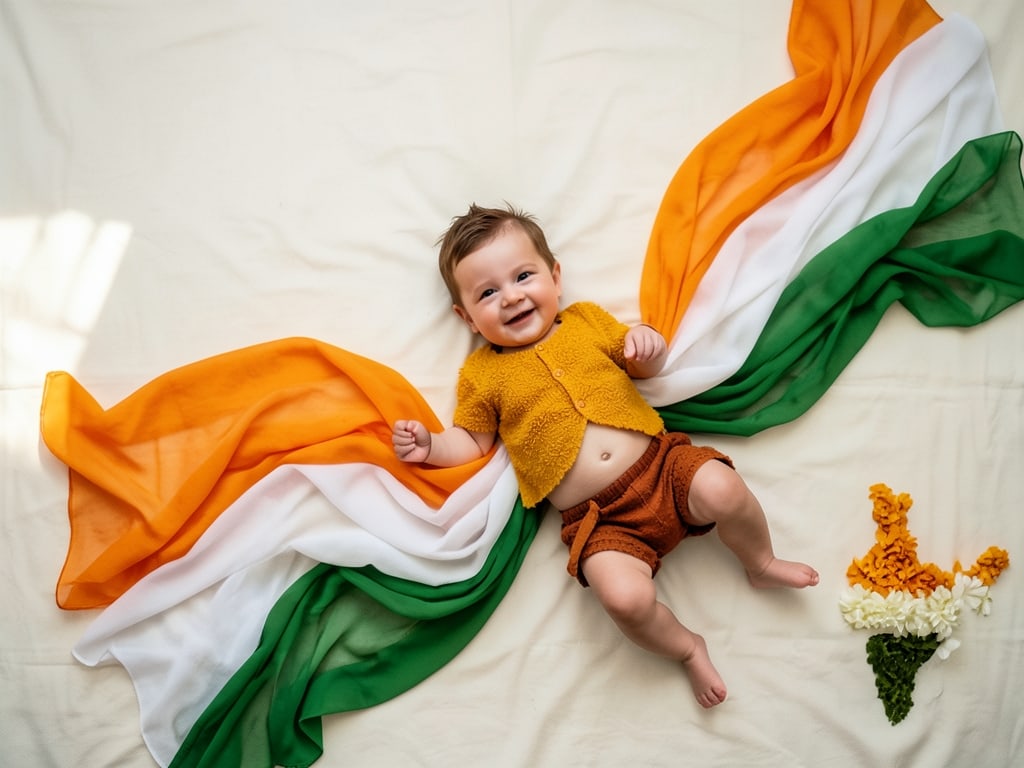
Tricolor Independence Day Baby Photoshoot Idea at Home

Portrait Photography prompt: create image STRICT FACE IDENTITY COPY DNA Use the uploaded image exclusively as the facial identity source for the baby and copy the baby’s exact…

Prompt
create image
STRICT FACE IDENTITY COPY DNA
Use the uploaded image exclusively as the facial identity source for the baby and copy the baby’s exact face identity into the generated portrait, reproducing the same head shape, forehead, hairline, eyebrows, eyelids, exact eye shape and spacing, nose, lips, cheeks, jawline, chin, ears, skin tone, natural skin texture, facial symmetry, distinctive traits, expression characteristics, and exact apparent age. Do not create a similar, inspired, beautified, or generic baby face. The uploaded image controls facial identity only; reconstruct everything else entirely from this written blueprint.
SUBJECT & COMPOSITION DNA
Create an artistic Indian Independence Day baby flat-lay photoshoot. Position the baby lying diagonally near the center of a large soft off-white fabric backdrop, with the head toward the upper-middle and feet extending toward the lower-right. Surround the baby with dramatically flowing saffron, white, and green fabrics spreading outward like broad patriotic wings, while maintaining generous clean negative space.
BABY POSE & BODY LANGUAGE DNA
The baby lies comfortably on the back in a playful natural pose, torso slightly diagonal, one arm relaxed outward and the other interacting gently with the nearby tricolor fabric. Keep both legs naturally bent and separated, with relaxed bare feet. The baby looks upward toward the overhead camera with a cheerful, spontaneous expression. Preserve realistic infant anatomy and age-appropriate proportions.
OUTFIT & STYLING DNA
Keep the baby minimally styled to preserve the innocent newborn/infant photoshoot aesthetic, wearing a simple neutral cream diaper cover or soft fitted shorts. Keep the upper torso bare. No elaborate jewellery, headwear, shoes, costume, flag-print clothing, or distracting accessories.
TRICOLOR FABRIC DNA
Use three lightweight translucent fabrics in saffron orange, clean white, and India green. Arrange them around and partially beneath the baby so they sweep outward from the center toward both sides of the composition. On the left, create a broad flowing saffron section above a white central fold and green lower sweep. Continue the fabrics behind the baby toward the upper-right, creating long wind-like ribbons. Preserve recognizable saffron-white-green separation with organic folds and realistic textile transparency.
TYPOGRAPHY DNA
In the large negative space at the upper-left, spell “INDIA” using handcrafted saffron/orange decorative lettering. Keep the typography simple, slightly rustic and physically integrated into the flat-lay rather than appearing like digital overlay text. Leave substantial breathing room around the lettering.
PATRIOTIC PROP DNA
In the lower-right negative space, create a small India-map-inspired tricolor arrangement made from flower petals or fine natural decorative material, with saffron at the top, white through the middle, and green at the bottom. Keep it secondary in scale to the baby and sufficiently separated from the baby’s feet.
BACKGROUND & SURFACE DNA
Use a large ivory/off-white cotton fabric sheet with subtle natural wrinkles and soft woven texture. Avoid a perfectly digital white background. The neutral surface should make the saturated saffron and green fabrics stand out while maintaining the handcrafted home-photoshoot character.
CAMERA ANGLE, DISTANCE & FRAMING DNA
Photograph from a true 90-degree overhead viewpoint, camera perfectly perpendicular to the baby. Position the camera approximately 2.5–3 metres above the setup to capture the complete baby, sweeping fabrics, INDIA lettering, decorative tricolor arrangement, and surrounding negative space. Maintain balanced 16:9 framing with the baby as the unmistakable visual focal point.
LENS & CAMERA DNA
Use a 45–50mm full-frame lens, approximately f/5.6, 1/200 sec and ISO 100–200. Maintain natural body proportions with minimal optical distortion and enough depth of field to keep the baby’s face, body, fabrics and nearby decorative elements sharply resolved.
LIGHTING DNA
Use large, diffused daylight-style illumination from the upper-left with broad soft fill from the opposite side. Create delicate dimensional shadows beneath the baby’s body and fabric folds while retaining luminous skin tones and detailed textile texture. No harsh flash, dramatic studio shadows or blown highlights.
COLOR & MOOD DNA
Maintain an elegant Independence Day palette dominated by warm ivory, saffron orange, white and rich India green. Keep skin tones natural and realistic. The mood should feel joyful, innocent, handcrafted, celebratory and distinctly Indian without becoming overly decorative.
PHOTOGRAPHY QUALITY & REALISM DNA
Create premium ultra-realistic baby photography with authentic infant skin texture, tiny hairs, realistic fingers and toes, natural fabric wrinkles, individual textile fibres, physically accurate contact shadows and handcrafted decorative details. Preserve the charming simplicity of a real creative Independence Day baby photoshoot while elevating the photographic quality.
NEGATIVE & EXCLUSION DNA
No identity drift, generic baby face, facial beautification, changed apparent age, altered facial anatomy, adult-like features, distorted body, extra fingers or toes, duplicate limbs, unsafe pose, artificial plastic skin, oversized props, incorrect saffron-white-green arrangement, distorted India-inspired decoration, random patriotic symbols, excessive flags, balloons, confetti, clutter, artificial CGI fabric, extreme saturation, HDR effect, excessive blur, perspective distortion, misspelled “INDIA,” additional text, logos, watermarks, social-media UI or screenshot elements.
OUTPUT DNA
Generate an ultra-realistic 4K Ultra HD 16:9 photograph, preserving the distinctive overhead flat-lay concept: baby centered within sweeping saffron-white-green fabric, handcrafted “INDIA” lettering in the upper-left, a small tricolor decorative arrangement in the lower-right, soft ivory fabric background, natural infant pose and premium photographic realism.

How to use

Paste the prompt into Midjourney. Swap the subject and keep the lighting, lens and style details for a consistent look.

Use case

Portrait Photography — baby, fabric
Preview rendered from “Tricolor Independence Day Baby Photoshoot Idea at Home”
image / ChatGPT
Studio tools

AI Optimizer

Improve, shorten, expand or retarget this prompt for another image or video model. Every result is saved as a new version — the original is never overwritten.

Improve prompt

Produces optimized, concise, detailed, beginner and model-specific versions.

Generate variations

Professional, creative, cinematic, minimal and advanced.

Prompt history

  • v1 · Original1 day ago
More like this

Related prompts

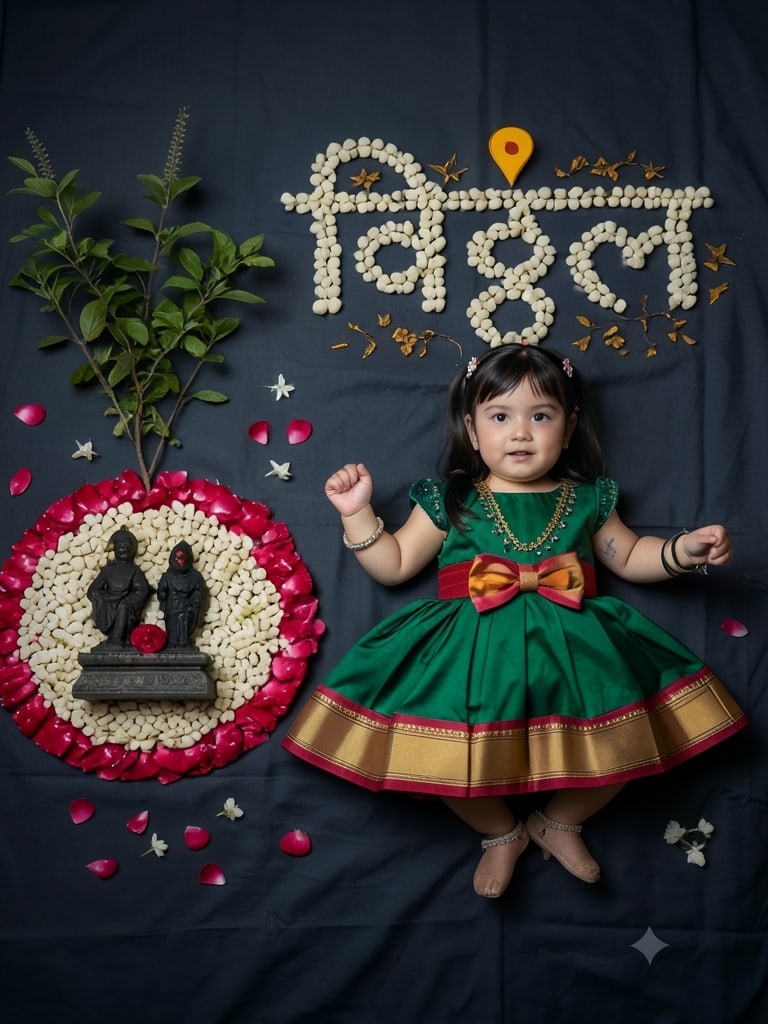
Preview of Vitthal Devotional Ashadhi Ekadashi Girl Photoshoot with Floral Flat Lay
image / Gemini
Baby & KidsGemini · ChatGPT

Vitthal Devotional Ashadhi Ekadashi Girl Photoshoot with Floral Flat Lay

create image STRICT FACE IDENTITY PRESERVATION DNA Use the uploaded image exclusively as the facial identity reference for the baby. Preserve the exact facial identity, including the head shape, forehead proportions, hairline, eyebrows, eyelids, eye spacing, eye shape, nose structure, cheeks, lips, jawline, chin, ears, skin tone, skin texture, facial symmetry, and apparent age. Preserve the baby’s calm innocent facial expression, soft cheeks, natural infant smile, and delicate facial proportions exactly as shown. Do not beautify, stylize, enlarge the eyes, sharpen facial contours, modify complexion, alter age, or apply beauty-filter effects. The uploaded image serves only as the facial identity reference while every devotional object, floral arrangement, fabric relationship, and environmental element is reconstructed entirely through descriptive instructions. SUBJECT DNA Create an ultra-realistic premium Tulsi Vivah-inspired devotional baby flat-lay portrait, celebrating the sacred relationship between Lord Vitthal, Tulsi Mata, and Maharashtrian devotional traditions. The baby becomes the heart of a handcrafted spiritual artwork where every surrounding element contributes to a balanced devotional narrative rather than appearing as randomly placed props. OUTFIT DNA Dress the baby in a luxurious traditional Maharashtrian infant frock stitched from rich emerald-green silk with realistic woven texture and naturally flowing pleats. The neckline and sleeves remain softly gathered with premium tailoring. Around the waist, attach a handcrafted Paithani silk belt featuring vibrant magenta, saffron, and antique gold zari weaving finished with an oversized decorative silk bow positioned centrally. The lower border of the dress should display broad antique gold zari weaving framed with royal magenta edging, while the skirt spreads naturally around the baby’s body through realistic silk folds. Add delicate silver anklets on both feet, black infant bangles on both wrists, tiny traditional earrings, and a vertical white Vaishnav tilak with saffron centre on the forehead. RITUAL OBJECT DNA Construct a handcrafted devotional arrangement inspired by Tulsi worship. Position a fully grown Tulsi plant along the left side of the composition with naturally branching stems, healthy green leaves, realistic flowering spikes, and authentic botanical structure. Below the Tulsi plant create a handcrafted floral altar using densely arranged white jasmine blossoms surrounded by a thick border of vibrant pink rose petals. At the centre of this floral mandala place beautifully sculpted miniature black stone idols of Lord Vitthal and Goddess Rukmini, standing upon a realistic carved stone pedestal with authentic basalt texture. Above the baby create a large handcrafted Marathi devotional rangoli spelling “विठ्ठल”, formed entirely from densely packed fresh white jasmine buds with naturally scattered saffron-orange marigold petals decorating the lettering. Integrate a saffron-yellow Vaishnav tilak into the centre of the typography. Arrange subtle loose rose petals and jasmine blossoms naturally across the fabric to soften transitions between devotional objects. POSITION DNA Lay the baby diagonally across the lower-right portion of the flat-lay arrangement. Approximately ninety-eight percent of the baby’s body weight rests gently upon the soft fabric surface. The spine follows its natural infant curvature while the torso rotates approximately six degrees toward camera-left. The head turns gently toward camera-right by approximately eight degrees while remaining comfortably supported by the fabric. The left leg extends naturally downward with slight knee relaxation, while the right knee bends softly outward, creating realistic infant body mechanics. Both shoulders remain completely relaxed without tension. HAND POSITION DNA The baby’s right forearm bends naturally upward beside the shoulder with the tiny hand forming a relaxed partial fist. The left arm extends slightly outward from the torso with the elbow softly flexed and the fingers naturally separated according to authentic infant anatomy. Every joint should remain loose and anatomically correct, creating the appearance of spontaneous movement rather than instructed posing. BODY LANGUAGE DNA The baby should communicate peaceful curiosity and devotional innocence. The relaxed posture, softly lifted arms, naturally separated legs, and calm facial expression create the feeling of a child peacefully resting within a sacred ceremonial space prepared with love and devotion. Every body mechanic should remain physically accurate for an infant. EYE DIRECTION DNA The baby looks directly upward toward the overhead camera with calm, attentive eyes filled with soft natural catchlights. The gaze establishes an immediate emotional connection while preserving complete innocence. CAMERA DNA Position the camera exactly 90 degrees overhead, perfectly perpendicular to the floor with zero perspective distortion. Mount the camera approximately 2.3 metres above the devotional arrangement, ensuring complete visibility of the baby together with every ritual object while maintaining symmetrical flat-lay geometry. CAMERA POSITION DNA Align the optical centre directly above the baby’s chest while balancing the Tulsi plant, floral altar, and Marathi floral typography around the composition. Maintain perfectly parallel sensor alignment with the fabric surface to eliminate distortion and preserve museum-quality flat-lay precision. CAMERA DISTANCE DNA Capture using a professional full-frame camera fitted with a 50mm macro prime lens positioned approximately 2.3 metres above the arrangement. This focal length preserves true proportions while delivering edge-to-edge sharpness throughout every devotional object. CAMERA ELEVATION RELATIONSHIP DNA The perfectly overhead camera transforms the scene into sacred devotional artwork where every ceremonial object becomes equally important within the visual narrative. The baby serves as the spiritual centre while the surrounding devotional symbols radiate harmoniously throughout the composition. LENS DNA Photograph using a professional full-frame camera equipped with a 50mm macro prime lens at f/6.3, ensuring complete sharpness across the baby, floral arrangements, Tulsi plant, Vitthal-Rukmini idols, typography, fabric textures, and every handcrafted devotional element. LIGHTING DNA Illuminate the flat-lay using two oversized overhead diffused softboxes positioned symmetrically above the arrangement. The lighting should remain shadow-free while preserving realistic silk reflections, botanical textures, flower petals, stone sculpture details, and premium infant skin rendering. Gentle overhead illumination should produce smooth tonal transitions without harsh contrast. BOKEH DNA Flat-lay compositions require consistent optical sharpness rather than background blur. Maintain uniform focus across the entire devotional arrangement with only extremely subtle edge softness beyond the outer decorative elements. VISUAL DEPTH DNA The foreground begins with premium charcoal-grey cotton fabric displaying realistic woven texture and naturally flowing folds. The primary subject layer consists of the baby rendered with pore-level skin detail, luxurious silk clothing, authentic jewellery, and realistic infant anatomy. The secondary layer includes the Tulsi plant, jasmine floral typography, Vitthal-Rukmini idols, floral mandala, and ceremonial petals arranged with handcrafted precision. The final layer consists of the remaining fabric surface, maintaining visual harmony while reinforcing the sacred atmosphere. ENVIRONMENT DNA Construct a premium handcrafted indoor devotional flat-lay inspired by traditional Maharashtrian Tulsi worship. The fabric should resemble a ceremonial altar prepared lovingly for Lord Vitthal, where every flower, leaf, and devotional object is intentionally positioned according to spiritual symbolism. The entire environment should communicate serenity, purity, and traditional craftsmanship. STORYTELLING DNA This portrait celebrates the baby’s place within the sacred Warkari tradition. The Tulsi plant represents devotion, the jasmine typography glorifies the holy name of Vitthal, the floral altar symbolizes worship, and the miniature Vitthal-Rukmini idols remind viewers of Pandharpur’s timeless spiritual heritage. The baby peacefully resting among these devotional symbols represents the passing of faith from one generation to the next. Rather than documenting a milestone, the portrait should become a timeless devotional artwork filled with cultural authenticity and emotional warmth. TYPOGRAPHY DNA Create the Marathi word “विठ्ठल” entirely from densely arranged fresh white jasmine buds positioned above the baby’s head. Scatter vibrant saffron-orange marigold petals naturally across the lettering without obscuring readability. Integrate a traditional saffron-yellow Vaishnav tilak at the centre of the typography. The floral lettering should appear handcrafted, symmetrical, and naturally integrated into the ceremonial arrangement rather than digitally placed. COMPOSITION DNA Construct the composition using balanced devotional geometry. The floral Marathi typography anchors the upper portion, the Tulsi plant balances the left side, the floral Vitthal-Rukmini altar occupies the lower-left corner, and the baby rests diagonally across the lower-right region. Every object should maintain equal visual spacing, creating elegant negative space between devotional elements. The viewer’s eye should naturally travel from the floral typography to the Tulsi plant, then to the baby, and finally to the Vitthal-Rukmini altar, producing a museum-quality devotional flat-lay masterpiece. FINAL OUTPUT Create an ultra-realistic premium Tulsi Vivah-inspired devotional baby flat-lay portrait in 4K Ultra HD, photographed with a professional full-frame camera using a 50mm macro prime lens at f/6.3, featuring physically accurate optics, luxurious Maharashtrian silk attire, authentic Tulsi botanical textures, handcrafted jasmine floral typography, realistic Vitthal-Rukmini stone idols, premium ceremonial flower arrangements, edge-to-edge optical sharpness, emotionally immersive devotional storytelling, museum-quality flat-lay photography, and a 9:16 vertical composition.

25 0 0
1h
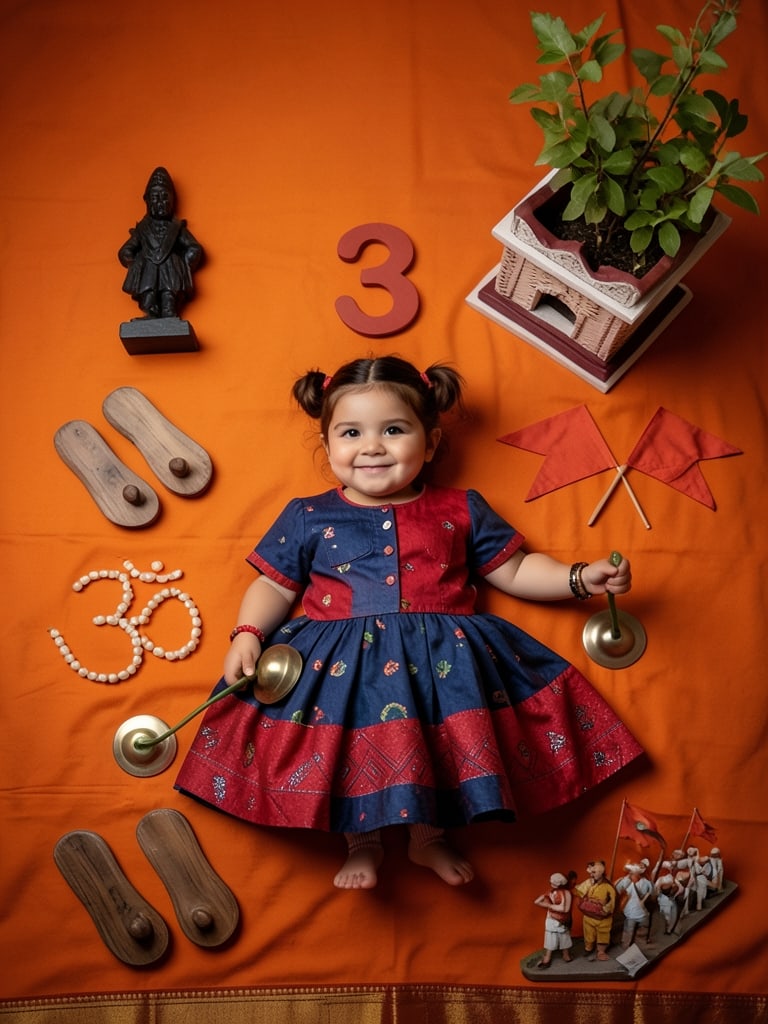
Preview of Ashadhi Ekadashi Girl Photoshoot with Warkari Palkhi Theme and Traditional Flat Lay
image / Gemini
Baby & KidsGemini · ChatGPT

Ashadhi Ekadashi Girl Photoshoot with Warkari Palkhi Theme and Traditional Flat Lay

create image STRICT FACE IDENTITY PRESERVATION DNA Use the uploaded image exclusively as the facial identity reference for the baby. Preserve the exact facial identity, including the head shape, forehead proportions, hairline, eyebrows, eyelids, eye spacing, eye shape, nose structure, cheeks, lips, jawline, chin, ears, skin tone, skin texture, facial symmetry, and apparent age. Preserve the baby’s innocent smile, soft infant expression, naturally rounded cheeks, and delicate facial proportions exactly as shown. Do not beautify, stylize, enlarge the eyes, reshape facial proportions, sharpen facial contours, modify complexion, alter age, or apply beauty-filter effects. The uploaded image serves only as the facial identity reference while every devotional object, environment, costume, and artistic relationship is reconstructed entirely through descriptive instructions. SUBJECT DNA Create an ultra-realistic premium Ashadhi Ekadashi 3-Month Baby Milestone Flat-lay inspired by the sacred Warkari tradition of Pandharpur. The baby should become the centrepiece of a handcrafted devotional artwork where every surrounding object celebrates Lord Vitthal, Tulsi devotion, Pandharpur pilgrimage, and Warkari culture. The composition should resemble a professionally curated museum-quality devotional flat-lay rather than a simple milestone photograph. OUTFIT DNA Dress the baby in a luxurious traditional Maharashtrian Paithani infant dress. The upper bodice should be deep vermilion-red silk richly embroidered with antique gold zari floral motifs, creating realistic woven texture and authentic silk sheen. The lower skirt should transition into a royal navy-blue Paithani silk displaying bold traditional geometric zari weaving with intricate antique gold motifs running throughout the fabric. The skirt should spread naturally beneath the baby with graceful radial folds while maintaining premium silk realism. Add tiny black infant bangles on both wrists, delicate gold earrings, a traditional white Vaishnav tilak with black central dot on the forehead, and naturally styled infant hair. MILESTONE DNA The milestone number “3” should be handcrafted from deep saffron-red matte material and positioned directly above the baby’s head, perfectly centred within the composition. The number should occupy approximately twelve percent of the overall frame height, creating immediate visual recognition while remaining proportionally balanced with the devotional objects. Its placement should clearly indicate the baby’s third-month milestone without competing for visual attention. RITUAL OBJECT DNA Construct a complete handcrafted Warkari devotional arrangement around the baby. On the upper-left section, position a handcrafted silhouette of Lord Vitthal standing upon a stylized temple base inspired by the architecture of Pandharpur Temple. The silhouette should feature realistic matte charcoal-black handcrafted texture with carefully cut devotional proportions. Directly below, arrange a pair of traditional wooden Paduka (holy sandals) carved from aged sandalwood with visible natural wood grain. Beside the sandals, create a beautifully handcrafted “ॐ” symbol using hundreds of individual ivory-coloured Tulsi beads arranged with perfect spacing and realistic bead texture. Place authentic brass Taal (hand cymbals) beside both of the baby’s hands, suspended naturally using green cotton cords. Their polished brass surfaces should display realistic reflections, aged metal texture, and authentic devotional craftsmanship. On the upper-right corner, position a premium handcrafted Tulsi Vrindavan with traditional white-and-maroon temple architecture, realistic carved detailing, and a vibrant living Tulsi plant overflowing naturally with healthy green leaves. Below the Tulsi Vrindavan position two handcrafted saffron Warkari flags crossed symmetrically, their cotton fabric displaying realistic folds and natural drape. In the lower-right section arrange miniature handcrafted Warkari pilgrims carrying saffron flags, mridangam, veena, and devotional instruments while walking together in Dindi procession, representing the sacred Pandharpur pilgrimage. POSITION DNA Lay the baby naturally upon the saffron devotional cloth in a perfectly relaxed infant posture. Approximately ninety-eight percent of the body weight rests evenly upon the soft fabric. The spine follows its natural infant curvature while the torso rotates gently approximately five degrees toward camera-left. The head turns softly toward camera-left by approximately ten degrees with the chin slightly elevated. The left leg extends naturally downward while the right knee bends softly, creating authentic infant relaxation. Both shoulders remain completely relaxed with the arms comfortably positioned away from the torso, preserving realistic infant anatomy. HAND POSITION DNA The baby’s left forearm bends naturally upward with the tiny hand softly closed into a relaxed partial fist, positioned approximately twelve centimetres away from the chest. The right forearm extends slightly outward while gently holding one brass cymbal through its green cotton cord. The fingers naturally wrap around the cord without visible tension. The opposite brass cymbal rests beside the left arm, suspended naturally by gravity. Every finger maintains anatomically correct infant curvature. BODY LANGUAGE DNA The baby should communicate peaceful innocence and quiet devotional joy. The relaxed shoulders, gently bent limbs, softly turned head, and calm expression should create the impression of a child peacefully resting within a sacred Ashadhi Ekadashi celebration. Every posture must remain anatomically authentic while preserving emotional warmth. EYE DIRECTION DNA The baby looks gently toward camera-left with naturally open eyes focused slightly upward, creating the impression of peacefully observing the surrounding devotional world. The expression remains soft, relaxed, and emotionally engaging. CAMERA DNA Position the camera perfectly perpendicular to the floor at a true 90-degree overhead angle. Mount the camera approximately 2.6 metres above the flat-lay setup, ensuring complete geometric symmetry without any perspective distortion. The optical axis remains perfectly centred over the baby, producing a true professional milestone flat-lay composition. CAMERA POSITION DNA Align the camera exactly above the geometric centre of the devotional arrangement. The baby’s chest becomes the optical centre while every ritual object radiates outward with balanced spacing. Maintain absolute horizontal symmetry so every element appears intentionally placed within the handcrafted composition. CAMERA DISTANCE DNA Photograph using a professional full-frame camera equipped with a 50mm premium macro prime lens positioned approximately 2.6 metres above the setup. This focal length preserves perfectly accurate flat-lay geometry while maintaining edge-to-edge sharpness throughout every devotional object. CAMERA ELEVATION RELATIONSHIP DNA The overhead perspective transforms the milestone arrangement into devotional artwork. Every object remains parallel to the sensor plane while the baby becomes the sacred centre surrounded by symbolic representations of Pandharpur pilgrimage. The balanced spacing between devotional elements should create visual harmony similar to handcrafted festival rangoli compositions. LENS DNA Photograph using a professional full-frame camera fitted with a 50mm macro prime lens at f/6.3. Maintain complete sharpness throughout the baby, silk clothing, Tulsi Vrindavan, Vitthal silhouette, brass cymbals, milestone number, and every handcrafted devotional object. LIGHTING DNA Illuminate the flat-lay using two oversized premium overhead softboxes positioned symmetrically on both sides of the arrangement. The lighting should remain completely diffused with virtually shadowless illumination, preserving realistic silk reflections, brass highlights, Tulsi leaf texture, wooden Paduka grain, and delicate infant skin rendering. Every object should appear naturally illuminated without harsh directional shadows. BOKEH DNA Because this is a professional flat-lay composition, maintain complete optical sharpness throughout the entire arrangement. Apply only extremely subtle edge softness beyond the outer decorative elements while preserving perfect clarity across every devotional object and the baby. VISUAL DEPTH DNA The foreground begins with the richly woven saffron devotional cloth displaying authentic textile weave, soft natural folds, and decorative temple-style zari borders framing the composition. The primary subject layer consists of the baby rendered with pore-level skin detail, premium silk Paithani textures, realistic infant anatomy, authentic jewellery, and devotional markings. Surrounding the baby, handcrafted Vitthal temple artwork, Tulsi bead Om symbol, brass cymbals, Paduka, crossed saffron flags, Tulsi Vrindavan, and miniature Warkari procession create richly layered devotional storytelling. The final layer consists of the luxurious saffron fabric extending seamlessly toward every edge while maintaining visual balance. ENVIRONMENT DNA Construct a premium handcrafted devotional studio flat-lay inspired by the sacred atmosphere of Pandharpur Ashadhi Ekadashi. The entire saffron fabric should resemble a ceremonial altar where every devotional object has been intentionally arranged according to traditional Warkari symbolism. The composition should feel handcrafted, culturally authentic, spiritually meaningful, and visually luxurious without appearing cluttered. STORYTELLING DNA This portrait celebrates the baby’s third month through the sacred traditions of the Warkari Sampradaya. Surrounded by Lord Vitthal, Tulsi devotion, Paduka, Om, brass Taal, saffron flags, and the Dindi procession, the baby symbolically begins life’s spiritual journey under the blessings of Pandurang. Every object contributes to the narrative of devotion, pilgrimage, humility, and inherited faith, transforming the milestone portrait into a timeless devotional masterpiece. COMPOSITION DNA Construct the composition using perfect radial balance with the baby positioned precisely at the centre. The Vitthal temple silhouette anchors the upper-left, the Tulsi Vrindavan balances the upper-right, the Om symbol and Paduka stabilize the lower-left, and the Warkari procession completes the lower-right. The milestone number forms the upper visual anchor while the brass cymbals create natural symmetry beside the baby’s hands. Every visual pathway should converge toward the baby’s face before expanding outward into the sacred symbols of Pandharpur, producing a museum-quality devotional flat-lay composition. FINAL OUTPUT Create an ultra-realistic premium Ashadhi Ekadashi 3-Month Warkari milestone flat-lay portrait in 4K Ultra HD, photographed with a professional full-frame camera using a 50mm macro prime lens at f/6.3, featuring physically accurate optics, luxurious Paithani silk simulation, authentic handwoven saffron ceremonial fabric, handcrafted devotional objects, realistic brass, wood and Tulsi textures, premium edge-to-edge sharpness, museum-quality overhead flat-lay composition, emotionally immersive storytelling, masterpiece-level devotional photography, and a 9:16 vertical composition.

25 0 0
1h
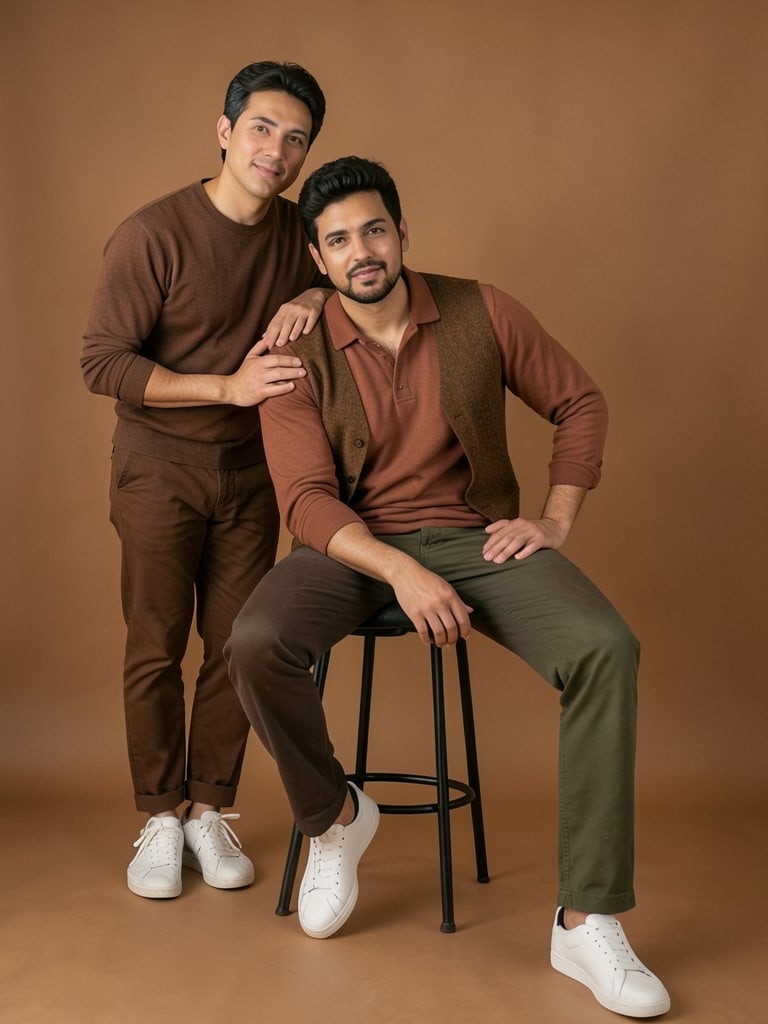
Preview of Couple posing together in a warm brown studio
image / Gemini
Couples & EngagementGemini · ChatGPT

Couple posing together in a warm brown studio

STRICT FACE IDENTITY COPY DNA Create image using the uploaded image only as the facial identity reference for the man and woman. Preserve both faces exactly, including head shape, facial proportions, forehead, hairline, eyebrows, eyes, eyelids, nose, cheeks, lips, chin, jawline, ears, skin tone, natural skin texture, apparent age, facial symmetry, and every recognizable identity-defining characteristic. Do not beautify, reshape, smooth, stylize, age, de-age, or modify either face. Use the uploaded image only for facial identity; do not copy its clothing, pose, background, props, or lighting. VISUAL RECONSTRUCTION DNA Create a photorealistic premium studio couple portrait with a warm contemporary editorial aesthetic. Reconstruct a similar intimate two-person studio composition: the man seated confidently on a tall minimalist black metal stool while the woman stands closely behind and slightly to his left, leaning affectionately toward him. The result should feel stylish, natural, modern, and professionally photographed. SUBJECT & COMPOSITION DNA Use a vertical 9:16 composition. Place the man centrally in the lower-middle frame, seated on the stool with his legs naturally separated and extending toward the lower corners. Place the woman behind him, slightly toward camera-left, creating a layered composition with her upper body visible beside and above his head. Keep both subjects fully visible from head to shoes. Maintain balanced negative space around them while keeping the couple as the dominant visual focus. POSE & BODY LANGUAGE DNA The man sits upright but comfortably on a tall black metal stool. One hand rests naturally on his thigh while the other hand rests near his waist/hip, creating a relaxed confident posture. His shoulders remain natural and his legs extend comfortably forward. The woman stands behind the stool and leans gently toward the man. One arm rests affectionately across or near his shoulder while her other hand rests naturally near his upper arm. She tilts her head slightly toward him and smiles warmly toward the camera. Their interaction should communicate closeness, affection, confidence, and playful companionship without looking overly posed. Maintain realistic anatomy, natural hands, correct fingers, believable body proportions, and physically accurate contact between both subjects. OUTFIT DNA — WOMAN Dress the woman in a fitted white short-sleeve crew-neck T-shirt layered under a warm camel-brown knitted sleeveless sweater vest with subtle knit texture. Pair it with olive-green slim-fit trousers and clean white casual sneakers. Keep her styling modern, minimal, fashionable, and understated. Give her naturally styled shoulder-length to medium-length light brown/blonde hair, softly waved with realistic individual strands and natural volume. OUTFIT DNA — MAN Dress the man in a muted terracotta-brown long-sleeve polo-style shirt with a soft cotton texture and natural folds. Pair it with relaxed dark taupe-brown trousers and clean white low-top sneakers. Keep his styling contemporary, masculine, minimal, and polished. SET & BACKGROUND DNA Create a seamless warm caramel-tan studio backdrop and matching floor, producing a monochromatic premium editorial environment. The background should have extremely subtle tonal variation and a soft gradient, with the floor blending naturally into the background without a visible horizon line. Include only the minimal black metal stool as a functional prop. No furniture, plants, decorations, text, logos, watermarks, equipment, or unnecessary objects. LIGHTING DNA Use soft warm studio illumination with gentle frontal and slightly side-oriented light falling naturally across both faces and clothing. Create smooth highlights on the forehead, cheeks, nose, and hair while maintaining soft dimensional shadows beneath the chin, arms, clothing folds, and stool. Add a subtle warm ambient glow consistent with the caramel studio environment. Keep the lighting clean, flattering, balanced, and premium, with moderate contrast and realistic skin rendering. Do not show any softboxes, reflectors, lamps, diffusers, light stands, or studio equipment. Lighting describes only the resulting illumination, highlights, shadows, contrast, and color atmosphere. CAMERA & OPTICAL DNA Use a professional full-frame portrait camera with an approximately 50–70mm lens at f/4, positioned at approximately chest-to-eye level and facing the couple almost directly. Maintain realistic perspective and enough depth of field to keep both faces, clothing, stool, and shoes clearly recognizable while allowing the background to remain subtly softer. COLOUR & MOOD DNA Use a refined palette of camel tan, terracotta brown, olive green, white, dark brown, and black. Keep colors warm, sophisticated, muted, and naturally coordinated. The emotional mood should be modern, affectionate, confident, stylish, relaxed, and editorial. PHOTOREALISM DNA Render as 4K Ultra HD, ultra-realistic professional photography with authentic skin pores, natural facial texture, individual hair strands, realistic cotton and knit fibers, accurate fabric folds, natural shoe materials, physically correct shadows, and believable studio-floor contact. Avoid plastic skin, excessive beauty retouching, facial alterations, distorted anatomy, extra fingers, malformed hands, unrealistic limbs, floating feet, excessive HDR, oversaturation, artificial glow, cartoon styling, or an obvious AI-generated appearance. FINAL OUTPUT DNA Create a polished warm-toned studio couple portrait featuring the identity-preserved man seated confidently on a minimalist black metal stool and the identity-preserved woman leaning affectionately beside him from behind. Use the coordinated camel, white, olive, terracotta, and brown wardrobe, seamless caramel studio environment, soft warm illumination, natural shadows, realistic anatomy, and premium contemporary editorial photography aesthetics.

25 0 0
3h
Preview of Shravan Month Baby Photoshoot with Little Shiva Meditation Theme
image / Gemini
Baby & KidsGemini · ChatGPT

Shravan Month Baby Photoshoot with Little Shiva Meditation Theme

create image STRICT FACE IDENTITY PRESERVATION DNA Use the uploaded image exclusively as the facial identity reference for the baby. Preserve every facial characteristic exactly, including head shape, forehead proportions, baby hairline, eyebrows, eyelids, eye shape, eye spacing, nose structure, lips, cheeks, chin, ears, natural skin tone, baby skin texture, facial symmetry, sleeping expression, and apparent age. Preserve the baby’s peacefully sleeping face exactly as shown. Do not beautify, stylize, enlarge the eyes, alter complexion, smooth skin, reshape facial proportions, or apply beauty-filter effects. The uploaded image is used solely for facial identity preservation while every remaining visual element is reconstructed through descriptive instructions. SUBJECT DNA Create a premium devotional Baby Lord Shiva forest meditation photoshoot, where the sleeping baby appears peacefully meditating inside a sacred Himalayan-inspired woodland beside a gentle river. The scene should feel calm, divine, spiritual, and cinematic while maintaining realistic handcrafted studio-quality styling. OUTFIT DNA Dress the baby in a realistic tiger-skin patterned cotton wrap inspired by Lord Shiva’s traditional attire. The fabric wraps completely around the body with thick layered folds, leaving only the tiny feet visible. Place multiple authentic Rudraksha malas around the neck, wrists, and upper arms. Apply three horizontal white Vibhuti stripes across the forehead with a small red tilak in the centre. Keep the baby barefoot with naturally relaxed curled toes. POSITION & BODY LANGUAGE DNA Seat the baby upright inside a handcrafted meditation nest made from thick knitted wool blankets and soft natural fabrics. Approximately 90% of the baby’s body weight is supported by the hidden cushioned nest beneath the body. The spine remains gently supported in a naturally upright seated position with only a slight infant forward curve. Both shoulders remain relaxed. The right forearm bends approximately 80 degrees, resting softly inside the blanket with fingers naturally hidden beneath the wrap. The left forearm mirrors the same relaxed position. Both legs remain folded naturally beneath the wrapped blanket, creating the appearance of a peaceful meditative seated posture while ensuring realistic infant comfort. The head remains upright with only a 3-degree forward tilt, expressing deep peaceful sleep. EYE DIRECTION DNA The baby’s eyes remain peacefully closed with completely relaxed eyelids, expressing calm meditation and divine serenity. CAMERA DNA Capture from approximately 95 centimetres above ground level using a slightly elevated front-upper camera angle of approximately 12 degrees downward. Position the camera approximately 2.8 metres from the baby. The optical centre aligns with the baby’s face while maintaining complete visibility of the devotional props and surrounding environment. Frame the portrait from ground level upward while preserving generous storytelling space around the subject in a vertical 9:16 composition. LENS DNA Photograph using a professional full-frame camera equipped with an 85mm prime portrait lens at f/2.2, producing exceptional facial sharpness, soft cinematic background separation, luxurious creamy bokeh, and premium subject isolation. LIGHTING DNA Illuminate the portrait with soft early-morning forest light filtered gently through dense tree foliage. Overall brightness remains medium with subtle warm highlights softly illuminating the baby’s face, tiger-wrap texture, Rudraksha beads, and devotional objects. Shadows remain feather-soft beneath the chin, blankets, and surrounding props without harsh transitions. Preserve rich earthy greens, warm browns, and natural skin tones with medium contrast and broad dynamic range. A gentle cool atmospheric haze fills the distant background, creating a peaceful Himalayan devotional mood. BOKEH & VISUAL DEPTH DNA The foreground begins with richly textured green grass, moss, and tiny wildflowers rendered slightly soft. The meditation platform, blankets, and baby create the sharply focused primary subject layer with pore-level skin detail and realistic textile rendering. Sacred devotional objects occupy the secondary layer. The riverbank, forest vegetation, rocks, and distant mountains gradually dissolve into luxurious creamy cinematic bokeh with gentle atmospheric mist, producing exceptional visual depth. ENVIRONMENT DNA Create a lush Himalayan-inspired forest beside a gently flowing river with smooth natural stones and distant mist-covered hills. Position the baby beneath a gracefully curved sacred tree whose branches extend overhead. Suspend an antique polished brass Kamandalu from the tree branch using a Rudraksha rope. Place a large open ancient scripture on a wooden stand in the lower-left foreground, with a fresh Rudraksha mala resting naturally across its pages. Position a beautifully handcrafted traditional Damru in the lower foreground beside the baby. Surround the meditation nest with fresh green plants, Bilva leaves, white wildflowers, moss-covered rocks, small flowering shrubs, and naturally scattered forest foliage. A small rustic Shiva idol crafted from stone may be partially visible among the plants, blending naturally into the environment. STORYTELLING DNA The portrait represents Baby Shiva peacefully meditating within a sacred Himalayan forest while nature quietly worships the divine child. The suspended Kamandalu, ancient scripture, Damru, Bilva leaves, and peaceful riverside surroundings symbolize wisdom, purity, devotion, and spiritual awakening. Every element should feel naturally arranged as part of a sacred woodland sanctuary rather than an artificial studio backdrop. COMPOSITION DNA Construct the composition using a gentle triangular visual hierarchy. The hanging Kamandalu forms the upper focal point, the sleeping baby occupies the visual centre, and the open scripture with Damru anchors the foreground. The curved tree naturally frames the baby while the river and mountains provide layered environmental depth. Every visual line should guide the viewer’s attention toward the peacefully sleeping face before flowing naturally through the sacred devotional objects. FINAL OUTPUT Create an ultra-realistic 4K Ultra HD luxury devotional Baby Shiva portrait featuring authentic infant anatomy, realistic skin rendering, premium tiger-wrap textile simulation, detailed Rudraksha textures, handcrafted meditation nest, lush Himalayan forest environment, sacred Kamandalu, ancient scripture, Damru, cinematic woodland lighting, luxurious creamy bokeh, exceptional foreground-to-background depth, emotionally immersive storytelling, masterpiece-quality devotional baby photography, and a vertical 9:16 composition.

25 0 0
2h
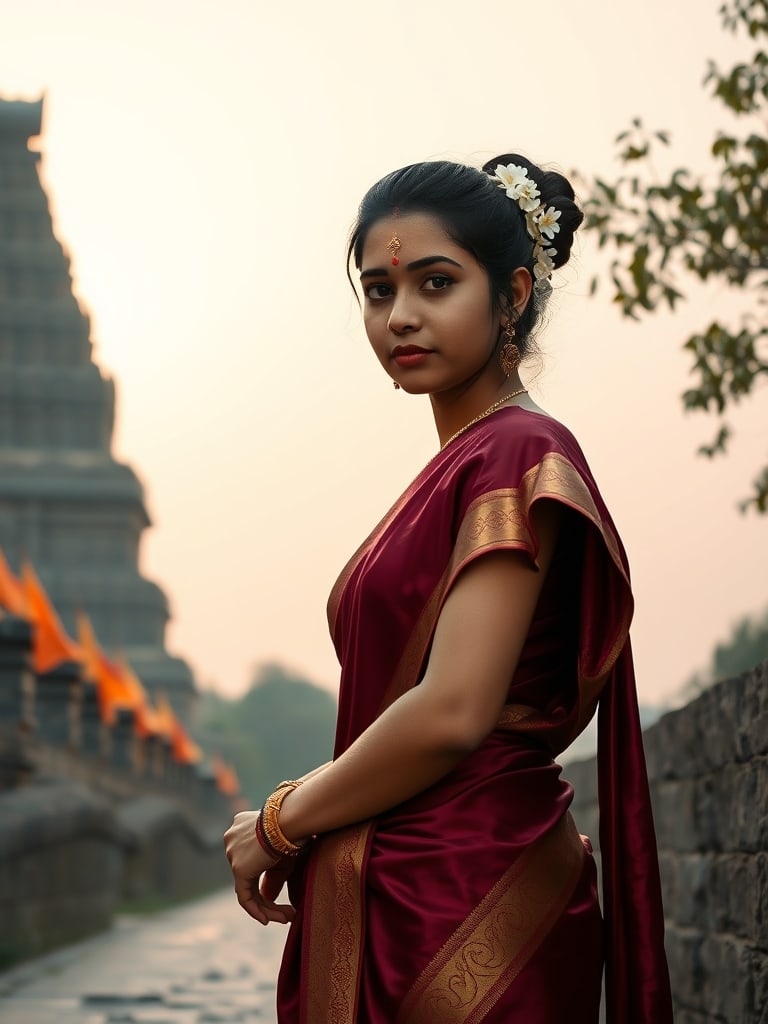
Preview of Ashadhi Ekadashi Women Photoshoot with Lord Vitthal Temple Theme
image / Gemini
Photo Edits & TrendsGemini · ChatGPT

Ashadhi Ekadashi Women Photoshoot with Lord Vitthal Temple Theme

create image STRICT FACE IDENTITY PRESERVATION DNA Use the uploaded image exclusively as the facial identity reference for the woman. Preserve her exact facial identity, including head shape, forehead proportions, natural hairline, eyebrow shape, eyelids, eye size and spacing, nose bridge and structure, lips, cheeks, jawline, chin, ears, skin tone, natural skin texture, facial symmetry, smile characteristics, expression, and apparent age. Do not beautify, stylize, reshape, slim, age, or modify any facial feature. The uploaded image must be used only for exact facial identity preservation. Reconstruct the outfit, hairstyle arrangement, jewellery, body pose, Lord Vitthal statue, temple environment, lighting, camera perspective, and overall composition entirely from the detailed instructions below. SUBJECT AND CONCEPT DNA Create an ultra-realistic devotional cinematic portrait of a young Maharashtrian woman standing confidently on a narrow ancient stone temple pathway, with a monumental black-stone statue of Lord Vitthal rising directly behind her. The woman should be the primary human subject in the foreground, while the enormous Vitthal statue creates a powerful spiritual presence immediately behind her. The visual story should represent devotion to Lord Vitthal and the sacred atmosphere of Pandharpur. Create a majestic yet believable photographic scene where warm golden sunrise light radiates from directly behind the crown and head of the Vitthal statue, producing naturally visible volumetric sun rays. Ancient temple architecture, saffron devotional flags, lush pathway vegetation, and warm morning haze should extend into the background. OUTFIT DNA Dress the woman in an authentic traditional deep wine-red to rich maroon Maharashtrian silk saree. The saree should feature a broad antique-gold zari border with intricate traditional woven motifs and subtle fine red detailing. Drape the saree in an elegant traditional Maharashtrian-inspired style, fitted neatly around the waist and hips while allowing realistic pleats to descend vertically toward the lower body. The pallu should cross diagonally from the lower waist across the torso and over the left shoulder, creating a clearly visible broad golden zari border. Pair the saree with a fitted short-sleeved deep maroon blouse featuring broad antique-gold woven sleeve borders. The fabric should display realistic silk weight, fine weave, natural folds, slight compression around the waist, subtle highlights from the sunrise, and physically accurate draping. Avoid artificial plastic-like fabric or excessively saturated red. JEWELLERY AND CULTURAL STYLING DNA Style the woman with elegant traditional Maharashtrian gold jewellery. Add a long layered gold necklace descending toward the upper abdomen with a prominent traditional pendant, complemented by a shorter delicate gold chain near the neckline. Add traditional gold earrings, subtle gold rings, and a delicate traditional gold waist belt encircling the saree at the natural waist. Place multiple dark green glass bangles on both wrists, arranged densely but naturally, with a few subtle gold bangles mixed between them. Keep the jewellery culturally authentic and refined rather than excessively bridal. Her hair should be long, thick, dark, and naturally wavy, styled with a deep side part. Sweep most of the hair over her right shoulder so that soft waves descend across the right side of her chest. Keep the opposite side relatively open to reveal the jewellery and saree drape. EXACT BODY POSITION AND STANCE DNA Position the woman centrally in the lower-middle foreground, with the center of her body approximately 48–50% across the image width. Her body should face almost directly toward the camera with only a subtle 5-degree rotation toward camera-left. She should stand upright with confident but relaxed posture. Keep the spine straight, shoulders gently pulled back, and chest naturally open. Place both hands firmly but gracefully on the waist, creating a symmetrical confident stance. Her elbows should extend diagonally outward on both sides, approximately 30–40 degrees away from the torso, creating a strong triangular body silhouette. Position her right hand against the right side of her waist with fingers naturally spread and gently curved. Mirror the posture with her left hand resting on the opposite waist. The hands should not appear stiff or clenched. Maintain anatomically accurate fingers and wrists. Keep the hips naturally balanced with a very subtle weight shift toward one leg rather than an exaggerated fashion pose. HEAD, FACE, GAZE AND EXPRESSION DNA Keep the woman’s head nearly upright with a subtle 5–8 degree tilt toward her right shoulder. Her face should turn directly toward the camera. Her eyes should establish clear, warm eye contact with the camera. Preserve a broad, genuine, joyful smile matching her exact facial identity and natural smile characteristics. The expression should communicate happiness, devotion, confidence, and warmth without appearing exaggerated or artificially posed. LORD VITTHAL STATUE DNA Create a monumental, highly detailed traditional black-stone statue of Lord Vitthal positioned directly behind the woman. The statue should rise approximately 2.5–3 times the visible height of the woman, creating a powerful sense of spiritual scale. Lord Vitthal must stand in the iconic traditional pose with both arms bent outward and hands firmly positioned at the waist. Create a tall, intricately carved cylindrical crown with authentic temple-sculpture detailing. Place the distinctive bright yellow-orange Vaishnav devotional tilak prominently at the center of the statue’s forehead. The statue should have authentic dark black basalt or polished black-stone texture with subtle weathering and finely carved jewellery, necklaces, arm ornaments, shoulder decorations, and traditional sculptural garments. Position the statue directly behind the woman but offset its torso slightly toward camera-left so that the woman’s head does not completely obscure the statue’s face. The statue’s head and crown should remain completely visible above the woman’s head. The woman’s head should overlap only the lower central torso region of the statue, preserving clear recognition of Lord Vitthal. SCALE AND SPATIAL RELATIONSHIP DNA The woman should occupy approximately 55–65% of the total image height, extending from near the bottom edge toward the middle-upper region. The Vitthal statue should begin behind her at ground level but extend dramatically upward, with the crown reaching approximately 8–12% below the top edge. Create enough physical separation between the woman and statue to preserve realistic depth. The woman should stand approximately 3–4 metres in front of the statue. Despite this separation, use telephoto compression so the statue appears visually close and imposing behind her. The woman remains the sharpest foreground subject, while the statue should retain substantial detail and recognizable facial and sculptural features. TEMPLE PATHWAY DNA Place the woman on an old narrow stone-paved pathway leading through a sacred temple environment. The pathway should begin at the bottom center of the frame and extend behind the woman toward the temple complex. Create irregular rectangular stone paving with subtle age, weathering, fine cracks, and a slightly damp surface that reflects small amounts of warm golden sunlight. The path should feel authentic, ancient, and naturally used rather than perfectly constructed. Add low green shrubs and leafy vegetation along both edges of the pathway, particularly visible in the lower-right foreground. Keep the vegetation naturally irregular and softly illuminated by the golden morning light. TEMPLE ARCHITECTURE DNA Create a series of ancient dark-stone Maharashtrian temple structures receding into the background, particularly along the right side of the frame. The temples should feature tall traditional shikhara towers with layered stone carvings and authentic weathered architectural surfaces. The nearest temple tower should be visible behind the right shoulder region of the Vitthal statue, with additional temple silhouettes progressively fading into atmospheric haze. Avoid fantasy palace architecture. The structures should resemble historically grounded Indian temple architecture associated with Maharashtra and the devotional atmosphere of Pandharpur. SAFFRON FLAG DNA Place several saffron-orange triangular devotional flags throughout the middle and distant background. Mount the flags on slender poles positioned along the temple pathway and around the temple structures. Allow the flags to flutter gently in a light morning breeze. Keep the flags relatively small and secondary within the composition. Their saturated saffron tone should create subtle warm accents against the stone architecture and golden atmospheric haze. SUNRISE AND BACKLIGHT DNA Position the rising sun directly behind the upper head and crown of the Lord Vitthal statue. Create intense but natural warm golden sunrise illumination forming a radiant halo around the crown. Generate multiple visible volumetric sun rays spreading upward and diagonally outward from behind the statue’s head, producing a symmetrical spiritual radiance without looking like artificial graphic lines. The brightest light should remain concentrated behind the statue rather than directly overexposing the woman’s face. Create warm golden rim lighting along the statue’s crown, shoulders, and carved edges. Add subtle warm rim light along the woman’s hair, shoulders, and saree borders. Use soft frontal fill illumination on the woman’s face so her facial identity remains perfectly visible despite the strong backlight. ATMOSPHERIC DNA Create a warm early-morning atmosphere with delicate golden mist suspended throughout the temple pathway. The distant architecture should gradually soften into atmospheric perspective. Add extremely subtle floating dust particles illuminated by the sunlight. The environment should feel sacred and cinematic while remaining photorealistic. Avoid excessive fantasy effects, glowing particles, fire, supernatural flames, or unrealistic celestial imagery. CAMERA ANGLE DNA Photograph from approximately the woman’s mid-torso to upper-waist height, positioning the camera approximately 100–115 centimetres above the pathway surface. Use a very subtle low-angle perspective of approximately 3–5 degrees upward, allowing both the woman and monumental Vitthal statue to appear commanding while maintaining natural human proportions. Keep the camera horizontally centered with the woman. Do not use an extreme ground-level angle and do not use a high-angle perspective. Maintain straight architectural verticals and realistic perspective. CAMERA-TO-SUBJECT DISTANCE DNA Position the camera approximately 6–8 metres from the woman. This distance should create a three-quarter to nearly full-body environmental portrait while retaining sufficient surrounding temple context. The woman should remain prominently framed but should not become an extreme close-up. Position the Vitthal statue approximately 3–4 metres behind the woman, making the total camera-to-statue distance approximately 9–12 metres. Use optical compression to visually connect the woman and statue while preserving genuine physical depth. LENS AND DEPTH OF FIELD DNA Use a professional full-frame camera with an approximately 70–85mm portrait telephoto lens. Photograph at approximately f/4–f/5.6, ISO 100–200, and a shutter speed suitable for sharp handheld portrait photography. Keep the woman’s face, body, jewellery, and saree sharply focused. Maintain the Lord Vitthal statue in moderately sharp focus so its face, crown, iconic pose, and forehead tilak remain clearly recognizable. Allow the distant temple towers, saffron flags, and vegetation to transition gradually into soft atmospheric blur. Avoid extreme shallow depth of field that would erase important d

25 0 0
2h
Preview of Romantic Rain Couple Photoshoot With Umbrella and Bike
image / Gemini
Couples & EngagementGemini · ChatGPT

Romantic Rain Couple Photoshoot With Umbrella and Bike

create image STRICT FACE IDENTITY COPY DNA Use the uploaded image exclusively as the facial identity source and copy the exact face identity onto each generated subject, reproducing the same facial anatomy, proportions, head shape, hairline, eyebrows, eyes, nose, lips, cheeks, jawline, chin, ears, skin tone and natural texture, distinctive traits, symmetry, and apparent age. Do not merely create similar or inspired faces, and do not beautify, reshape, idealize, stylize, average, or reinterpret any facial feature. Adapt each exact copied identity naturally to the required expression, pose, head angle, camera perspective, and lighting with zero identity drift. Use the uploaded image only for facial identity unless explicitly instructed otherwise. SUBJECT & COMPOSITION DNA Create a full-body cinematic monsoon couple portrait on a narrow rain-soaked road surrounded by dense green vegetation. Position the man on the left and the woman on the right, with both subjects occupying the central foreground and their entire bodies visible from head to shoes. Capture a spontaneous romantic dance: the man holds an umbrella while lifting the woman’s hand above her head, and she turns beneath his arm. Place a sporty black motorcycle diagonally behind them, visually connecting the two subjects without blocking their bodies. Preserve generous green environmental space above and around them while keeping the couple as the unmistakable focal point. POSE & BODY LANGUAGE DNA The man stands with his weight naturally distributed between his legs while taking a subtle forward step. His left arm bends upward to hold the umbrella handle close to shoulder level, while his opposite arm extends diagonally upward toward the woman. His hand gently holds her raised hand approximately above the space between their heads. Turn his torso slightly toward her and direct his eyes toward her face with a spontaneous broad smile. The woman is captured halfway through a graceful clockwise twirl, one arm extended above her head to meet his hand while her opposite arm hangs naturally beside her body with relaxed fingers. Her torso rotates gently with the movement, one foot bearing her weight while the other steps lightly across the wet road. Tilt her head slightly backward, eyes naturally narrowed or closed from laughter, with a joyful open smile. OUTFIT DNA Dress the man in a pale powder-blue lightweight cotton button-front shirt, visibly darkened in irregular areas from the rain, with the top buttons casually open and sleeves rolled neatly to approximately mid-forearm. Pair it with slim dark charcoal-black trousers soaked slightly around the lower legs and clean white low-top sneakers showing realistic wetness from the road. Dress the woman in a flowing ankle-to-mid-calf lavender-blue dress with a softly fitted waist, gently gathered bodice, round neckline and translucent three-quarter-to-long sleeves. Cover the fabric with a delicate scattered micro-floral pattern in muted pink, violet and blue. Give the skirt substantial flowing volume so it spreads naturally outward during her spin. Pair the dress with simple white sneakers. Wet fabric must react naturally to rain, becoming slightly darker and heavier without becoming transparent. HAIRSTYLE & ACCESSORIES DNA Give the man naturally tousled dark hair saturated by rain, with individual damp strands falling irregularly around the forehead. Keep accessories minimal, adding only a dark wristwatch or understated wristband. Give the woman long dark hair worn completely loose, thoroughly wet and separated into natural strands that trail behind her movement and cling selectively around her shoulders and neck. Add only minimal delicate jewellery such as small earrings and a thin bracelet so the styling remains youthful and casual. CAMERA ANGLE & GEOMETRY DNA Position the camera approximately between knee and waist height, directly in front of the couple with a subtle low-angle orientation. Keep vertical lines natural and avoid exaggerated upward distortion. The slightly low perspective should emphasize their full-body dance, umbrella canopy and surrounding rainfall while allowing the wet road to stretch toward the camera. Maintain natural body proportions and ensure the raised joined hands form a clear visual arch between the subjects. CAMERA DISTANCE & FRAMING DNA Place the camera approximately 7–10 metres from the couple, far enough to capture both subjects completely from the umbrella canopy to their shoes while retaining substantial surrounding scenery. Use a full-body environmental portrait composition with comfortable breathing room around the umbrella and the woman’s moving skirt. Preserve enough foreground road beneath their shoes to show puddles, splashes and elongated reflections. Do not crop the umbrella, feet, flowing skirt or motorcycle. LENS & OPTICAL DNA Use approximately a 70mm full-frame lens perspective, providing gentle background compression while maintaining enough environmental context for the road and vegetation. Use approximately f/2.8–f/4, keeping both subjects and the important portions of the motorcycle sharply readable while allowing the distant trees to dissolve gradually into creamy natural bokeh. Focus primarily across the couple’s facial plane and joined hands. Use a sufficiently fast shutter speed to retain sharp facial features while allowing subtle motion in the spinning dress, falling rain and loose wet hair. ENVIRONMENT & BACKGROUND DNA Set the scene on a quiet narrow asphalt road running through dense tropical monsoon greenery. Surround both sides with layered trees, shrubs, hanging branches and lush foliage extending deeply into the background. Allow the distant road to disappear softly into rainy atmospheric haze. The road surface should be completely saturated, dark and reflective, with shallow puddles, scattered water accumulation and visible painted road markings beneath the couple. Avoid buildings, crowds or urban distractions. PROPS & OBJECT RELATIONSHIP DNA Give the man a large dark charcoal-black rain umbrella with a broad wet canopy positioned primarily above him and extending toward the joined hands. Water droplets should collect across the umbrella fabric and stream naturally from its outer edges. Place a modern sporty black street motorcycle immediately behind and slightly between the couple, parked diagonally across the road with its side stand down. Use restrained red and metallic detailing on the motorcycle, wet tires, water-beaded body panels and believable reflections. The motorcycle should remain secondary to the couple and must not intersect their legs unnaturally. LIGHTING DNA Use broad diffused daylight from a fully overcast monsoon sky, producing soft flattering illumination without harsh directional shadows. Keep facial exposure bright enough to clearly reproduce identity while preserving the darker atmosphere of the rainy surroundings. Allow subtle highlights on wet skin, hair, umbrella fabric, motorcycle paint and water-covered asphalt. Use natural environmental fill from the green surroundings without casting an artificial green tint across skin. WEATHER & ATMOSPHERE DNA Show steady heavy monsoon rainfall across the entire depth of the scene, with individually resolved rain streaks visible against darker vegetation. Water should stream from the umbrella edges, bead across hair and clothing, splash around shoes and create overlapping ripples in shallow puddles. The woman’s spinning movement should throw tiny droplets outward from her wet hair and dress. Add subtle humid atmospheric haze in the distant background while keeping the foreground optically clear. COLOR & MOOD DNA Create a joyful, romantic and energetic rainy-day atmosphere. Build the palette around natural rain-darkened greens, cool powder blue, lavender, charcoal and neutral wet asphalt, balanced by realistic warm skin tones. Use a refined cinematic monsoon grade rather than extreme cyan or turquoise processing. Preserve rich greens without neon saturation and maintain natural contrast between the couple and the vegetation. PHOTOGRAPHY QUALITY & REALISM DNA Render the scene as premium professional lifestyle photography with realistic pores, natural skin variation, individual wet hair strands, soaked cotton texture, fine floral fabric details, anatomically accurate hands and fingers, realistic footwear, physically believable rain, puddles, reflections, motorcycle materials and umbrella construction. Preserve subtle natural imperfections and genuine movement rather than producing a rigid studio pose or digitally painted appearance. NEGATIVE & EXCLUSION DNA No identity drift, generic faces, beautification, facial reshaping, artificial skin smoothing, exaggerated body proportions, malformed hands, extra fingers, fused hands, incorrect joined hands, duplicated limbs, distorted feet, floating umbrella, impossible umbrella grip, malformed motorcycle, duplicated wheels, dry clothing, dry hair, fake rain, impossible reflections, excessive motion blur, neon colors, oversaturation, artificial HDR, fantasy lighting, floating hearts, emojis, text, captions, logos, watermarks, social-media icons or interface elements. OUTPUT DNA Produce an ultra-realistic 4K Ultra HD cinematic photograph in the locked 16:9 aspect ratio, with accurate facial identity, complete full-body framing, realistic romantic movement, detailed monsoon rainfall, physically believable wet surfaces, natural photographic optics and a polished professional rainy-season editorial finish.

25 0 0
2h

Search prompts

Search by keyword or describe what you need