PromptBehind
Use case

Prompts for flag

11 prompts tagged flag.

11 prompts for flag, each shown with a rendered example. Copy one, swap the details in brackets for your own, and run it in the model of your choice.

PromptBehind's discovery engine writes and vets these automatically around the clock, then ranks them by how often people actually copy them — so this page changes as tastes do.

Preview of Festive Republic Day Portrait of Young Indian Couple
image / Gemini
Festivals & OccasionsGemini · ChatGPT

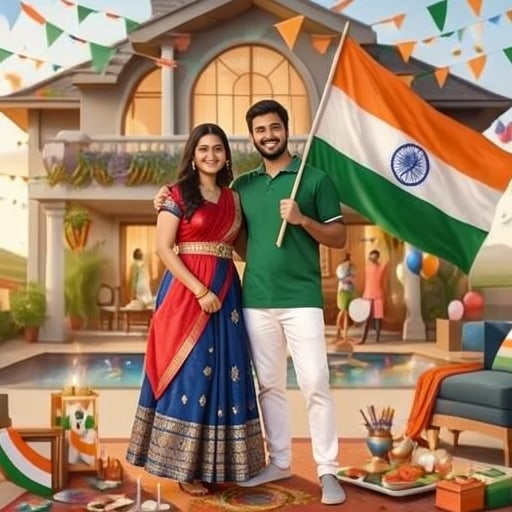
Festive Republic Day Portrait of Young Indian Couple

An eighteen-year-old young Indian man and woman pose together outdoors before a picturesque house. The young woman is dressed in a vibrant red lehenga, while the young man is barefoot, wearing denim jeans and a shirt in national flag colors featuring the clear name 'RAHUL' printed on the front. He holds the national tricolor flag with great pride. The surrounding environment is adorned with tricolor festive decorations, floating balloons, and flying kites. Positioned nearby is a small table displaying a detailed tricolor rangoli alongside traditional holiday sweets, fully evoking the patriotic spirit and atmosphere of Republic Day, 32k enhance image quality

10 0 0
5d
Preview of Patriotic Golden Hour Portrait
image / Gemini
Festivals & OccasionsGemini · ChatGPT

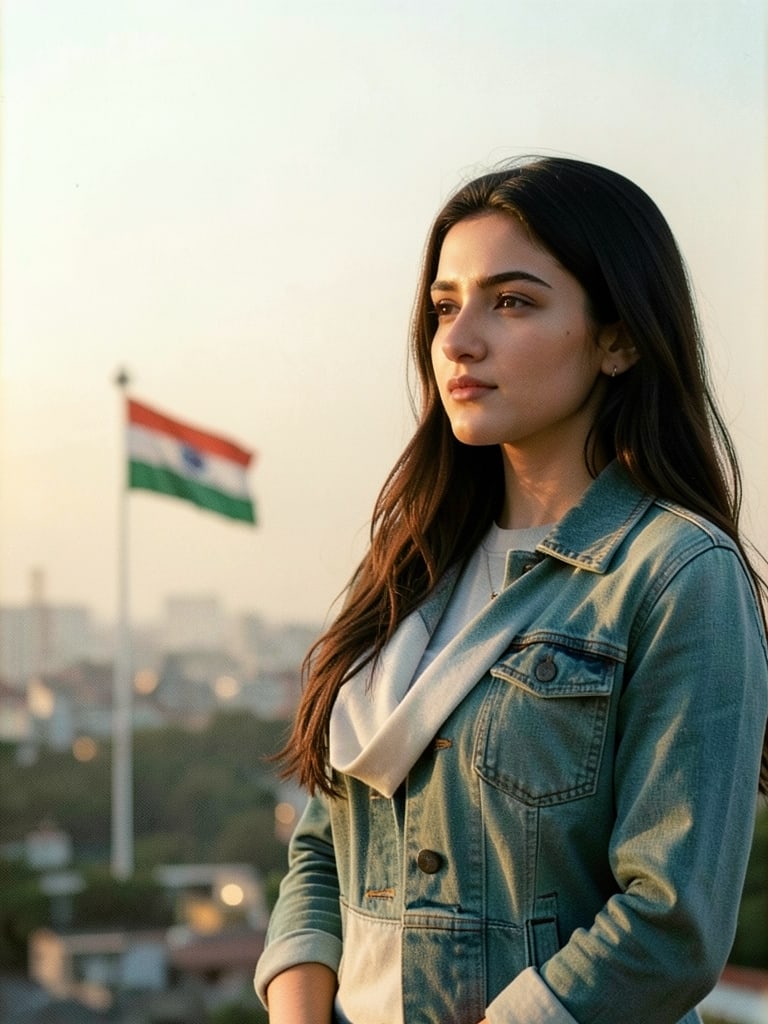
Patriotic Golden Hour Portrait

FACE IDENTITY PRESERVATION DNA STRICT FACE IDENTITY COPY DNA Use the supplied photograph solely as a reference for the woman's facial characteristics. Replicate every recognizable detail—head shape, forehead, hairline, eyebrows, eye shape and spacing, eyelids, nose, lips, cheeks, chin, jawline, ears, natural skin tone, texture, proportions, apparent age, and all other distinguishing traits—without any alteration. The face must remain untouched, natural, and free from beautification, reshaping, smoothing, stylization, aging, de‑aging, or any modification. Do not use the reference for clothing, pose, setting, props, lighting, or composition. VISUAL CONCEPT DNA Generate a premium, ultra‑realistic cinematic portrait that celebrates Independence Day. Position the subject outdoors during golden‑hour, conveying emotion, patriotism, elegance, and an editorial feel. The woman occupies the right side of the frame in a close‑up, while a softly blurred Indian national flag appears in the distant background, creating a quiet sense of pride rather than overt festivity. COMPOSITION DETAILS DNA Place the subject in the right two‑thirds of the image, captured from upper chest to the top of the head. Her face should dominate roughly 35‑40% of the vertical space. Angle the body slightly toward the camera‑left and rotate the head toward the left side of the frame, producing a natural three‑quarter profile. Direct her gaze toward the far‑off flag, not at the camera, to evoke a reflective mood. Reserve ample negative space on the left for campaign typography. POSE AND EXPRESSION DNA Keep shoulders relaxed and naturally positioned. Turn the head about 35‑45° toward camera‑left, revealing a graceful three‑quarter view while preserving the exact identity. Aim for a calm, thoughtful, quietly proud expression with relaxed lips and a subtle warmth. Avoid exaggerated or staged postures. APPAREL SPECIFICATIONS DNA Dress the woman in an elegant black Indian ethnic garment—such as a simple black kurta with a refined traditional cut. Drape a lightweight ivory‑white dupatta over one shoulder and across the upper chest. The black‑and‑white palette should contrast sharply with the warm background while maintaining an understated, patriotic editorial aesthetic. Use realistic cotton or soft woven fabric that shows natural folds and texture. HAIRSTYLE DNA Give her long, naturally flowing dark‑brown to black hair, parting softly and falling around the shoulders. Allow a few delicate strands to drift across the forehead and cheek for a relaxed, effortless look. ENVIRONMENT DNA Create a distant Indian cityscape bathed in golden‑hour light, rendered with heavy blur and shallow depth of field. Position a small Indian national flag on a pole in the left background, roughly 2‑3 m behind the subject and considerably smaller than her head. The flag must display accurate saffron, white, and green bands with a correctly rendered navy‑blue Ashoka Chakra, gently fluttering in a light breeze. Include a soft, indistinct skyline and atmospheric haze behind it. LIGHTING SCHEME DNA Employ warm golden‑hour sunlight arriving from camera‑left/rear‑left, forming a rim of light along the hair, cheek, and jawline. Illuminate the front of the face softly enough to retain natural detail, while casting gentle cinematic shadows on the opposite side. Add amber highlights to the hair and subtle golden reflections on the skin. Keep the background slightly darker and muted so the lit face remains the focal point. Preserve natural skin colour without an overly orange cast. No studio lighting equipment should be visible. CAMERA SETTINGS DNA Use a professional full‑frame camera equipped with an 85 mm portrait lens set to approximately f/2‑f/2.8. Position the camera 1.5‑2 m from the subject’s face at eye level, achieving strong natural compression and shallow depth of field. Render the eyes, eyelashes, skin texture, lips, and hair in razor‑sharp detail while the flag and skyline appear as soft cinematic bokeh. TYPOGRAPHY LAYOUT DNA Utilize the left‑side negative space for refined Independence Day copy: 15 AUGUST HAPPY (saffron) INDEPENDENCE (white) DAY (deep green) Add the tagline “Celebrating the spirit of freedom.” followed by a smaller line “ONE NATION. ONE SPIRIT.” and conclude with “JAI HIND” at the bottom of the text area. Ensure typography is crisp, elegant, correctly spelled, and integrated without overlapping the subject’s face. COLOR AND ATMOSPHERE DNA Adopt a sophisticated cinematic palette blending warm amber‑gold sunlight, deep charcoal shadows, muted green, soft ivory, and subtle saffron accents. Introduce gentle atmospheric haze around the distant skyline and flag. The overall tone should feel premium, timeless, and patriotic, avoiding oversaturation. OUTPUT QUALITY DNA Produce a 4K Ultra HD, ultra‑realistic editorial photograph that faithfully preserves facial identity, shows natural skin pores and texture, realistic hair strands, physically plausible clothing, accurate flag details, believable golden‑hour lighting, cinematic depth of field, subtle haze, premium colour grading, and natural contrast. Exclude any cartoonish, CGI, plastic‑skin, or excessive beauty‑retouch aesthetics.

7 1 2
1mo
Preview of Historical Timeline of Indian National Flags
video / Veo

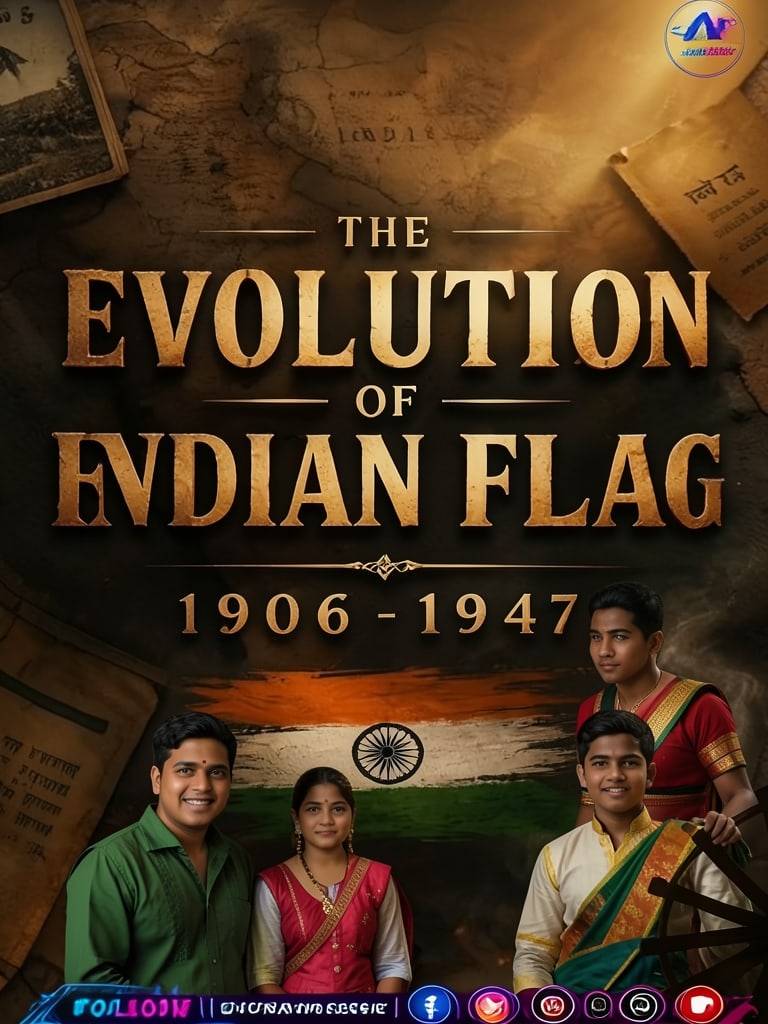
Historical Timeline of Indian National Flags

HISTORICAL PROGRESSION OF THE NATIONAL BANNER OF INDIA ACROSS THE YEARS 1906 TO 1947 Tracing the path from the initial vexillological designs at the dawn of the twentieth century to the definitive saffron, white, and green tricolour adopted at national sovereignty in 1947, where each iteration chronicles a milestone in the struggle for self-determination. This historical sequence emphasizes the shifting emblems, chromatic arrangements, and philosophical tenets that defined the evolution of the sovereign ensign — capturing a narrative of solidarity, bravery, self-rule, and liberation.

7 0 2
1mo
Preview of Patriotic Newborn Flat Lay With Tricolorship
image / Gemini
Festivals & OccasionsGemini · ChatGPT

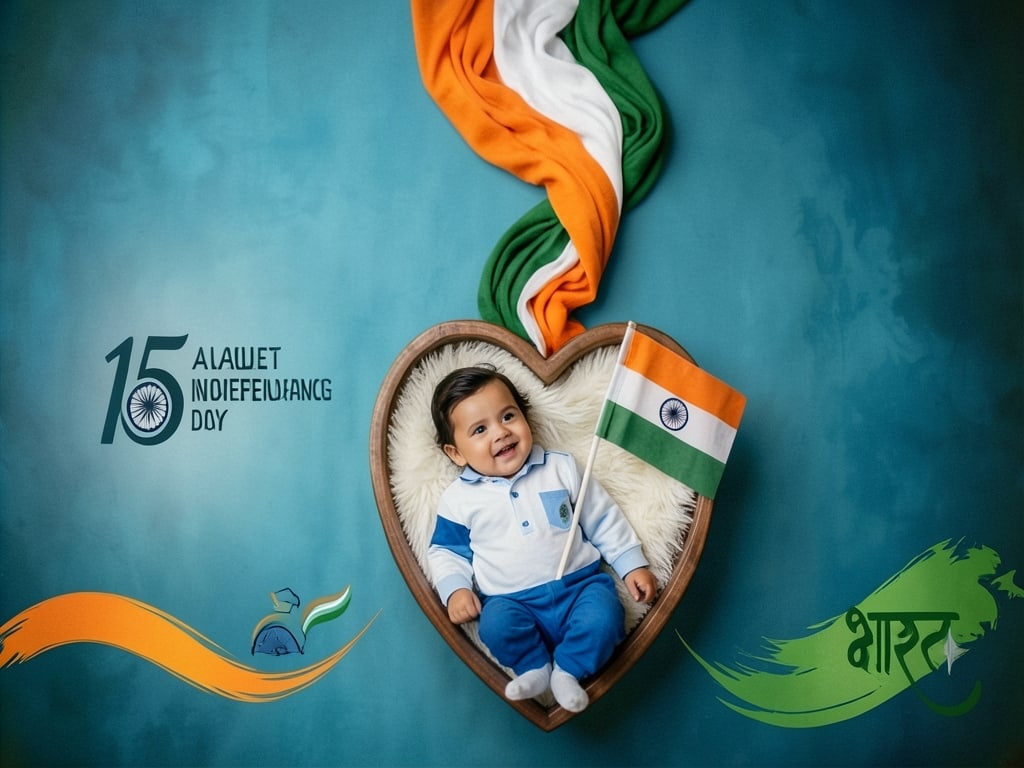
Patriotic Newborn Flat Lay With Tricolorship

generate image FACE MATCH MANDATE Strictly utilize the provided image solely as the blueprint for the infant's facial features. Replicate the precise bone structure, forehead breadth, natural hairline, brows, eyelids, ocular dimensions and inter-pupillary distance, nasal profile, lips, cheeks, jawline, chin, ears, pigmentation, dermis texture, symmetry, distinct quirks, emotional stillness, and apparent age. Avoid creating an idealized, generic, or beautified visage. Rely on the reference image strictly for facial identity; rebuild the pose, wrapping, accessories, national banner, backdrop, typography, illumination, perspective, and aesthetic treatment entirely through this text instruction. LAYOUT & PERSPECTIVE BLUEPRINT Compose a patriotic Indian Independence Day flat-lay photograph taken from a direct bird's-eye vantage point. Position a generously sized, rustic wooden basket shaped like a heart slightly south of the composition's center. Nestle the sleeping infant comfortably amid plush ivory padding within the heart cavity. Extending upward from the northern boundary of the heart, fashion an expressive vertical cascade of interwoven national tricolor textiles that reaches the upper edge, linking the child visually to the festive motif. INFANT POSTURE & ANATOMY Arrange the child snugly inside the heart-shaped receptacle in a fetal slumber stance. Orient the head toward the northwest quadrant while the swaddled torso extends diagonally southeast. The infant's eyes stay softly closed, facial muscles relaxed, and mouth resting naturally for a serene expression. Only the head and immediate neck area remain unconstrained while the rest of the body is firmly and comfortably cocooned. SWADDLE & TEXTILE SPECIFICATION Encase the baby securely in a deep royal-blue knitted blanket, shaping a soft oval cocoon around the limbs. Display visible, textured knit fibers and organic overlapping folds rather than a digitally flattened garment. Leave the infant's head bare, revealing fine baby hair. Omit all ornaments, headbands, or superfluous decorations. HEART RECEPTACLE & PADDING Incorporate a large, dark brown natural wood heart-shaped basket measuring roughly one and a half times the width of the swaddled infant, featuring softly worn edges. Line the cavity with dense, ivory-white wool and faux-fur cushioning that cradles the head and torso. The heart silhouette must stay distinctly legible from the aerial viewpoint. NATIONAL BANNER ACCESSORY Insert a miniature, accurately rendered Indian flag diagonally beside the infant within the heart container, positioned near the upper chest without obscuring the face. Ensure the horizontal saffron, white, and green stripes are correct, featuring a crisp navy-blue Ashoka Chakra centered in the white bar. The banner should resemble lightweight cloth mounted on a slender wooden dowel. TRICOLOR DRAPE ELEMENT Directly behind the heart receptacle, drape three elongated lengths of premium flowing cloth in saffron, pristine white, and deep forest green. Twist and entwine the trio into a graceful, vertical S-shaped wave that flows upward through the frame's vertical axis, exiting past the top border. Incorporate rich folds, tactile fabric weight, and gentle shadows, keeping the saffron-white-green sequence intact while the textiles blend harmoniously. BACKGROUND SURFACE Utilize a mottled teal-to-dark-cyan studio canvas spanning the entire background. Infuse it with delicate painterly tonal shifts, subtle weathering, and slightly darkened vignettes to add depth without drawing focus away from the infant. The cerulean backdrop should contrast vividly against the warm timber heart and the national colors. FESTIVE TYPOGRAPHY & GRAPHICS Within the empty space on the left side of the heart, design an artistic Independence Day emblem featuring a bold stylized numeral "15", incorporating a miniature Ashoka Chakra into the artwork alongside the text "AUGUST INDEPENDENCE DAY" set neatly nearby. Ensure this graphic remains secondary to the child. In the lower-left section, introduce a fluid saffron brush mark complemented by a minimalist patriotic line sketch. In the lower-right section, balance this with an emerald green brush stroke and graceful Devanagari script reading "भारत" woven smoothly into the design. Keep these illustrative marks refined and tasteful rather than illustrative. CAMERA ANGLE & ALIGNMENT Set the camera at an exact 90-degree overhead angle, perpendicular to the display surface. Center the lens axis precisely on the heart container and the fabric ribbon. Prevent any perspective skewing or lateral tilting. The heart contour, slumbering child, banner, cloth trail, and surrounding graphics must all remain crisp and readable from above. FRAMING & DISTANCE Position the camera approximately two and a half to three meters overhead, distant enough to encompass the entire wooden heart, the majority of the cascading cloth, and ample surrounding blue negative space. Place the heart roughly in the lower-middle tier while the textile ribbon dominates the upper center. Maintain generous borders around the graphic elements. OPTICS & LENS PARAMETERS Employ a 45mm to 50mm full-frame camera lens set around f/5.6 to f/7.1, ensuring corner-to-corner sharpness across the relatively flat scene. Use a shutter speed near 1/200 to 1/250 of a second with ISO 100 to 200. Preserve lifelike perspective without wide-angle warping, excessive depth-of-field blur, or artificial edge enhancement. LIGHTING SETUP Deploy a broad, diffused overhead softbox paired with soft fill illumination to generate delicate infant lighting. Introduce subtle directional modeling from the upper-left so the baby's cheeks, timber rim, knit texture, fur padding, and fabric creases exhibit true dimensional realism.

7 0 2
1mo
Preview of Patriotic Baby Flat‑Lay Portrait
image / Gemini
Festivals & OccasionsGemini · ChatGPT

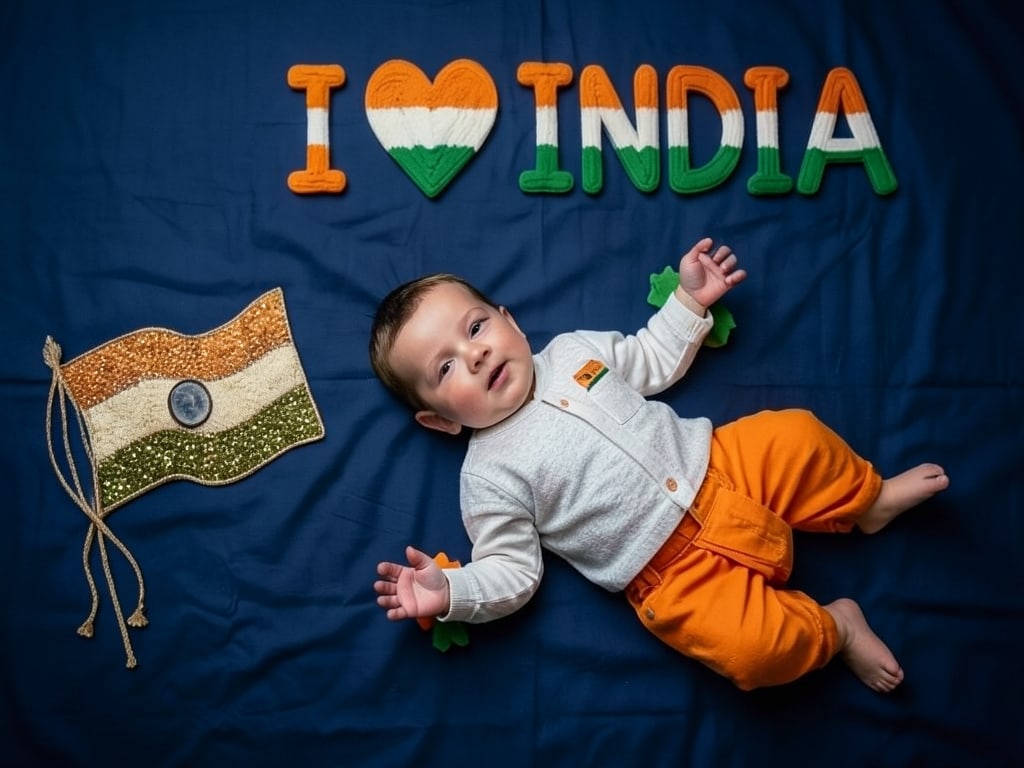
Patriotic Baby Flat‑Lay Portrait

create image STRICT FACE IDENTITY COPY DNA Maintain the exact facial characteristics of the uploaded baby photo. Preserve every detail of the infant’s face—head shape, forehead, hairline, eyebrows, eye shape and spacing, eyelids, nose, lips, cheeks, chin, ears, natural skin tone, texture, proportions, apparent age, and all recognizable traits—without any beautification, reshaping, stylization, smoothing, aging, de‑aging, or other alterations. The uploaded picture must serve solely for facial replication; it must not influence clothing, pose, props, background, composition, camera setup, or lighting. VISUAL RECONSTRUCTION DNA Render a premium, hyper‑realistic Indian Independence Day baby photoshoot as an overhead flat‑lay portrait. Position the infant on a deep‑blue fabric surface, surrounded by patriotic décor. The scene should convey a handcrafted, festive, innocent atmosphere and appear as a professionally captured photograph rather than a digital illustration. SUBJECT & COMPOSITION DNA Place the baby slightly to the right of the vertical centre, lying diagonally across the lower‑middle region. The head should sit about 42‑45 % down from the top edge, with the feet extending toward the lower‑middle area. Reserve the entire upper third for the patriotic title and keep the left side open for a miniature Indian flag and swing‑rope element. The baby’s height should occupy roughly 35‑40 % of the total frame, while the surrounding decorations remain secondary. POSE & BODY LANGUAGE DNA Lay the infant on its back on the blue fabric, rotating the torso about 10‑15° from the vertical axis. Turn the head slightly toward the camera‑right, maintaining a relaxed upward gaze. Both arms should be lifted outward from the shoulders in a playful, relaxed manner, elbows gently bent, hands open with natural baby fingers. Knees are bent naturally, one knee a bit higher than the other to create subtle asymmetry; lower legs angle inward slightly, with bare feet resting softly on the fabric. The overall posture must exude joy, innocence, comfort, and playful patriotism without appearing staged. OUTFIT DNA Dress the baby in a sweet white kurta‑style top featuring faint light‑blue decorative trims and small saffron‑green accents. Pair it with bright saffron‑orange traditional lower garments, loose and comfortable, showing realistic folds and a soft cotton texture. Add a tiny tricolour cap or headpiece blending saffron, white, and green in a tasteful miniature design. Ensure the clothing looks realistic, age‑appropriate, soft, and naturally wrinkled. PATRIOTIC ACCESSORY DNA Position small green fabric accents near each raised hand, resembling delicate patriotic wrist ribbons, without covering the fingers. Include a subtle saffron‑white‑green decorative element on the outfit that enhances the theme without overwhelming the composition. “I LOVE INDIA” TYPOGRAPHY DNA Across the upper portion, create large handmade‑style lettering that reads exactly: I LOVE INDIA The text should span about 55‑60 % of the frame width and be centred horizontally. Use chunky, tactile lettering with visible textured fibres or tiny decorative particles rather than smooth digital fonts. Render the “I” in saffron/orange, the heart symbol in a blend of saffron, white, and green, and “INDIA” primarily in saffron, white, and green. Ensure perfect spelling and clear readability. INDIAN FLAG DNA Depict an authentic Indian flag (not plastic) as it appears in office dhwaj‑vandana displays, with a rope‑like support, fully unfurled and appearing to wave in the air. Render the flag using grain‑style engraving to convey texture. BACKGROUND & SURFACE DNA Cover the entire scene with a rich deep navy‑blue cotton fabric backdrop, showing subtle natural wrinkles, folds, and woven texture. The blue surface must provide strong contrast against the white, saffron, and green elements. Avoid walls, furniture, floor edges, or visible studio gear. CAMERA ANGLE & HEIGHT DNA Employ a true overhead flat‑lay camera position at 90°, directly above the infant. Position the camera sensor roughly 2.8‑3.2 metres above the fabric, with the optical axis pointing straight down and a deviation of no more than 0‑1°. No eye‑level, three‑quarter, diagonal, or low‑angle views are allowed; exact overhead geometry is critical. CAMERA DISTANCE & FRAMING DNA Place the camera about 3 metres vertically above the centre of the baby’s torso. Use a distance that captures the entire infant, the full “I LOVE INDIA” title, the miniature flag, the swing‑rope decoration, and generous blue negative space, while preserving natural proportions without head enlargement or wide‑angle distortion. LENS & OPTICAL DNA Utilize a professional full‑frame 50 mm lens set to approximately f/5.6, mounted directly overhead. Maintain precise geometry and realistic proportions. Keep the baby’s face, clothing, flag, and primary decorations sharply in focus, with only a very subtle softness toward the farthest background. LIGHTING DNA Apply bright, soft, evenly distributed high‑key studio lighting to illuminate the scene uniformly.
7 0 2
1mo
Preview of Patriotic Infant Overhead Flat Lay
image / Gemini
Festivals & OccasionsGemini · ChatGPT

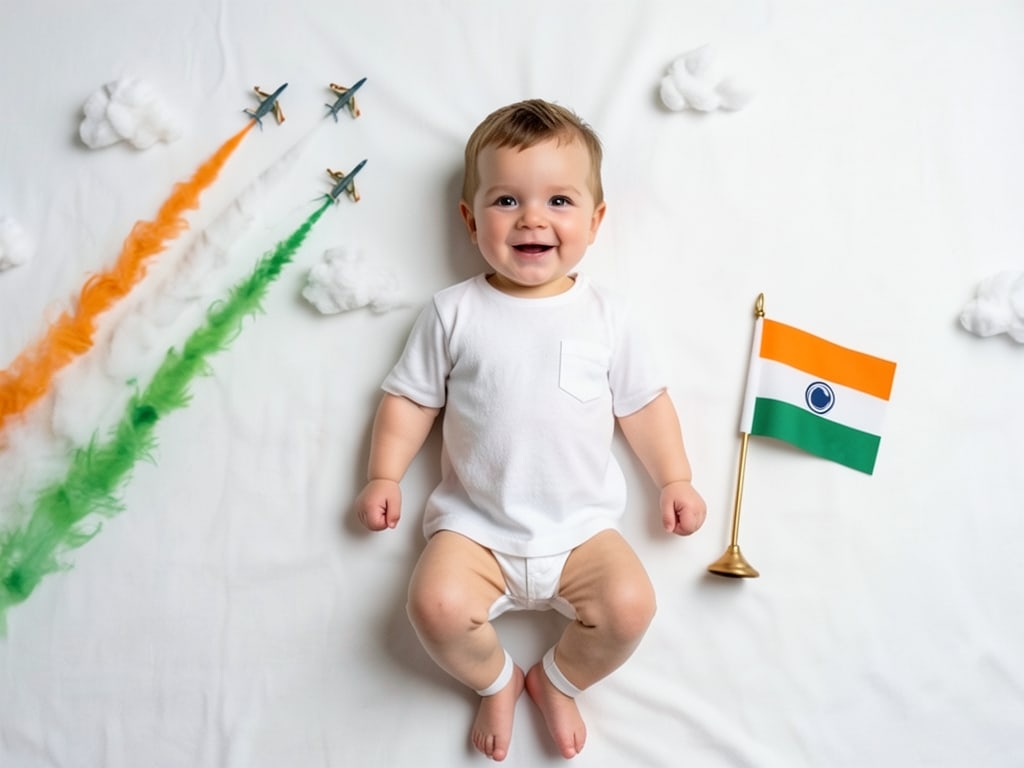
Patriotic Infant Overhead Flat Lay

create image IDENTITY REPRODUCTION: Use the supplied portrait solely to replicate the baby's facial features. Preserve head shape, forehead, hairline, eyebrows, eye shape and spacing, eyelids, nose, lips, cheeks, chin, ears, natural skin tone, texture, proportions, age and distinguishing traits. Do not apply any beautification, reshaping, stylization, smoothing, aging or de‑aging. The reference image must not influence clothing, pose, background, props, text or lighting. SCENE CONSTRUCTION: Produce a high‑quality, hyper‑realistic Indian Independence Day infant photoshoot arranged as a top‑down flat‑lay. The infant rests on a soft white textured plane, encircled by aviation‑themed elements, fluffy clouds, a national flag, and celebratory typography. The aesthetic should be clean, innocent, creative, festive and professionally shot. COMPOSITION: Position the infant near the central vertical line, slightly lower than the exact center. The child lies on the back with the head toward the upper‑middle area and feet toward the lower‑middle area. The infant should fill roughly 45‑50 % of the image height, leaving ample negative space for clouds, aircraft trails, the flag and the Independence Day text. Keep each prop distinct; avoid any unnecessary overlap with the baby's body or face. POSE: Lay the infant naturally on its back, torso nearly vertical in the frame. Shoulders should relax against the surface. Arms rest alongside the torso with elbows gently bent; hands relaxed with naturally curled fingers. Knees are softly bent with a subtle asymmetry—one knee raised slightly higher than the other—while both bare feet stay visible. Legs appear relaxed, not staged. Head points straight up toward the camera with a mild 3‑5° turn toward the left side of the frame. Gaze meets the lens, expression calm, curious, innocent, with a faint natural smile. APPAREL: Dress the infant in a pristine traditional white Indian kurta‑pajama. The kurta features a simple rounded collar, short hidden placket and faint vertical fabric grain. The matching pajama is loose, comfortable and shows realistic folds at the knees and ankles. The clothing stays entirely white, allowing surrounding saffron, white and green elements to provide the patriotic palette. FLAG ELEMENT: Position a small Indian national flag on the right side of the image (camera‑right) adjacent to the torso and lower legs. Mount it on a polished miniature stand of wood or brass‑tone, roughly 45‑55 cm tall, proportionate to the infant. The flag must display correct saffron, white and green bands with a navy‑blue Ashoka Chakra centered in the white band, and exhibit a slight natural drape rather than a perfectly flat surface. AVIATION & CLOUDS: Add three tiny realistic miniature aircraft in the upper‑left quadrant, each angled diagonally upward toward that corner, leaving soft, fluffy trails. Use three separate smoke trails—saffron/orange, white, and green—running parallel but spaced naturally, resembling powdery cotton smoke. Scatter irregular white fluffy clouds around the composition, especially near the trails and the top and bottom edges. Clouds should have soft volume and subtle shadows while staying secondary to the infant. TYPOGRAPHY: Insert a polished Independence Day graphic in the upper‑right quadrant, clearly separated from the infant’s head. Include large elegant patriotic lettering reading: 15 August INDEPENDENCE DAY Apply saffron/orange, green, navy‑blue and dark accent colors. Integrate a small Indian flag and an Ashoka Chakra within the design. Ensure the text is fully legible, correctly spelled, professionally aligned and balanced with the overall image without dominating it. CAMERA POSITION: Employ a true overhead flat‑lay viewpoint, camera placed directly above the infant at about a 90° angle to the surface, with only 0‑2° horizontal tilt. Avoid any eye‑level, low‑angle, standing‑height or three‑quarter perspectives. This strict top‑down geometry is crucial so that the infant, flag, clouds, aircraft trails and all props appear as a deliberately arranged bird’s‑eye composition. CAMERA DISTANCE: Set the camera roughly 2.2‑2.8 m above the infant’s chest, measured from sensor to the lying surface. This distance should capture the whole body from head to feet along with surrounding elements, providing generous negative space without requiring extreme wide‑angle distortion. The infant’s facial proportions must remain natural, without exaggerated forehead, enlarged head or distorted limbs. LENS SETTINGS: Use a professional full‑frame 50 mm lens at about f/5.6, positioned directly overhead. Maintain precise geometry and natural proportions. Provide sufficient depth of field so the infant and nearby props stay sharp, while distant cloud edges and background texture are gently softened. SURFACE: Render a soft white textured surface that mimics a plush fabric, offering subtle shadows under the infant and props to convey depth.

7 0 2
1mo
Preview of Patriotic Newborn Flat‑Lay Portrait
image / Gemini
Festivals & OccasionsGemini · ChatGPT

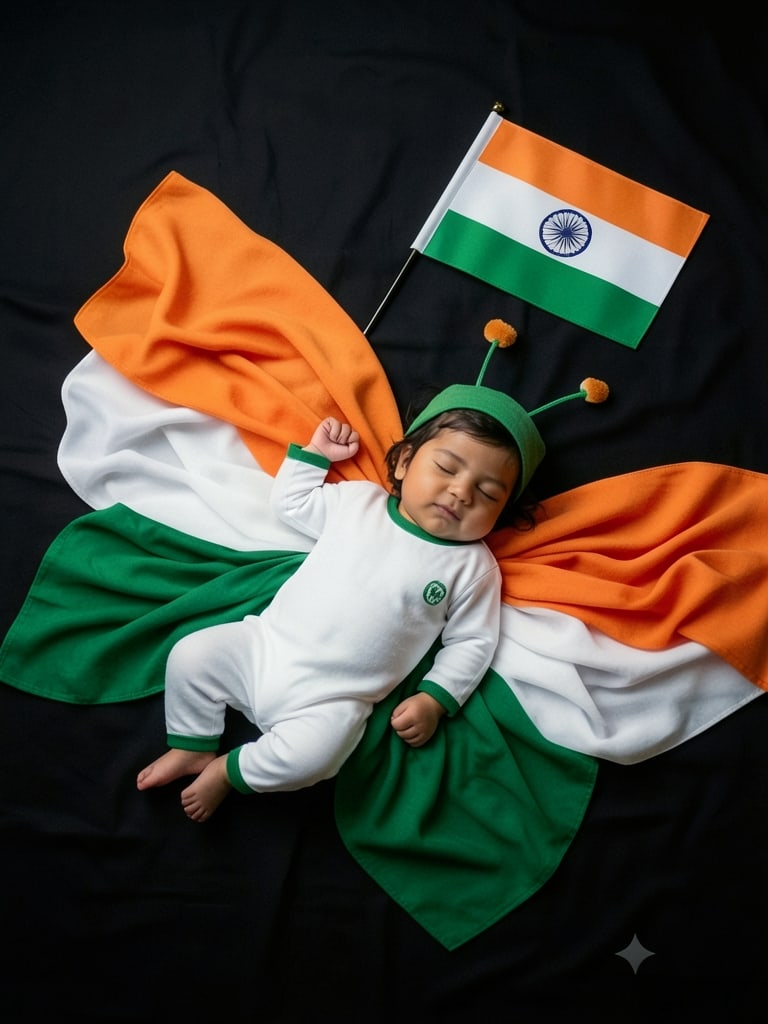
Patriotic Newborn Flat‑Lay Portrait

Face Identity Preservation Use the supplied photograph solely to lock in the baby's exact facial identity. Replicate every facial element—head shape, forehead, hairline, eyebrows, eye shape and spacing, eyelids, nose, lips, cheeks, chin, ears, natural skin tone and texture, facial proportions, apparent age, and any unique characteristics—without any beautification, reshaping, smoothing, stylization, aging, de‑aging, or alteration. The reference image must not influence clothing, pose, setting, props, lighting, or any other visual component. Overall Visual Concept Create a high‑end, hyper‑realistic Indian Independence Day newborn scene arranged as an overhead flat‑lay. The infant lies diagonally on an expansive, flowing Indian tricolour fabric that spreads like a butterfly, while an Indian national flag hovers prominently above the upper‑right side of the baby. The look should feel handcrafted, photographic, with authentic fabric textures, natural drapes, subtle shadows, and a premium patriotic editorial vibe. Subject Placement & Composition Position the baby just below the frame centre, oriented from lower‑left toward upper‑right. Align the head at roughly 58‑62 % of the frame width and 52‑55 % of the frame height. The baby’s height should cover about 28‑32 % of the total frame. Preserve ample black negative space around the scene. Let the tricolour fabric emanate from beneath the infant in four broad, soft, wing‑like sections: saffron occupies the upper‑left and upper‑right, white forms the central zones, and deep green fills the lower‑left and lower‑right. Place the Indian flag in the upper‑right quadrant, clearly separated from the baby and tilted slightly toward the corner. Pose & Body Language Lay the infant on its back, following the diagonal axis. Shoulders should rest gently on the fabric, arms close to the torso with elbows mildly bent and hands relaxed. Legs extend toward the lower‑left with a natural infant knee bend, feet together. The head rests naturally on the fabric, looking almost straight up with a modest 5° turn toward the camera’s right. Capture a serene sleeping expression—closed eyes and relaxed lips—while maintaining the exact facial identity from the uploaded photo. Clothing Details Dress the newborn in a pristine white traditional Indian wrap made of lightweight cotton, featuring delicate folds and a realistic woven feel. The wrap should cover the torso and legs, leaving the face and a small portion of the hands exposed. Incorporate faint saffron and green trim on select edges while keeping the garment primarily white. Add a soft green newborn cap that fits snugly without covering the face. Adorn the cap with two slender white arches rising from behind, each terminating in a tiny heart‑shaped tip with subtle saffron, white, and green accents. Tri‑Colour Fabric Arrangement Construct a large, flowing set of translucent fabrics in saffron‑orange, white, and deep green beneath and around the baby. Saffron dominates the upper‑left and upper‑right wing‑like folds, white fills the central transition zones, and deep green spreads across the lower‑left and lower‑middle areas. The textiles must exhibit realistic cotton/chiffon texture, visible wrinkles, layered drapes, soft translucent edges, natural bunching, and believable shadows. Avoid perfectly straight stripes; the tricolour should appear manually arranged into an artistic, flowing form. National Flag Placement Suspend a lifelike Indian national flag roughly 45‑55 cm above and to the right of the infant’s head, sized appropriately for the composition. Mount it on a thin dark pole that blends subtly against the black backdrop. The flag must display accurate horizontal saffron, white, and green bands with a clearly visible navy‑blue Ashoka Chakra centered in the white band. Allow the flag to curve naturally, as if gently billowing, with realistic fabric folds and slight three‑dimensionality. Background Employ a deep matte‑black textured fabric that fills the entire background. The surface should show faint natural textile wrinkles and tonal variation, without any distracting objects or patterns, providing strong contrast to the vibrant fabrics while maintaining a refined studio‑photography feel. Camera Setup Shoot from a true overhead flat‑lay perspective, positioning the camera exactly 90° perpendicular to the surface, with deviation limited to 0‑1°. The camera should be placed about 2.5‑3 m above the baby’s torso (sensor to surface distance). Frame the whole tricolour arrangement, the baby, and the flag without cropping essential elements. Use a natural full‑frame equivalent focal length of roughly 50 mm to avoid wide‑angle distortion.

7 0 2
1mo
Preview of Patriotic Child Portrait for Independence Day
image / Gemini
Festivals & OccasionsGemini · ChatGPT

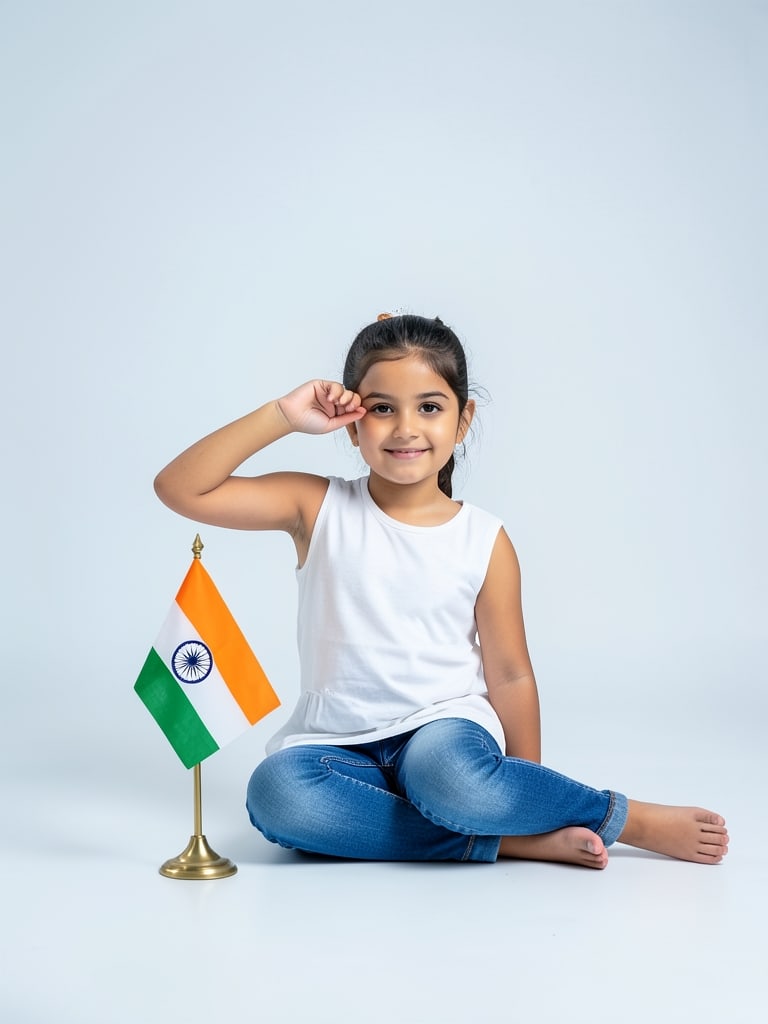
Patriotic Child Portrait for Independence Day

create image FACE IDENTITY CONSERVATION Use the supplied photograph solely as the exact reference for the child's facial features. Replicate every element of her face—head contour, forehead, hairline, eyebrows, eyelids, eye shape and spacing, nose, lips, cheeks, jawline, chin, ears, natural skin hue, texture, symmetry, apparent age, and the characteristic expression. Avoid any beautification, stylization, reshaping, eye enlargement, complexion alteration, skin smoothing, or age modification. The reference image must not influence clothing, pose, setting, props, typography, or overall composition. PRIMARY SUBJECT Render a high‑quality Indian Independence Day portrait of a young Indian girl seated on a pristine white studio floor, set against a very light cool‑gray seamless backdrop. The image should convey a polished, campaign‑style feel—patriotic, elegant, minimal, youthful, and clean. The girl must dominate the visual field as the sole focal point. ATTIRE SPECIFICATIONS Dress the child in a sleeveless white cotton top featuring a smooth rounded neckline and subtle patriotic detailing, paired with form‑fitting light‑blue denim jeans. The top should exhibit realistic cotton texture with natural folds at the waist and shoulders. Incorporate modest patriotic accents in saffron, white, and green—such as a delicate tricolour bracelet on the raised wrist and a tiny tricolour element near the hair or garment. Keep these accessories understated. The feet are bare. SEATING AND BODY POSITIONING Place the girl on the floor slightly beneath the vertical centre of the frame. Her torso stays upright yet relaxed, with the spine tilted about 5° backward from true vertical. The hips angle modestly toward the left side of the frame. The left leg folds inward, knee pointing left, while the lower leg rests flat on the floor. The right leg extends diagonally toward the right side, knee gently bent, foot flat on the floor. Shoulders are relaxed; the right shoulder lifts slightly due to the salute gesture. The head is held straight with a soft 6° tilt toward the left, yielding a natural portrait rather than a rigid pose. HAND GESTURE AND BODY LANGUAGE Elevate the right arm to execute a respectful Indian military salute. The elbow bends roughly 80°, projecting outward from the torso, and the forearm angles upward toward the forehead. The right hand rests beside the right temple, palm down, fingers together and extended, fingertips nearing but not touching the forehead. The left arm stays relaxed, positioned slightly behind the body, with the left palm flat on the floor for balance; fingers splay gently. Overall demeanor should radiate pride, confidence, innocence, and respect. EYE LINE AND EXPRESSION The child gazes straight into the camera, maintaining confident eye contact while saluting. Her face carries a gentle, proud, mildly playful smile. CAMERA HEIGHT, ANGLE, AND DISTANCE Position the camera at a low eye‑level, about 85–95 cm above the floor, roughly aligned with the girl’s face rather than looking down. Use an almost straight‑on viewpoint with a slight 3° rotation toward the right. Set the camera roughly 2.8 m from her face, allowing the full seated figure, flag, headline area, and lower logo space to fit within the vertical composition while preserving a natural portrait perspective. Frame from the top of the hair to the floor, leaving ample negative space above for an Independence Day headline. LENS SETTINGS Select a professional full‑frame 85 mm portrait lens at approximately f/4 to deliver natural facial proportions, gentle background separation, crisp detail, and a sophisticated commercial portrait look. BACKGROUND SEPARATION (BOKEH) Apply only a very subtle depth effect; the light‑gray backdrop should stay identifiable as a clean studio wall rather than becoming heavily blurred. Preserve strong subject isolation while maintaining the minimalist campaign aesthetic. VISUAL DEPTH LAYERS Foreground: clean studio floor and a small polished brass flag stand positioned beside the girl's front‑left side. Subject layer: the girl, her clothing, face, salute, and natural posture. Secondary layer: the Indian national flag and modest patriotic accessories. Background: seamless pale cool‑gray studio wall and floor. Atmospheric layer: minimal, with only a soft tonal fade toward the edges. ENVIRONMENTAL SETTING Create a completely clean high‑key studio scene with a seamless pale cool‑gray wall and matching floor. Place a small polished brass Indian flag stand about 45–50 cm tall adjacent to the girl's front‑left side, close enough to appear naturally connected but not touching her. Mount the Indian national flag vertically on the pole, displaying accurate saffron, white, and green horizontal bands and a correctly centred navy‑blue Ashoka Chakra. Keep the surrounding space virtually empty to sustain the premium minimalist campaign look. LIGHTING DESIGN Employ bright, soft, high‑key studio lighting with extremely smooth tonal transitions. Illuminate the girl's face evenly, providing gentle highlights on the forehead, cheeks, nose, and lips, and only very soft shadows beneath the chin, arms, and clothing folds. Ensure the central area around the child is slightly brighter while allowing the outer background to remain gently subdued.

7 0 2
1mo
Preview of Patriotic Beach Portrait with Flag
image / Gemini
Festivals & OccasionsGemini · ChatGPT

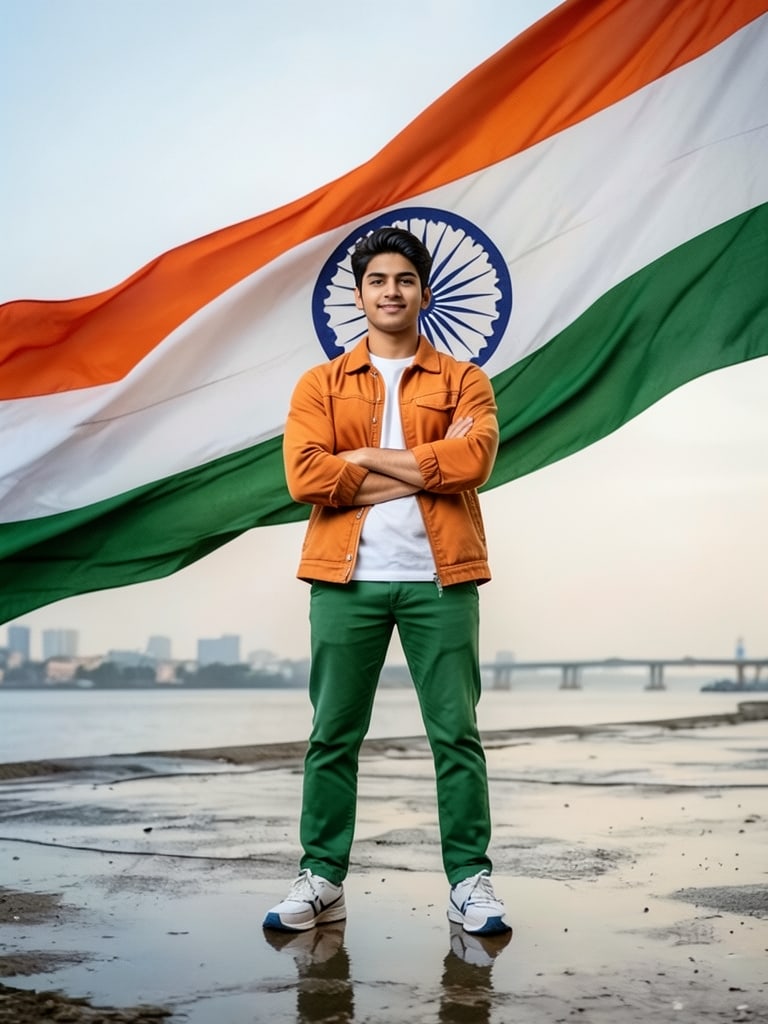
Patriotic Beach Portrait with Flag

IDENTITY PRESERVATION Maintain the exact facial characteristics of the uploaded reference: head shape, forehead, hairline, eyebrows, eye shape and spacing, eyelids, nose, lips, cheeks, jawline, ears, natural skin tone and texture, facial proportions, apparent age, beard and moustache pattern, and every other recognizable feature. The face must stay completely unchanged and natural—no beautification, reshaping, smoothing, stylization, aging, de‑aging, or alteration of any facial element. Use the reference only for the face; do not apply it to clothing, pose, background, props, lighting, or composition. SCENE SETTING Create a premium, ultra‑realistic Indian Independence Day fashion portrait of the identity‑preserved man positioned on a wet waterfront promenade. Behind him, an enormous Indian tricolour fabric flag dominates the upper and middle background, delivering a strong patriotic atmosphere akin to a professional campaign photograph. The setting combines a realistic outdoor waterfront with a large, flowing flag and subtle patriotic typography. COMPOSITION & FRAMING Place the subject near the horizontal centre, occupying roughly 55‑60 % of the total image height. Capture him from head to shoes, leaving comfortable space above the head and below the feet. His body faces the camera directly, standing relaxed with feet about shoulder‑width apart and weight evenly distributed. Position the head in the upper‑middle region while wet ground and its reflections remain visible in the lower part. The flag should sweep diagonally from the upper‑left toward the right, linking the subject to the patriotic theme. POSE & EXPRESSION Give the man a confident, composed stance with arms crossed naturally across the chest. Shoulders stay relaxed, chin level with the camera, and expression calm yet slightly serious, conveying confidence and patriotic pride. The posture should feel authentic, not a rigid fashion‑model pose. APPAREL Dress him in a modern, patriotic casual outfit: a plain white crew‑neck T‑shirt beneath a lightweight saffron‑orange zip‑up jacket featuring realistic fabric texture, natural stitching, a functional front zipper, subtle shoulder and elbow folds, and a slightly relaxed fit. Pair with deep forest‑green straight‑fit trousers showing natural creases at the knees and ankles, and white‑and‑blue athletic sneakers with realistic mesh, laces, rubber soles, and believable proportions. The colour scheme (saffron, white, green) mirrors the Indian flag without appearing costume‑like. HAIR & GROOMING Retain the man’s natural dark hairstyle and facial hair as seen in the reference. Render hair with individual strands, natural volume, and light grooming. Preserve his authentic beard and moustache pattern without redesign or excessive sharpening. FLAG DETAIL Render an enormous Indian national flag made of realistic flowing fabric, extending horizontally and diagonally across the background. Include accurate saffron, white, and green horizontal bands and a clearly visible navy‑blue Ashoka Chakra with exactly 24 spokes centered in the white band. The flag should be 5‑7 metres wide, extending beyond both frame edges, with substantial folds, wrinkles, wind‑induced stretch, overlapping layers, and realistic shadows. Position the Chakra behind and slightly above the subject’s head and shoulders so it remains visible without obscuring the face. WATERFRONT ENVIRONMENT Set the subject on a wet grey promenade or beachside concrete surface after a light rain. Show realistic shallow reflections of the man, his sneakers, and ambient light on the ground. In the distant background, include a faint, hazy urban waterfront skyline with low‑rise buildings and a horizontal bridge, kept soft and atmospheric to avoid competing with the subject or flag. The overall mood should feel overcast, fresh, slightly misty, and cinematic. LIGHTING Use soft overcast daylight that gently illuminates the face and clothing. Provide natural skin highlights on forehead, cheeks, nose, and beard, with subtle shadows under the jaw, arms, and jacket folds. Allow a restrained warm saffron tint from the flag to reflect onto portions of the jacket and one side of the subject, and a faint green tint near the lower clothing and wet ground. Keep skin tone natural and neutral. Reflections on the wet surface should be realistic without excessive shine. No studio lighting equipment such as softboxes, diffusers, reflectors, or stands should be visible. CAMERA & OPTICS Simulate a professional full‑frame camera with a 50 mm lens set to approximately f/4. Position the camera 3‑4 metres from the subject at chest‑to‑eye height, with a subtle low perspective of 3‑5 degrees to give the man a confident presence without body distortion. Ensure the entire figure is sharply detailed from face to shoes while the distant skyline and flag remain appropriately rendered.

7 0 2
1mo
Preview of Patriotic Kneeling Girl with Flag
image / Gemini
Festivals & OccasionsGemini · ChatGPT

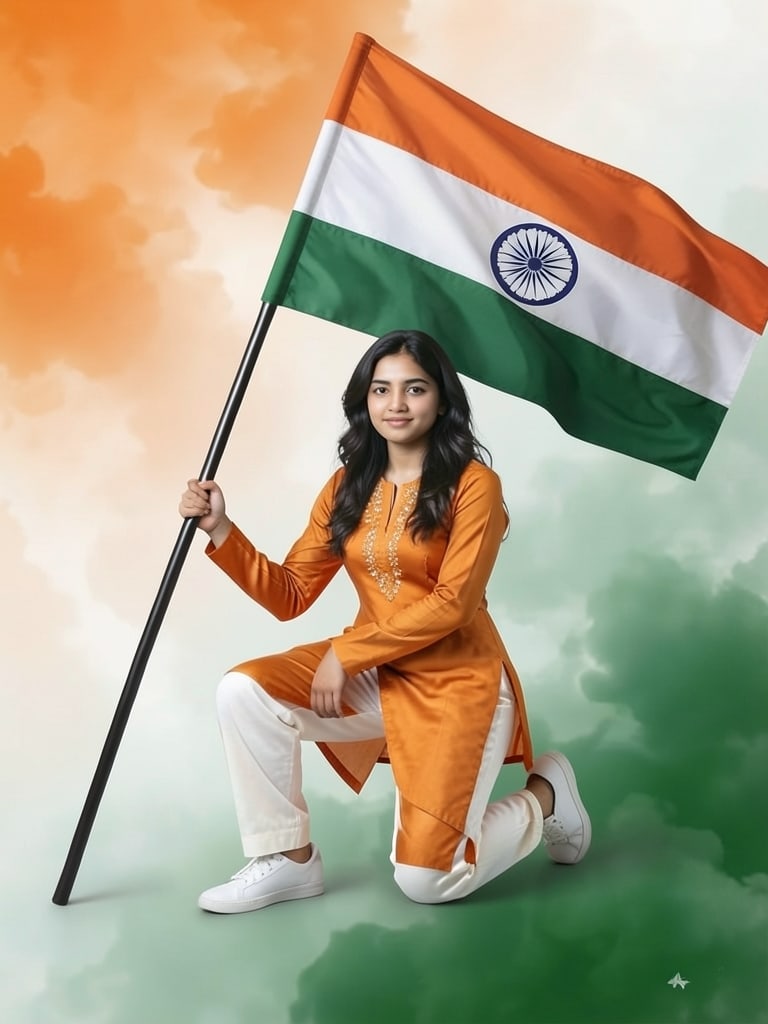
Patriotic Kneeling Girl with Flag

FACE IDENTITY PRESERVATION Maintain the exact facial features of the uploaded reference: head shape, forehead, hairline, eyebrows, eye shape and spacing, eyelids, nose, lips, cheeks, chin, ears, natural skin tone and texture, facial proportions, apparent age, and every distinctive trait. Do not apply any beautification, reshaping, smoothing, stylization, aging, de‑aging, or other alterations. The reference image may only inform the face; it must not influence clothing, pose, setting, props, lighting, or composition. VISUAL CONCEPT Generate a high‑end, photorealistic Independence Day portrait featuring a confident young Indian girl kneeling while gripping a large Indian flag. The mood should exude pride, innocence, and celebration within a cinematic patriotic colour scheme, resembling a professional campaign photograph rather than an illustration. COMPOSITION & POSITIONING - Place the girl slightly left of the horizontal centre, occupying roughly 55‑60% of the frame’s height. - Her head should be positioned about 38‑42% down from the top edge; her kneeling form extends toward the bottom. - The flag rises in the upper‑middle to upper‑right area, extending diagonally from the pole in her hand toward the upper‑right corner, remaining fully visible. - Ensure the flag does not obscure her face, which stays the primary focus. POSE & BODY LANGUAGE - Adopt a one‑knee kneel: left knee on the ground, right knee lifted forward, forming a strong triangular silhouette. - Keep the raised thigh nearly horizontal, with the lower leg angled downwards. - Torso upright with a subtle 5‑8° lean toward the camera‑left. - Left arm reaches upward beside the body, gripping the flagpole 45‑55 cm above shoulder level; elbow gently bent. - Right arm rests relaxed on the raised knee, forearm natural, hand lightly on the thigh. - Shoulders open, chest lifted, posture proud yet relaxed. - Head turned 8‑10° toward camera‑right, eyes fixed on the lens. - Provide a natural closed‑mouth smile expressing patriotic pride and youthful joy. ATTIRE - Outfit consists of a fitted saffron‑orange long‑sleeve crop top with realistic cotton texture and subtle creases. - Paired with loose white cargo‑style trousers of lightweight cotton, showing natural folds at knees, hips, and ankles. - White low‑top sneakers with realistic rubber soles, laces, stitching, and slight surface texture. - Colour palette remains chiefly saffron and white to keep the flag as the dominant patriotic element. HAIR & ACCESSORIES - Long dark hair styled into two low braids starting near the sides of the head and ending at the shoulders. - Braids tied with small decorative bands incorporating saffron, white, and green. - A few loose natural strands around the forehead and temples for realism. - Exclude large jewellery or distracting accessories. FLAG DETAILS - Girl holds a sizable Indian national flag on a dark pole. - Pole runs from the lower‑left corner toward the upper‑middle, creating a strong diagonal line. - Flag billows toward the upper‑right, covering about 35‑40% of the image width. - Colours exact: horizontal saffron, white, and deep‑green bands with a centered navy‑blue Ashoka Chakra in the white band. - Fabric behaves like lightweight cloth, showing natural waves, folds, edge movement, and slight tension; proportions and Chakra remain accurate. BACKGROUND - Atmospheric backdrop with soft saffron‑orange smoke on the left and upper‑left, pale‑white space centrally, and deep‑green smoke on the right and lower‑right. - Colours blend organically, avoiding hard stripes. - Smoke rendered with realistic volumetric depth, gentle diffusion, subtle turbulence, and natural transparency. - Area directly behind the face slightly lighter and less busy to keep facial detail clear. - No extraneous elements such as buildings, furniture, crowds, text, logos, or unrelated objects. CAMERA SETTINGS & ANGLE - Front‑facing camera positioned 8‑12° above eye level, looking slightly downward. - Distance from camera sensor to the girl's face roughly 2.5‑3 m. - Frame includes head to shoes, full flag, and pole, with enough space above the head for the flag while preserving facial detail. LENS & OPTICS Use a professional full‑frame 50mm lens at approximately f/3.5–f/4. Maintain natural human proportions without wide‑angle distortion. Keep the

7 0 2
1mo
Preview of Patriotic Woman in Emerald Saree
image / Gemini
Festivals & OccasionsGemini · ChatGPT

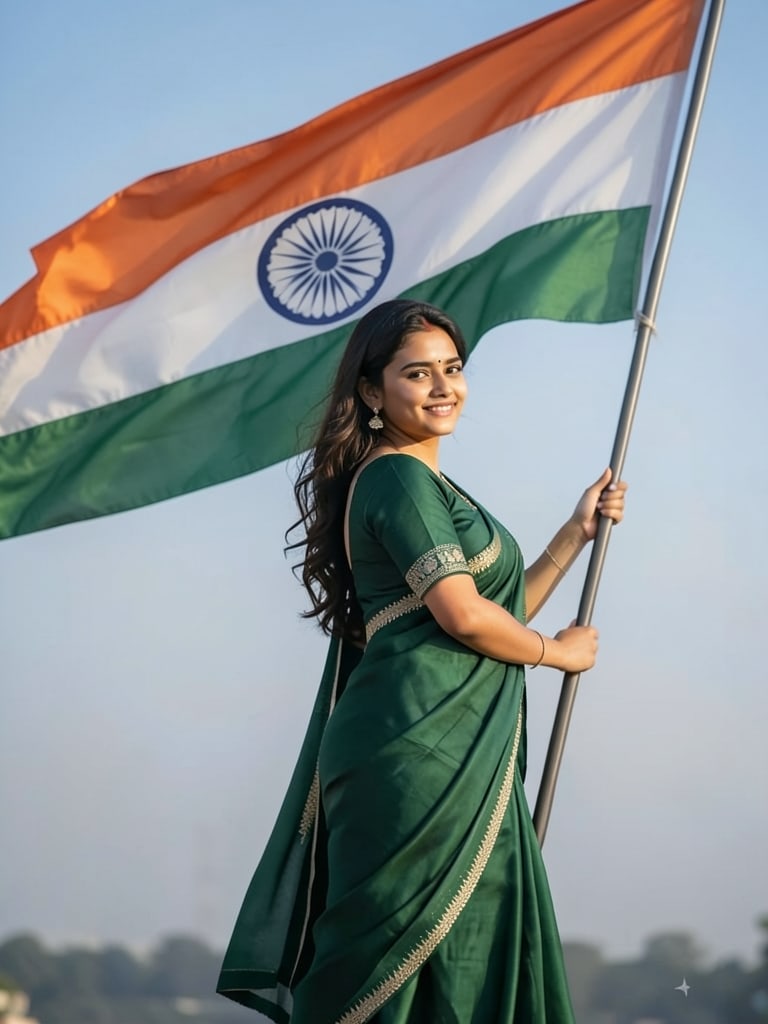
Patriotic Woman in Emerald Saree

FACE PRESERVATION GUIDELINES Maintain the exact facial identity from the uploaded reference photo. Replicate head shape, forehead, hairline, eyebrows, eye geometry and spacing, eyelids, nose, lips, cheeks, chin, jawline, ears, natural skin tone, texture, proportions, apparent age, and every distinctive feature. No beautification, reshaping, smoothing, stylization, aging, de‑aging, or alteration of any facial element is allowed. The reference image may be used solely for the face; it must not influence clothing, pose, background, props, lighting, or overall composition. OVERALL COMPOSITION Position the woman in the lower‑right to central‑right area, filling roughly 45‑55 % of the vertical frame. Show her full upper body and most of the flowing saree. The massive Indian flag should occupy the upper‑left and upper‑center, extending diagonally upward beyond the frame. Establish a strong diagonal link between the flagpole and the woman’s torso, leaving ample open sky for a spacious, cinematic feel. Employ a slightly low camera angle to convey power without exaggerating anatomy. POSE AND EXPRESSION Have the subject stand gracefully, gripping a long flagpole with both hands and angling the pole diagonally upward toward the upper‑right. Rotate the torso about 20‑30° away from the camera while she glances back over her shoulder toward the lens. The upper body should lean subtly backward, as if the flag’s motion creates a gentle lift. One hand should hold the pole near its middle, the other lower, with naturally curved fingers and anatomically correct grips. Her head turns toward the camera, displaying a confident, joyful look and a soft closed‑mouth smile. ATTIRE DETAILS Dress her in an elegant deep‑emerald Indian saree with a flowing silhouette. The fabric should possess a slight sheen, realistic folds, and natural draping around waist and legs. Pair with a matching deep‑green fitted blouse featuring short sleeves. The pallu sweeps across the torso and trails behind, edged with a delicate ivory‑gold embroidered border. Fabric weight must appear light enough to flutter yet retain realistic gravity. Add refined traditional Indian earrings; keep additional jewelry minimal so the flag remains the focal patriotic element. HAIR SPECIFICATIONS Provide long, dark, naturally voluminous hair extending below the shoulders. Style should be soft and mildly wind‑tousled, not tightly coiffed. Individual strands should be visible around the face and along the flowing hair, with a few strands moving in the breeze while keeping the facial area clear. FLAG CHARACTERISTICS Render a large, authentic Indian national flag attached to the pole. The flag must display distinct saffron, white, and green horizontal bands, with a navy‑blue Ashoka Chakra of exactly 24 spokes centered on the white band. Scale the flag to about 2.5‑3 times the woman’s width when fully extended, dominating the upper‑left portion. The fabric should billow dramatically, showing realistic waves, folds, stretched edges, and subtle translucency, resembling real cloth rather than a painted surface. POLE SPECIFICATIONS Use a long, slender, realistic dark‑metal or natural‑wood flagpole extending from the woman’s hands toward the upper‑right edge. The pole should be straight, structurally believable, and properly connected to the flag, with correct finger placement and grip. ENVIRONMENT BACKGROUND Set the scene outdoors beneath a clear‑to‑softly hazy blue sky. Keep the background minimal and atmospheric, with very subtle, heavily blurred distant forms. Apply shallow depth of field so the face and flag dominate. Exclude buildings, crowds, studio gear, logos, watermarks, or unrelated objects. LIGHTING AND MOOD Employ bright, natural late‑morning sunlight with soft directional quality. Light the face with gentle highlights on the forehead, cheeks, nose, and lips, while preserving natural shadows under the jaw and within clothing folds. Allow a restrained warm saffron reflection to tint the upper hair and clothing edges, and a faint green reflection near the lower body, without contaminating the true skin tone. Create realistic highlights on the flag’s fabric folds to give dimensionality to the saffron, white, and green sections. No visible studio lighting equipment. CAMERA SETTINGS Adopt a slightly low perspective, shallow depth of field, and a composition that emphasizes the diagonal relationship between subject and flag. Ensure the final image is ultra‑realistic, cinematic, and suitable for high‑impact Independence Day promotional use.

7 0 2
1mo
Other use cases

Search prompts

Search by keyword or describe what you need